
South Australian landlords must provide premises in a reasonable state of repair, comply with minimum housing standards at the start of each new tenancy, maintain locks and security, give proper entry notice, and keep accurate records. These duties sit in the Residential Tenancies Act 1995 (SA) (ss 64–69, s 67A), the Housing Improvement Act 2016 (SA), and the Housing Improvement Regulations 2017. From 1 July 2024, minimum housing standards became a hard requirement at tenancy commencement, not a best-practice aspiration.
The core rule: A landlord is not in breach of the repair obligation unless they have notice of the defect and fail to act with reasonable diligence. Document every notification and every response.
Quick-reference duties every SA landlord must meet:
- Repairs: Maintain premises in a reasonable state of repair throughout the tenancy (s 68). Respond immediately to urgent repairs (gas leaks, burst water, dangerous electrical faults, broken security locks).
- Minimum housing standards: Premises must comply with prescribed standards under the Housing Improvement Regulations 2017 at the start of each tenancy (s 67A).
- Locks and security: Provide and maintain necessary locks and security devices (s 66). Accept a protected person's lock change under s 66A.
- Quiet enjoyment: Do not interfere with the tenant's peace, comfort or privacy (s 65).
- Entry notice: Give at least 48 hours' written notice before entering for inspections or non-urgent repairs.
- Records and notices: Provide landlord/agent contact details before or at entry (s 48), keep the tenancy agreement for at least two years after termination (s 49), and maintain accurate rent records (ss 57–58).
- Smoke alarms and safety equipment: Maintain compliant smoke alarms and provide operating instructions for domestic appliances.
- Pest control: Keep grounds pest-free at tenancy start; ongoing pest issues caused by the property's condition remain the landlord's responsibility.
- SACAT remedies: Tenants may apply to the South Australian Civil and Administrative Tribunal (SACAT) for repair orders, compensation, rent reduction, or termination if obligations are not met.
The Law Handbook provides a plain-language summary of these duties and is worth bookmarking alongside the CBS tenancies hub.
Key takeaways
South Australian landlords must meet a defined set of statutory obligations under the Residential Tenancies Act 1995 (SA) and Housing Improvement Regulations 2017, and documentation of compliance is as important as compliance itself.
| Point | Details |
|---|---|
| Minimum standards from 1 July 2024 | Premises must meet prescribed Housing Improvement Regulations 2017 standards at the start of every new tenancy; a tenant agreement cannot waive this. |
| Repair obligation and notice | Landlords must act with reasonable diligence after written notice of a defect; failure allows tenants to arrange licensed repairs and recover costs under s 68. |
| Entry and quiet enjoyment | Give at least 48 hours' written notice before inspections or non-urgent repairs; over-inspecting or ignoring notice periods frequently escalates to SACAT. |
| Records are your evidence | Keep the tenancy agreement for two years post-termination, maintain a rent ledger, and file every repair request, response, and tradesperson report. |
| HOSO Real Estate | HOSO provides pre-tenancy compliance audits, repair coordination, inspection records, and rent ledger management to reduce SACAT exposure for SA landlords. |
Table of Contents
- 1. What are your repair and maintenance obligations as a landlord?
- 2. What minimum housing standards apply at the start of a tenancy?
- 3. How do locks, security, and quiet enjoyment obligations work?
- 4. What information must you give tenants and what records must you keep?
- 5. Who is responsible for damage: landlord or tenant?
- 6. What are your obligations when selling a tenanted property?
- 7. What can tenants do if you fail to meet your obligations?
- 8. How a professional property manager reduces your statutory risk
- What HOSO Real Estate thinks SA landlords consistently underestimate
- HOSO Real Estate manages SA landlord compliance so you don't have to
- Sources
1. What are your repair and maintenance obligations as a landlord?
Section 68 of the Residential Tenancies Act 1995 (SA) requires landlords to keep premises in a reasonable state of repair throughout the tenancy. The obligation applies even if the tenant knew of the disrepair when they moved in.
Urgent vs non-urgent repairs
Urgent repairs require immediate, diligent action. Sa these as including:
- Gas leaks
- Burst or seriously leaking water services
- Dangerous electrical faults
- Broken or malfunctioning security locks
- Faults likely to cause injury or major inconvenience
Non-urgent repairs have no fixed statutory deadline, but the landlord must act with reasonable diligence after receiving written notice. Failing to do so exposes you to tenant-arranged repairs and cost recovery claims under s 68(3).
What 'reasonable diligence' means in practice: Acknowledging the request promptly, engaging a licensed tradesperson within a timeframe proportionate to the severity of the fault, and keeping the tenant informed at each step. A leaking tap and a failing hot water system are not the same urgency level.
Practical landlord workflow for repairs
- Receive written notice of defect (email or SMS is acceptable).
- Acknowledge receipt to the tenant within 24 hours.
- Assess urgency and engage a licensed tradesperson.
- Confirm appointment time with the tenant.
- Obtain a written report from the tradesperson on cause and work carried out.
- File the report, invoice, and all communications in the property's maintenance log.
Larger repairs such as electrical wiring, gas heaters, and domestic appliances are the landlord's responsibility. You must also provide manufacturers' manuals or clear operating instructions for appliances at tenancy start; failing to do so can shift appliance-damage liability away from the tenant.
Pro Tip: Keep a trusted trades register with licensed plumbers, electricians, and locksmiths for each property. Pre-authorising a call-out limit for urgent repairs means your property manager can act immediately without waiting for approval, which is your strongest defence against a SACAT cost-recovery claim.

For a detailed look at maintenance standards for higher-end properties, including how 'reasonable state of repair' is assessed against a property's age and character, the HOSO blog covers the practical benchmarks.
2. What minimum housing standards apply at the start of a tenancy?
From 1 July 2024, premises must comply with prescribed minimum housing standards under the Housing Improvement Act 2016 (SA) and Housing Improvement Regulations 2017 at the beginning of every new tenancy (s 67A RTA). A tenant agreement that accepts substandard conditions does not override this statutory obligation.
Regulation 13 of the Housing Improvement Regulations 2017 sets out the specific requirements. In plain terms, the property must have:
- Structural integrity: Rigid internal walls and ceilings, adequate ceiling heights, sound floors and stairs
- Ventilation and natural light: Openable windows or mechanical ventilation in habitable rooms
- Locks: Functioning locks on all external doors and accessible windows; bedroom locks where required
- Flyscreens and window latches: Fitted to openable windows in habitable rooms
- Clothes-drying facilities: A dedicated facility provided
- Smoke alarms: Compliant and functioning at tenancy start
- Weatherproofing: Roof, walls, and windows must keep out rain
- Drainage: Adequate drainage to prevent water pooling
- Pest-free grounds: No active pest infestation at tenancy start
- Pool safety: Compliant pool fencing and signage where a pool is present
Pre-tenancy checklist: Run a condition report, test every smoke alarm, check all external locks, confirm appliance operation, inspect drainage and ventilation, and arrange a pest inspection. Complete this before handing over keys, not after.
If the premises do not meet these standards at tenancy start, the tenant may require urgent repairs to bring them into compliance or, in some circumstances, may be entitled to terminate the tenancy under s 85B. The Housing Safety Authority also maintains a Substandard Property Register; properties listed there face rent controls and restrictions on new tenancies until compliance is achieved. Check the register before leasing.
For a detailed breakdown of Adelaide rental compliance requirements mapped to the Housing Improvement Regulations, the HOSO guide covers each reg 13 item with practical notes.
3. How do locks, security, and quiet enjoyment obligations work?
Locks and security
Under s 66 of the RTA, landlords must provide and maintain all locks and security devices necessary to ensure the premises are reasonably secure. This means checking that external door locks, deadbolts, and window locks are functioning before each tenancy and repairing them promptly when they fail.
From 1 July 2024, s 66A introduced an intervention-order exception. Where a tenant holds a current intervention order, they may alter the locks without the landlord's consent. The landlord must accept a copy of the order and a key to the new locks. You cannot refuse or delay this.
Quiet enjoyment
Section 65 requires landlords not to interfere with the tenant's peace, comfort, or privacy. Common breaches include:
- Entering without proper notice
- Conducting excessive or unannounced inspections
- Contacting the tenant at unreasonable hours
- Allowing another party to interfere with the tenancy
Over-inspecting or ignoring notice periods frequently triggers disputes that escalate to SACAT. The obligation is ongoing, not just at tenancy start.
Entry notice requirements
- Inspections and non-urgent repairs: Minimum 48 hours' written notice
- Urgent repairs: Entry is permitted without notice when necessary to prevent injury or serious damage
- Showing the property to prospective purchasers: Written notice required; frequency limits apply
- Works under housing orders: Longer notice periods apply as per Housing Safety Authority guidance
Best-practice entry notice: Use a written template that states the date, time window, reason for entry, and your contact details. Send it by email and retain a copy. A consistent paper trail is your first line of defence if a tenant disputes the entry.
Pro Tip: Schedule routine inspections at regular intervals (typically every three months) and send notices in batches at the start of each quarter. Predictable scheduling reduces tenant friction and demonstrates that inspections are procedural, not reactive.
4. What information must you give tenants and what records must you keep?
Pre-tenancy and start-of-tenancy notices
Under s 48 of the Residential Tenancies Act 1995 (SA), before or at the time the tenant takes possession, you must provide:
- Written notice of the landlord's (or agent's) name and address for service of notices
- Details of any superior title holder where relevant
- Manufacturers' manuals or operating instructions for domestic appliances
Failure to provide this information attracts penalties and, critically, can shift liability for appliance damage to the landlord.
If your address changes, you must notify the tenant in writing within 14 days (s 48(3)).
Tenancy agreement and rent records
- Keep a copy of the signed tenancy agreement for at least two years after the tenancy ends (s 49).
- Maintain accurate rent records and provide receipts or statements when requested (ss 57–58).
- Record every rent payment, the date received, and the period it covers.
Practical document set to maintain: Signed tenancy agreement, condition report (ingoing and outgoing), appliance instruction pack, repair request log with dates and responses, rent ledger, entry notices, and change-of-address correspondence. Store these in a single property file, physical or digital.
Good record-keeping is not administrative overhead; it is your primary evidence in any SACAT application. Professional communication standards for repair notices, entry notices, and change-of-address correspondence are covered in the HOSO guide on tenant communications.
5. Who is responsible for damage: landlord or tenant?
Tenant obligations
Under s 69, tenants must keep the premises reasonably clean, notify the landlord of damage promptly, and not intentionally or negligently cause damage. Guests are generally the tenant's responsibility; if a guest causes damage, the tenant is liable unless they can demonstrate reasonable prevention steps.
Reasonable wear and tear vs tenant damage
This distinction determines who pays at the end of a tenancy.
Reasonable wear and tear includes:
- Minor scuffs on walls from normal use
- Carpet pile flattening in high-traffic areas
- Fading of paintwork over time
Tenant damage includes:
- Holes in walls
- Burns or stains on carpet
- Broken fixtures from misuse
The property's age and condition at tenancy start matter. A ten-year-old carpet showing wear is not the same as a new carpet with a burn mark.
Alterations
Tenants must obtain written consent before making alterations (s 70). Minor modifications for accessibility purposes may be permitted under specific provisions. At tenancy end, the tenant is generally required to restore the premises to their original condition unless the landlord agrees otherwise in writing.
Documenting damage for bond claims or SACAT
- Complete a thorough ingoing condition report with dated photographs.
- Conduct a formal outgoing inspection with the tenant present where possible.
- Obtain written quotes from licensed tradespersons for any damage repairs.
- Cross-reference the ingoing and outgoing reports before making any bond claim.
A property condition report done well is the single most effective tool for resolving end-of-tenancy disputes without tribunal involvement.
6. What are your obligations when selling a tenanted property?
Selling a property while it is tenanted requires careful management of both the sales process and the tenant's statutory rights.
Under s 71A of the RTA, you must give the tenant written notice after signing a sales agency agreement. You must also notify the tenant of the purchaser's details before settlement is finalised. These are not optional courtesies; they are statutory requirements.
Practical sale checklist for a tenanted property: Serve written notice of the agency agreement promptly, schedule purchaser inspections with proper entry notice, confirm the purchaser's details in writing to the tenant before settlement, and document all communications in the property file.
If the premises do not meet minimum housing standards at any point during the sale process, the tenant's rights under s 67A and s 85B remain intact. A tenant who is living in a property that fails minimum standards may require urgent repairs or, in some circumstances, terminate the tenancy. A sale does not suspend the landlord's compliance obligations.
The Housing Safety Authority notes that properties on the Substandard Property Register face restrictions on new tenancies until compliance is achieved, which can affect settlement timelines and purchaser due diligence.
7. What can tenants do if you fail to meet your obligations?
Tenant steps before applying to SACAT
Before making a tribunal application, a tenant should:
- Give the landlord written notice of the defect or breach.
- Allow a reasonable time for the landlord to respond.
- If the landlord fails to act, obtain at least one quote from a licensed tradesperson.
- Arrange the repair using a licensed tradesperson and obtain a written report on the cause and work carried out.
- Submit the invoice and report to the landlord for reimbursement.
Under s 68(3), the tenant may recover repair costs where the landlord has been given notice and failed to act with reasonable diligence, the repair was carried out by a licensed tradesperson, and the tenant holds a written report.
What SACAT can order against a landlord: Repair orders, compensation for loss or damage, rent reduction for the period the premises were substandard, and in serious cases, termination of the tenancy. Tenants must also mitigate their loss to preserve compensation claims.
Evidence landlords should have ready
- Written repair request log with dates received and acknowledged
- Tradesperson reports and invoices for all completed work
- Ingoing condition report and dated photographs
- Entry notices and inspection records
- All written communications with the tenant
Official guidance on repairs and tenant remedies from the Law Handbook explains the liability thresholds in detail. If a landlord has notice and fails to act, the documentation gap is the most common reason SACAT finds against them.
8. How a professional property manager reduces your statutory risk
A professional property manager does not just collect rent. The operational controls they provide directly reduce your exposure under the RTA and Housing Improvement Regulations.
A well-structured management service should deliver:
- Compliance audit: Pre-tenancy check against all reg 13 minimum-standards items
- Smoke alarm schedule: Annual testing and replacement programme
- Trusted trades register: Licensed plumbers, electricians, and locksmiths on call with pre-agreed response times
- Repair-response SLAs: Documented response timeframes for urgent and non-urgent repairs, reducing SACAT cost-recovery risk
- Inspection protocols: Routine inspections at regular intervals with written reports and dated photographs
- Rent and receipts ledger: Accurate records maintained and available on request
The split between what to delegate and what to retain is straightforward. Strategic decisions (major capital works, lease renewals, rent reviews) stay with you. Daily compliance, repair triage, entry notices, and record-keeping are where a manager's systems protect your asset.
Pro Tip: When structuring a management agreement, specify the repair authorisation limit in writing. A clear dollar threshold means urgent repairs are handled immediately without delay, while major expenditure still requires your approval. This protects both your budget and your compliance position.
Proactive maintenance scheduling and rental property oversight best practices are covered in detail in the HOSO guides for landlords who want to build a structured maintenance programme.
Understanding why rental income drops with poor management makes the case for proactive compliance more clearly than any checklist.
What HOSO Real Estate thinks SA landlords consistently underestimate
The 1 July 2024 minimum housing standards change is the most significant shift in SA tenancy law in years, yet many landlords still treat it as a formality. The standards are not aspirational; they are a hard floor. A tenancy agreement that accepts substandard conditions does not override the statutory obligation, and a tenant who moves into a non-compliant property has immediate remedies.
The deeper issue is that most SACAT applications against landlords are not about bad faith. They are about documentation gaps. A landlord who acted reasonably but kept no records loses the same way as one who ignored the problem. The repair log, the condition report, the entry notice, the tradesperson's written report: these are not paperwork for its own sake. They are the evidence that determines the outcome.
Compliance protects the investment. A property that meets minimum standards, has functioning smoke alarms, and is maintained to a reasonable state of repair commands better tenants, fewer disputes, and lower long-term maintenance costs. The small, regular spend on preventive maintenance consistently avoids the larger, reactive cost of emergency repairs and SACAT proceedings.
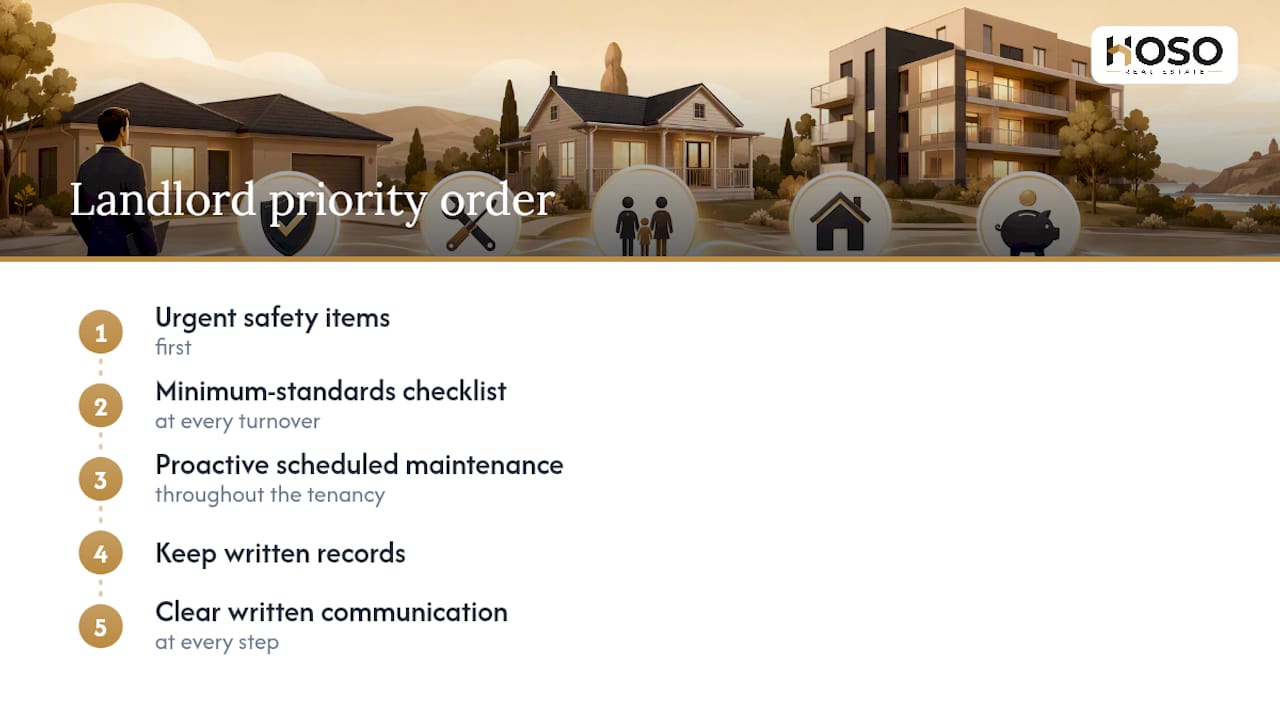
The priority order is simple: urgent safety items first, minimum-standards checklist at every turnover, proactive scheduled maintenance throughout the tenancy, and clear written communication at every step.
HOSO Real Estate manages SA landlord compliance so you don't have to
Staying across every obligation in the Residential Tenancies Act 1995 (SA) while managing a property from interstate, overseas, or simply from a busy schedule in Adelaide is where most landlords accumulate risk. HOSO Real Estate's property management services are built around the exact obligations covered in this guide: pre-tenancy compliance audits against the Housing Improvement Regulations, smoke alarm scheduling, a trusted trades network with documented response times, routine inspections with written reports, rent ledger management, and tenant communications that meet statutory requirements.
Landlords who come to HOSO typically start with a compliance audit of their current property, a handover checklist, and a 90-day maintenance plan. That first 90 days closes the gaps before they become SACAT applications. To speak with a HOSO landlord advisor or request a compliance audit, visit the HOSO services page.
Sources
Every obligation in this guide traces back to primary legislation or a government body. These are the sources to check when you need the authoritative text.
- Consumer and Business Services — Minimum housing standards
- Sa
- Housing Safety Authority — property owners and landlords
- Law Handbook — the landlord's obligations
- Residential Tenancies Act 1995 (SA) — s 68
How to use these sources: CBS and SA.GOV.AU are the starting point for practical guidance. AustLII carries the full legislative text for statute references. The Law Handbook translates the law into plain language. SACAT's website covers tribunal procedures if a dispute reaches that stage. Budget for rental property maintenance using the obligations in these sources as your planning baseline.
This article is general information, not a substitute for advice from a qualified lawyer. Consult a qualified legal professional about your own circumstances before acting on anything here.