
Proactive maintenance scheduling is the practice of planning and completing property upkeep before faults occur, rather than waiting for tenants to report problems. For landlords in South Australia, this approach directly protects asset value, supports compliance with the Residential Tenancies Act 1995 (SA), and reduces the risk of costly emergency repairs. The core benefits are clear:
- Preserves long-term property value by addressing wear and tear early
- Supports tenant safety and satisfaction through reliable upkeep
- Reduces legal exposure under SA tenancy law by demonstrating reasonable diligence
- Prevents lease disputes by keeping premises in a reasonable state of repair
- Creates a documented maintenance history that protects landlords in SACAT proceedings
- Lowers the frequency and cost of emergency call-outs through routine servicing
Landlords who treat maintenance as asset protection rather than a cost centre consistently see better tenant retention and fewer tribunal disputes.
How does proactive maintenance differ from reactive maintenance?
Reactive maintenance means fixing problems after they occur. A tenant reports a burst pipe, a broken heater, or a failed smoke alarm, and the landlord responds. Proactive maintenance, by contrast, means scheduling inspections and servicing before faults develop.

The practical difference shows up in cost and control. Reactive repairs tend to be urgent, which limits your choice of tradesperson, inflates labour costs, and puts tenants in a difficult position. Proactive scheduling lets you select licensed contractors in advance, obtain competitive quotes, and time work to minimise disruption.
Proactive maintenance characteristics:
- Planned, calendar-driven inspections and servicing
- Routine tasks: gutter cleaning, smoke alarm testing, HVAC filter replacement
- Seasonal checks: roof integrity before winter, air conditioning before summer
- Compliance audits: electrical safety, gas appliance checks, minimum housing standards
Reactive maintenance characteristics:
- Triggered by tenant reports or visible failure
- Higher average repair costs due to urgency
- Limited tradesperson choice and scheduling flexibility
- Greater legal risk if the landlord is slow to respond
Shifting from reactive to proactive scheduling also changes tenant behaviour. Tenants in well-maintained properties are more likely to report minor issues early, which prevents small faults from escalating into expensive structural or compliance problems.
What are your legal obligations as a landlord in South Australia?
South Australian landlords carry clear statutory duties under the Residential Tenancies Act 1995 (SA). Section 68 requires landlords to keep premises in repair throughout the tenancy, having regard to the property's age, character, and prospective life. This obligation exists regardless of whether the tenant knew about any disrepair before moving in.
From 1 July 2024, landlords must also comply with minimum housing standards under the Housing Improvement Act 2016 (SA) at the commencement of every tenancy. If a property does not meet these standards, a tenant may require urgent repairs or, in serious cases, terminate the tenancy.
Key statutory obligations include:
- Providing premises in a reasonable state of cleanliness and repair at tenancy commencement (s 67, s 68)
- Maintaining essential appliances, hot water systems, and structural elements throughout the tenancy
- Complying with all building, health, and safety standards affecting the premises (s 68(1)(b))
- Responding to urgent repairs with reasonable diligence, with best practice being contact within 24 hours
- Giving at least 48 hours' notice before entering to carry out non-emergency repairs
- Maintaining locks and security devices in working order
- Providing written notification of any change of address to tenants within 14 days (s 48)
The Act specifies that a landlord is not in breach of repair obligations until they have notice of a defect and then fail to act with reasonable diligence. Proactive inspections create what amounts to internal notice, giving you control over timing and tradesperson selection before a tenant formally reports a fault. That distinction is where maintenance planning for landlords directly reduces legal exposure.
Pro Tip: Keep a pre-vetted list of licensed plumbers, electricians, and locksmiths. When an urgent repair arises, you can respond immediately with a trusted contractor rather than scrambling for anyone available.
How to build an effective maintenance schedule for your rental property
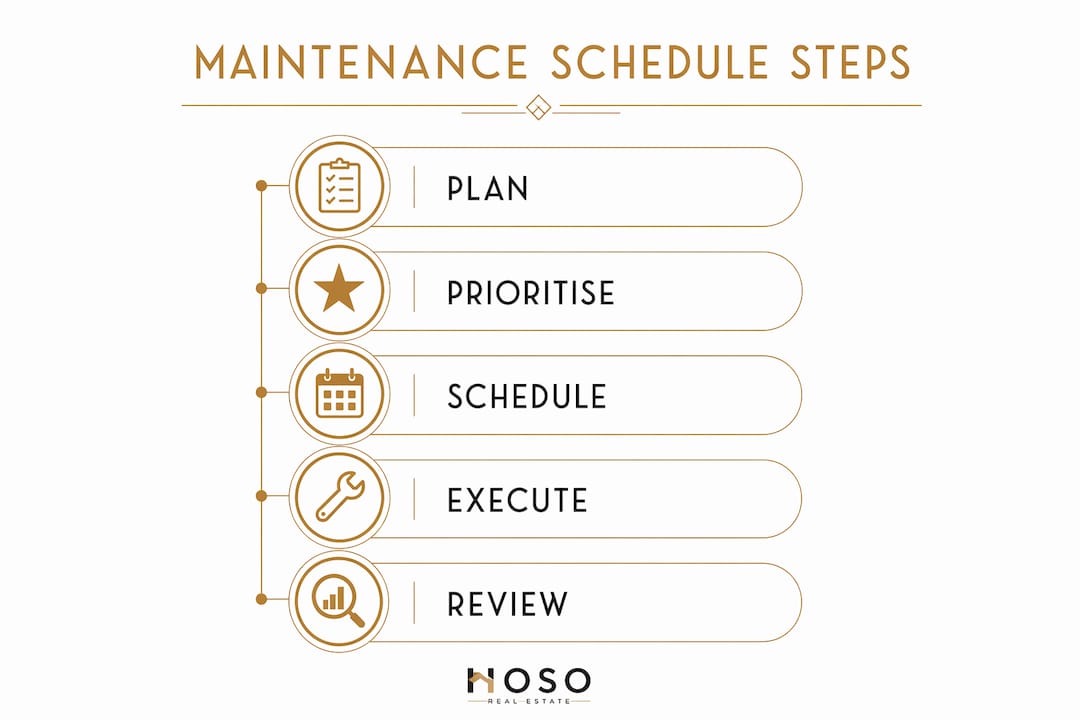
A well-constructed maintenance schedule runs across 12–24 months and maps tasks to tenancy milestones, seasonal conditions, and compliance deadlines. Start by auditing the property's age, construction type, and known risk areas, then assign tasks to specific calendar windows.
Priority triage system
Not every maintenance item carries the same urgency. A three-tier system keeps scheduling manageable:
| Priority | Category | Action Required |
|---|---|---|
| 1 | Defect | Immediate attention, safety or habitability risk |
| — | Requires maintenance | Schedule promptly |
| — | Satisfactory | Log and review at next inspection |
This triage approach prevents low-priority items from consuming the same urgency as genuine safety defects, and gives you a defensible record of how each issue was categorised and actioned.
12-month scheduling framework
- January to February: Air conditioning service, pest inspection, check external paintwork for UV damage
- March to April: Gutter cleaning, roof inspection ahead of winter, check drainage and downpipes
- May to June: Heater and gas appliance service, smoke alarm test, check door and window seals
- July to August: Mid-year routine inspection, plumbing check, assess any storm damage
- September to October: Spring inspection, check for mould or moisture damage, garden maintenance
- November to December: Pre-summer air conditioning check, annual compliance audit, lease renewal review
Smoke alarms, gutters, plumbing, electrical systems, and pest control should be checked at intervals tailored to the system type and property age. Automated tracking tools and digital checklists help maintain consistency across multiple properties and provide a timestamped record for compliance purposes.
Budgeting for scheduled maintenance
Allocating a maintenance reserve as a percentage of annual rental income is standard practice for experienced landlords. Older properties and those in coastal suburbs like Glenelg typically require higher reserves due to accelerated wear from salt air, which increases the frequency of paint, lock, and metalwork checks. Character homes in suburbs like Unley often need targeted sub-floor ventilation and chimney maintenance that modern builds do not.
Practical strategies for executing maintenance and communicating with tenants
Effective execution depends on two things: reliable contractors and clear tenant communication. Neither works well in isolation.
Contractor coordination
Vet tradespeople before you need them urgently. Confirm licensing, insurance, and availability for both scheduled and emergency work. Obtain at least two quotes for any non-urgent job above a reasonable cost threshold, and keep written records of all quotes, approvals, and completed work. A trusted trades register means you are never negotiating with an unknown contractor under time pressure.

For building managers handling multiple properties, automated package and access management systems can also reduce ad hoc contractor coordination by centralising entry and compliance records.
Tenant communication protocols
Tenants who understand the maintenance process are less likely to arrange unauthorised repairs. Under SA law, if a landlord is unreachable during an urgent repair situation, a tenant may engage a licensed tradesperson and recover costs from the landlord. Providing a clear, written after-hours contact process at the start of the tenancy reduces this risk directly.
Practical communication steps:
- Provide tenants with a written maintenance protocol at lease commencement, including after-hours contact details
- Notify tenants of scheduled maintenance at least 48 hours in advance, in writing
- Encourage early reporting of minor issues through a simple, accessible reporting process
- Acknowledge maintenance requests promptly, even if the repair is not yet scheduled
- Follow up after completed work to confirm the issue is resolved
Transparent communication reduces the likelihood of tenants escalating minor issues to Consumer and Business Services or SACAT. It also builds the kind of tenancy relationship where property oversight becomes collaborative rather than adversarial.
South Australian best practices for inspections, records, and compliance documentation
Australian best practice recommends at least two formal routine inspections per year, timed to address seasonal risks before winter and summer. In South Australia, landlords may conduct up to four routine inspections annually, with written notice of 7–28 days required for each entry.
Tailoring inspection frequency to property type
Standard biannual inspections suit most modern properties in suburbs like Norwood or Prospect. Higher-risk properties warrant more frequent checks:
- Coastal properties (Glenelg, Brighton, Henley Beach): quarterly checks for salt corrosion on paint, locks, and metalwork
- Older character homes (Unley, Malvern, Goodwood): targeted inspections for sub-floor ventilation, chimneys, and heritage materials
- Properties with pools or large gardens: seasonal safety and maintenance checks aligned with SA pool fencing regulations
- High-occupancy or multi-tenancy properties: more frequent common area and structural reviews
Leading landlords adjust inspection schedules based on property age and risk profile rather than fixed calendar dates alone. This approach, sometimes called a maintenance pulse, means a 1960s brick veneer in Clarence Park gets different attention than a 2020 townhouse in Mawson Lakes.
Documentation as legal protection
Every inspection and maintenance action should be documented with timestamps, photographs, and written technician reports. This record serves as direct evidence of reasonable diligence in any SACAT dispute.
Documenting no-action inspections matters as much as recording completed repairs. A log showing the property was inspected and found satisfactory on a given date is evidence that the landlord was actively monitoring the premises. Landlords who skip this step weaken their position even when no fault existed at the time.
A complete maintenance record includes:
- Date and time of each inspection, with the inspector's name
- Photographs of all areas inspected, including areas found satisfactory
- Written notes categorising each finding (Satisfactory, Requires Maintenance, Defect)
- Copies of all maintenance requests received from tenants, with response dates
- Invoices, quotes, and technician reports for all completed work
- Confirmation of smoke alarm tests, safety checks, and compliance audits
Digital property management platforms allow landlords to store and retrieve this documentation quickly. For landlords managing disputes through SACAT, a well-maintained compliance record is the most direct protection available. Without it, even a landlord who acted in good faith can struggle to demonstrate reasonable diligence.
Key takeaways
Proactive maintenance scheduling protects rental property value, reduces legal exposure under the Residential Tenancies Act 1995 (SA), and gives landlords control over costs, timing, and contractor selection.
| Point | Details |
|---|---|
| Schedule at least twice yearly | Australian best practice recommends at least two formal routine inspections per year, timed before winter and summer. |
| Use a three-tier triage system | Categorise every finding as Defect, Requires Maintenance, or Satisfactory to prioritise repairs and document decisions. |
| Document every inspection | Timestamped photos and technician reports are the primary legal defence in SACAT disputes, including no-fault inspections. |
| Tailor frequency to property type | Coastal and older character properties in suburbs like Glenelg and Unley require more frequent checks than modern builds. |
| Provide tenants a written maintenance protocol | A clear after-hours contact process at lease start reduces the risk of tenants arranging unauthorised urgent repairs. |
Let HOSO Real Estate manage your maintenance schedule
HOSO Real Estate handles maintenance coordination, routine inspections, compliance documentation, and tenant communication for landlords across Adelaide. If you want a property management team that treats your portfolio with the same care you do, explore our property management services or contact HOSO Real Estate directly to discuss your property.