
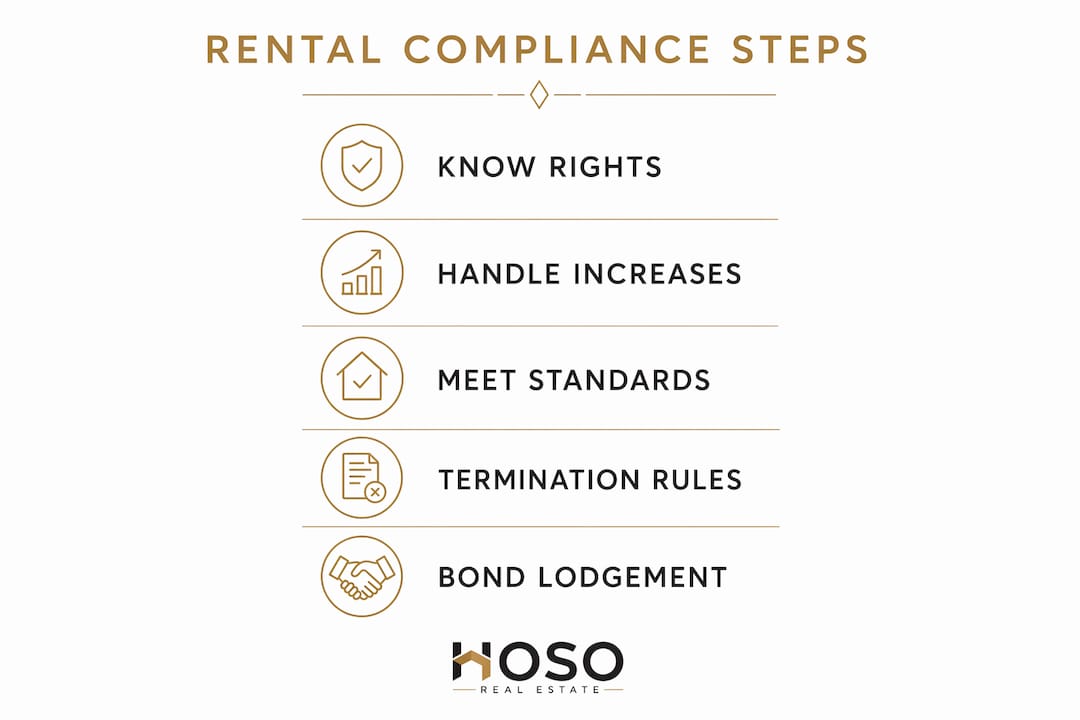
Adelaide landlords must complete five actions now: install and interconnect smoke alarms that comply with Australian Standard 3786 and keep dated test logs; maintain properties to minimum housing standards under the Housing Improvement Act 2016; adopt Form A1 for every tenancy application from 1 January 2026; lodge all bonds with Consumer and Business Services; and serve inspection notices within the legally prescribed notice period. Non-compliance with any of these exposes you to SACAT proceedings, penalties apply for smoke alarm breaches as stipulated by law, and potential listing on the Housing Safety Authority's public register.
Immediate action list:
- Test every smoke alarm today and record the date, result, and battery status in a maintenance log.
- Download Form A1 from Consumer and Business Services and update your application workflow before 1 January 2026.
- Lodge any outstanding bond through Residential Bonds Online.
- Confirm your last routine inspection was properly noticed and documented.
- Check the South Australian Substandard Property Register before your next acquisition or re-let.
Key compliance authorities:
- Metropolitan Fire Service (MFS): smoke alarm standards and maintenance guidance
- Housing Safety Authority: minimum habitability standards and the public register
- SACAT: dispute resolution for tenancy breaches, terminations, and bond claims
- Consumer and Business Services (SA): bond lodgement, prescribed forms, and reform updates
Pro Tip: Include a documented maintenance schedule in the lease agreement itself. Dated records of every test, repair, and inspection are your primary defence at SACAT.
Table of Contents
- What rights do tenants have under Adelaide rental laws?
- How do you handle rent increases correctly in South Australia?
- What environmental and energy efficiency standards apply to Adelaide rentals?
- How do termination processes work under the current SA reforms?
- How does bond lodgement work in South Australia?
- HOSO Real Estate keeps your Adelaide property compliant
- Key takeaways
What rights do tenants have under Adelaide rental laws?
Under the Residential Tenancies Act 1995, tenants in Adelaide hold a defined set of rights that directly shape your obligations as a landlord. They are entitled to a property that meets minimum housing standards before occupation begins, maintained in reasonable repair throughout the tenancy. Privacy is protected: routine inspections are capped at four per year, with 7–28 days' written notice required for each entry.
Tenants can request repairs in writing and, if a landlord fails to act, can apply to SACAT for orders. They also have the right to quiet enjoyment, meaning you cannot enter without proper notice except in a genuine emergency. The 2025–2026 reforms strengthened these protections, so landlords who rely on informal arrangements rather than prescribed processes face greater exposure. Understanding tenant rights in SA is not optional reading; it defines the boundaries of your legal duties.
How do you handle rent increases correctly in South Australia?
Rent increases are limited to once every 12 months under the reforms. You must advertise and charge a fixed rent amount without ranges or offers above this amount; soliciting offers above the advertised price is prohibited. When increasing rent, you must give the tenant written notice of the new amount and the date it takes effect, with the required notice period observed.

Keep a copy of every rent increase notice. If a tenant disputes the increase at SACAT, your written record is the evidence that determines the outcome.
What environmental and energy efficiency standards apply to Adelaide rentals?
The Residential Tenancies Regulations 2025 introduced minimum efficiency standards for rental properties under sections 68A and 105PA of the Act. These provisions set baseline requirements for appliances and fittings, with the intent of reducing energy costs for tenants. Landlords should confirm that hot water systems, heating, and cooling appliances in their properties meet the prescribed standards before the next tenancy commences.
Conducting rental property due diligence before re-letting is the practical way to catch non-compliant appliances early, avoiding orders or compensation claims later.
How do termination processes work under the current SA reforms?
Since the reforms, landlords can only end a tenancy on prescribed grounds, with extended notice periods. Ending a fixed-term tenancy at expiry requires 60 days' notice. Periodic tenancies require a specified ground and the correct form from Consumer and Business Services.
For breach-based terminations, you must issue the correct form (Form 5 for breach leading to termination), allow the remedy period, and document every step. Drug contamination requires testing within one month and remediation as soon as reasonably practicable. SACAT will scrutinise your paperwork; a missing form or incorrect notice period can void the termination entirely.
How does bond lodgement work in South Australia?
All bonds must be lodged with Consumer and Business Services, not held by the landlord or agent. Lodgement is completed through Residential Bonds Online. The bond lodgement process must occur promptly after the tenancy begins; holding a bond outside the system is a breach of the Residential Tenancies Act.
At the end of a tenancy, both parties can agree on the bond distribution through Residential Bonds Online. If there is a dispute, either party applies to SACAT. Your inspection reports, dated photographs, and repair invoices are the evidence that supports a successful claim.
HOSO Real Estate keeps your Adelaide property compliant
Adelaide's compliance obligations have grown more specific since the 2025–2026 reforms, and the documentation burden falls directly on the landlord. HOSO Real Estate manages that burden for property owners across Adelaide, from inner suburbs like Norwood and Unley to growth corridors in the north and south.
HOSO's property management services cover compliance audits, smoke alarm and fire-safety checks coordinated with qualified contractors, documented maintenance scheduling, Form A1 handling, routine inspection management with correct notice periods, and dispute-preparedness support aligned with Consumer and Business Services, the Housing Safety Authority, and MFS standards. Every inspection report, test log, and repair invoice is retained in a format ready for SACAT.
Pro Tip: Proactive professional checks for electrical, gas, and pool barriers, coordinated through HOSO, create the continuous compliance record that protects your asset's leasability and value.
Contact HOSO Real Estate to request a compliance audit for your Adelaide investment property.
Key takeaways
Adelaide rental compliance requires documented, prescribed processes across smoke alarms, bond lodgement, Form A1 applications, and termination notices, with SACAT as the enforcement mechanism for every breach.
| Point | Details |
|---|---|
| Smoke alarm compliance | Alarms must meet Australian Standard 3786; fines up to $750 apply for non-compliance. |
| Form A1 mandatory from 2026 | Every tenancy application must use Form A1 from 1 January 2026 or the landlord is in breach. |
| Rent increases capped | Rent can only be increased once every 12 months; written notice is required every time. |
| Bond lodgement is non-negotiable | All bonds must be lodged with Consumer and Business Services via Residential Bonds Online. |
| HOSO Real Estate | Manages compliance audits, maintenance records, Form A1 handling, and SACAT dispute preparation for Adelaide landlords. |