
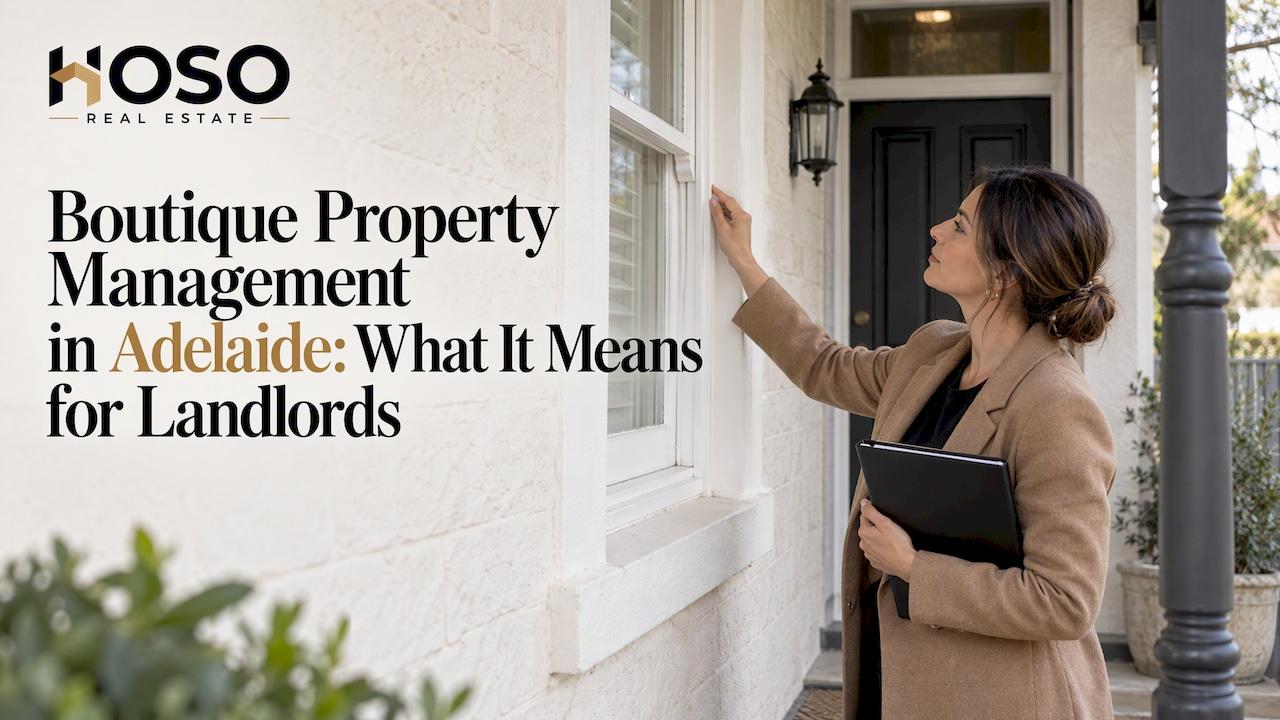
Boutique property management is a smaller, more hands-on way of running a rental. A limited number of properties per manager, one accountable contact, tight compliance and careful tenant selection replace the high-volume model. For an Adelaide landlord, the test is not the label. It is whether the agency can show you the workload, the systems and the reporting behind it. At HOSO Real Estate we manage property only and do not run a sales business, so every system we build is aimed at the rental performing for you.
This guide explains what the term should mean in practice, what to ask before you sign a management agreement, and how South Australian rules raise the stakes for owners who are busy, interstate or building a portfolio.
TL;DR
- A boutique agency is defined by workload and accountability: fewer properties per manager and a named person who knows your property.
- Agencies nationally have grown larger, with an average of 563 properties each at the end of 2016 per a Macquarie survey, so a smaller book is a real difference.
- South Australian penalties and minimum housing standards mean compliance capability is a core selection criterion, not an extra.
- Ask how tenants are screened, how repairs are approved and verified, and how you will see your property's performance.
- Set your involvement level in writing: what the manager can approve without calling you, and how fast you hear about arrears.
Table of Contents
- What boutique property management actually means
- Why a specialist rental agency suits Adelaide investors
- South Australian compliance: the reason detail matters
- Tenant quality is the biggest lever on your return
- Maintenance control and asset protection
- Communication: what you should expect to receive
- How to judge whether an agency is genuinely boutique
- Is boutique management right for your property?
- Our view: management is stewardship
- Talk to HOSO about your Adelaide rental
- FAQ
- Sources
What boutique property management actually means
No law or licence defines "boutique". In practice it describes an agency that keeps its portfolio deliberately sized to the team, so each manager can give every landlord and property real attention. Michael Yardney, writing for Canstar, notes that at boutique agencies a manager may look after about 100 to 150 properties, against up to 200 at busy agencies. He adds that landlords often find the more attentive service translates into a trouble-free investment.
The wider industry has moved the other way. A Macquarie benchmarking report based on a November 2016 survey of 430 agency owners found agencies managed an average of 563 properties each, up from 375 in 2009. The median was 101 properties per property management full-time equivalent. The report is a decade old, but it shows the direction: rent rolls grow, and the individual landlord can become one line in a very long list.
What a landlord should take from this is simple. Boutique is a promise about attention, and attention can be tested. You can ask how many properties your manager looks after, how long they have been managing, and who covers when they are away.
Boutique versus conventional: where owners feel the difference
| Area | High-volume model | Boutique model |
|---|---|---|
| Contact | Whoever answers the phone or a shared inbox | One accountable manager who knows the property |
| Tenant selection | Speed to fill the vacancy | Depth of screening before a lease is offered |
| Inspections | Completed to a schedule | Reported with context and follow-up |
| Compliance | Checked when an issue arises | Checked before the tenancy starts and tracked through it |
| Owner visibility | Periodic statements | Ongoing access to property information |
The table describes the model, not a guarantee from any single agency, which is why the questions later in this article matter.
Why a specialist rental agency suits Adelaide investors
Many agencies run sales and rentals side by side. Sales teams chase listings and commissions on a different cycle to a rental that needs steady attention month after month. We focus exclusively on property management and do not sell property, so our team's time goes into leasing, inspections, maintenance and compliance for the owners we serve.
That focus matters most for three kinds of owner.
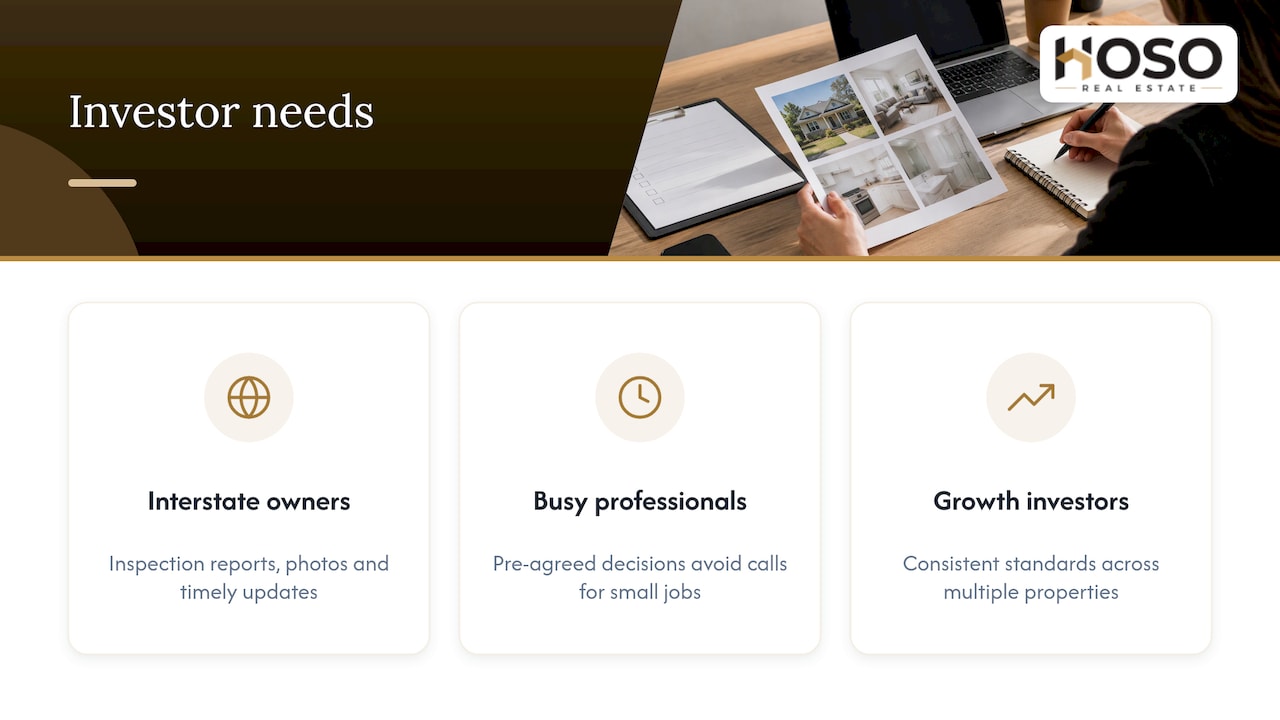
Interstate and overseas owners. You cannot walk through the property, meet a tradesperson or read a tenant's reaction. You depend on what your manager reports. Clear inspection reports, photographs and timely updates replace your own eyes.
Busy professionals. The aim is hands-off ownership. That only works when decisions are pre-agreed, so the manager does not need to phone you for every small job.
Growth-focused investors. When you add a second or third property in suburbs such as Prospect, Glenelg, Mawson Lakes or Unley, you need consistent standards across the portfolio and one place to see how each asset is going.
API Magazine's September 2025 piece makes a similar point: the manager you choose can make or break returns. It suggests looking for a track record of low vacancy and quick leasing, proactive compliance knowledge, and a single point of contact with clear inspection reporting. It also suggests asking whether key tasks are done in-house or outsourced.
South Australian compliance: the reason detail matters
South Australia's tenancy rules have tightened in recent years. According to Landlord Wise's April 2026 summary of the Residential Tenancies Act, from 1 March 2024 maximum penalties rose sharply, for example to $25,000 for failing to provide the Tenant Information Guide and $35,000 for failing to lodge a bond. From 1 July 2024, no-grounds terminations were removed, minimum housing standards began applying, and routine inspections were capped at four a year. The summary also notes new regulations from 1 September 2025 and Form A1 rental applications becoming mandatory from 1 January 2026. Check the current requirements with Consumer and Business Services (CBS), the state regulator, for your own tenancy.
The legal responsibility for these matters sits with you as the landlord. In practice, the person running the tenancy carries them out. ConditionHQ's David Yu makes the point that under SA's minimum housing standards, practical responsibility for pre-tenancy compliance sits with the property manager, while the breach falls on the landlord. Compliance capability is therefore one of the most important things to look for in an agency.
What this means for you:
- Ask how compliance is checked before a tenancy starts, not just after a problem appears. Our guide to room checks before a tenancy for minimum housing standards shows what a thorough check looks like.
- Ask who prepares the condition report, the notices and the bond lodgement, and how those are recorded.
- Ask how inspections are scheduled around the four-a-year limit. Our article on the four inspections rule and avoiding SACAT explains the practical approach. SACAT is the South Australian Civil and Administrative Tribunal, which hears tenancy disputes.
- Read the wider picture in Adelaide rental compliance requirements explained and landlord obligations in South Australia.
When an agency handles compliance as a system, the work is done in the background and you see a clean record. When it is handled ad hoc, you find out through a dispute.
Tenant quality is the biggest lever on your return
A good tenant pays on time, treats the home with care and stays. A poor match costs you in arrears, damage and vacancy. Selection is therefore the part of management that rewards the most care.
Our HPTS tenant screening is an exclusive four-layer system built for this purpose. We also offer a drug testing service for owners who want it as part of selection. These sit alongside premium advertising on the major portals, which brings a stronger pool of applicants to choose from.
South Australia limits what a landlord or agent may ask applicants for. Landlord Wise's summary says applicant information is limited to two documents per category, and that the prescribed Form A1 is used for applications. A disciplined process works within those limits and still reaches a confident decision, because it is built on consistent steps applied to every applicant rather than on a hunch.
Pets are another point where process matters. The same summary notes that pet applications require a response within 14 days, so a manager who tracks timeframes protects you from avoidable breaches.
Maintenance control and asset protection
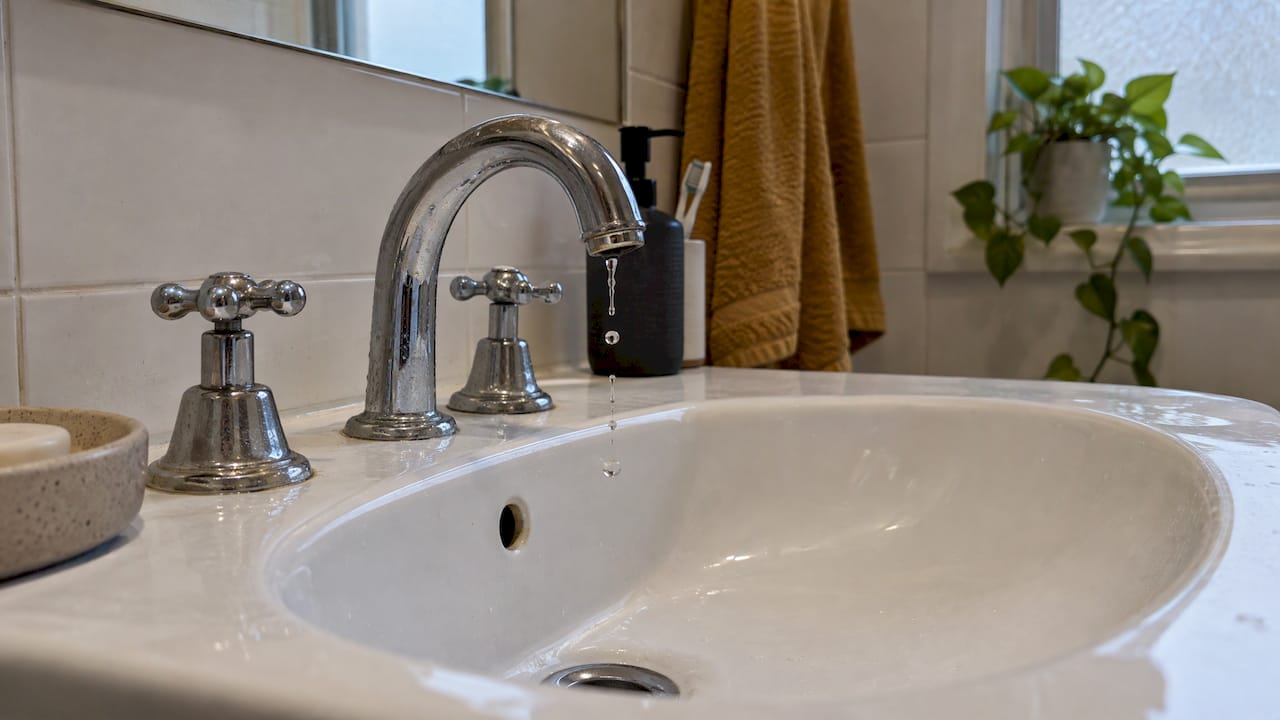
A rental loses value quietly: a leaking tap left for weeks, a roof issue noticed late, a worn finish no one flags. Premium rentals attract tenants who expect a high standard, and they stay longer when repairs are handled promptly.
The practical mechanism is a clear approval arrangement. Canstar's article suggests you explain how involved you want to be and agree what the manager can do without referring back to you, such as a set repair approval limit. Agree that limit in writing, along with how urgent repairs are handled out of hours.
A good maintenance process has four parts:
- The tenant lodges the request through a single channel and receives acknowledgement.
- The manager assesses urgency and arranges a qualified trade within your agreed limit.
- The work is verified, with photos where appropriate, before it is closed.
- You see the outcome in your records.
Our luxury rental property maintenance standards guide goes deeper on what a higher-end rental needs. Maintenance coordination is part of what we do for owners, so the arrangement above is one we can set up with you at the start.
Communication: what you should expect to receive
Responsiveness is the most common complaint landlords raise about conventional agencies. The cure is not more calls. It is agreed expectations and a system that makes information available without chasing.
Before you sign, decide with your manager:
- How quickly you want to hear about late rent.
- Which repairs need your approval and which do not.
- How you want inspection results delivered.
- Who you contact, and what response time is reasonable.
We provide a 24/7 owner portal so you can see your property's information when it suits you, whether you are in Adelaide, interstate or overseas. Our piece on tenant communication professional standards for SA landlords explains how consistent, documented tenant communication reduces disputes.
If you track rental income and expenses for tax, it also helps to compare statements against your own records. A rental property income and expense tracking guide can help you set up a simple routine so you know what to expect from your reports and what to raise with your manager. Speak to your accountant for tax advice specific to your situation.
How to judge whether an agency is genuinely boutique
Bring these questions to any agency, including ours. They draw on the checks in the Canstar and API Magazine guidance above.
- How many properties does my manager look after? A figure in the 100 to 150 range or lower is consistent with the boutique pattern Canstar describes.
- Who will I deal with day to day, and can I meet them?
- How are tenants screened, and what do you do beyond the standard application?
- How do you check compliance before a tenancy and during it?
- How are repairs approved, carried out and verified?
- What happens when rent is late, and how soon will I know?
- How do I see my property's performance at any time?
- Are the key tasks done in-house or outsourced?
Write the answers into your management agreement. A specific agreement is the best protection for both sides, and a good agency welcomes it.
Is boutique management right for your property?
It suits most owners who value their asset and their time. It is particularly well matched to:
- Owners with one investment property who want it handled properly from the first lease.
- Owners of premium or higher-value homes, where tenant quality and presentation drive the result.
- Interstate and overseas investors who need clear reporting.
- Investors with several properties who want one consistent standard across the portfolio.
PropPy's guide suggests that boutique agencies managing 50 to 100 properties in concentrated areas can outperform large franchises, and that investors with seven or more properties often return to professional management. Treat it as a general guide rather than a rule: what matters is the match between your goals and the agency's way of working.
A rental appraisal is a sensible first step, because it gives you a realistic view of the rent your property can achieve and how it would be presented to the market.
Our view: management is stewardship
We believe a rental property is a portfolio asset, and it should be run like one. That is the idea behind our line, "Your Portfolio. Our Craft."
Most landlords who come to us are not unhappy with the idea of an agent. They are unhappy with distance: a manager they cannot name, updates that arrive late, and compliance they only hear about when something goes wrong. We built our approach to answer that.
We manage property and nothing else, so our attention is not split with a sales desk. Our four-layer HPTS tenant screening is designed to put the right person in your home. Our 24/7 owner portal is designed so you can see your property without asking. Our 60-day satisfaction guarantee reflects our confidence that owners will see the difference early.
South Australia's rules ask more of landlords than they did a few years ago. We think the right response is a manager who treats compliance, inspections and maintenance as one routine, and who tells you plainly what is happening with your property.
HOSO
Talk to HOSO about your Adelaide rental
We provide full property management for Adelaide landlords and investors, including tenant placement, rent collection, maintenance management, lease administration and property inspections. If you are weighing your options, start with a rental appraisal and see how your property would be positioned. You can also look at our recently leased properties to see the standard we present to the market.
FAQ
Is boutique property management only for high-value properties?
No. The approach is about attention and accountability, so it suits any rental where the owner wants careful tenant selection, reliable reporting and consistent compliance. Premium homes benefit particularly because tenant quality and presentation have a bigger influence on the result.
Does a smaller agency have the systems of a large one?
It can, and you should ask. Look for an owner portal, a documented screening process, a repair approval and verification routine, and a clear compliance checklist. A smaller team that uses modern systems can combine them with a manager who knows your property personally.
What should I put in writing before signing a management agreement?
Specify the services you expect, how often inspections occur within South Australia's four-a-year limit, how quickly you are told about late rent, and the repair amount your manager can approve without contacting you. Canstar's guidance on setting a repair approval limit is a useful starting point.
I live interstate. Can I still manage an Adelaide rental well?
Yes, provided your manager gives you clear visibility. Agree reporting, approval limits and contact arrangements at the start, and use an owner portal to see inspections and maintenance records. A manager who handles local compliance means you do not need to be in South Australia to meet your obligations.
Who handles tribunal matters if a dispute arises?
Tenancy disputes in South Australia go to SACAT. Ask your manager at the outset how they prepare for a possible hearing, including how condition reports, notices and communication are documented, since good records are what protect you.
Sources
- Canstar: How to choose a property manager for your investment
- Macquarie: 2017 Residential Real Estate Benchmarking Report
- API Magazine: The property manager you choose can make or break your investment returns
- Landlord Wise: Residential Tenancies Act SA
- ConditionHQ: SA Minimum Housing Standards
- PropPy: Choosing a property manager to maximise rental returns
- BAL Accounting: Rental property guide