
Professional property management is defined as the full-service oversight of a rental property by a licensed agent acting on behalf of the landlord. For South Australian landlords, this means a qualified professional handles tenant screening, maintenance coordination, legal compliance under the Residential Tenancies Act 1995, and SACAT proceedings. The question of why landlords need a property manager comes down to one core fact: the cost of getting it wrong almost always exceeds the cost of professional fees. A single eviction handled without expertise can cost between $3,500 and $10,000, which is more than most landlords pay in management fees across an entire year.
Why landlords need a property manager: the financial case
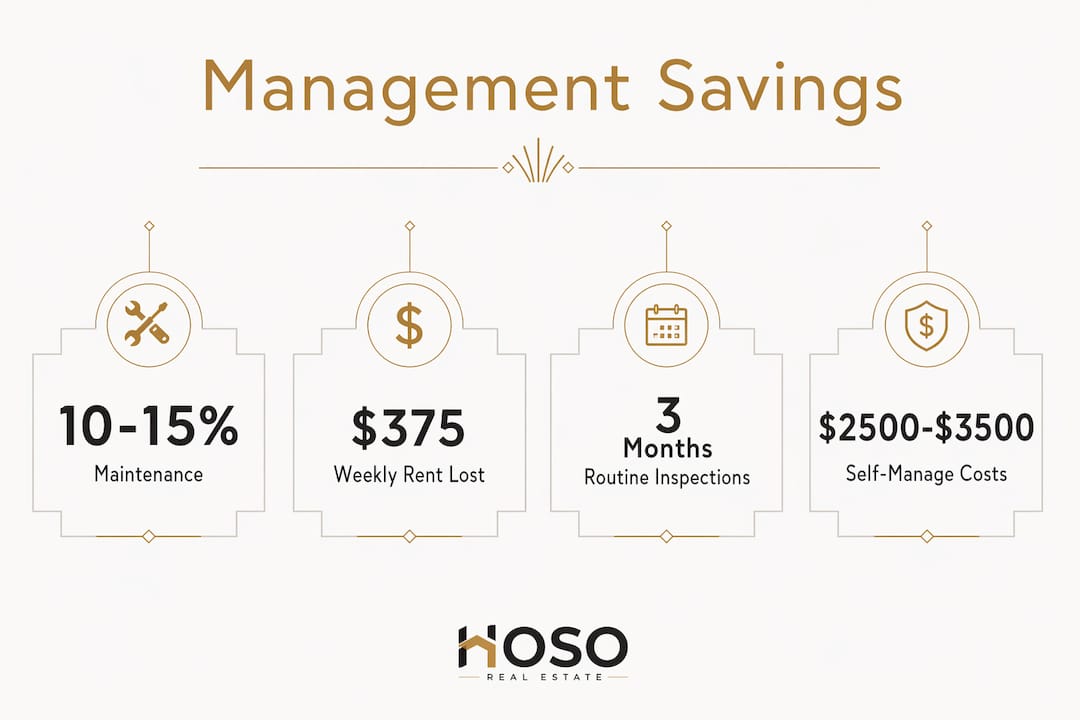
The financial argument for professional management is direct. Every week a property sits vacant costs a landlord money. On a $1,500 monthly rental, each vacant week costs $375 in lost income. That figure compounds quickly across a 30-day vacancy period, wiping out months of net rental return.
Professional property managers reduce vacancy periods through active marketing across multiple listing platforms, pre-qualified tenant databases, and fast turnaround on applications. The results are measurable. Reducing vacancy rates by 2% saves a landlord $384 annually on a $1,600 monthly rental. That saving alone offsets a significant portion of a typical management fee.

Tenant quality is the other side of this equation. A poorly screened tenant costs far more than a vacancy. Bad tenant avoidance through professional screening can save landlords $5,000–$20,000 over five years. Property managers use reference checks, rental history verification, income assessment, and tenancy database searches to filter applicants before a lease is ever signed.
The benefits of property management in this area include:
- Reduced time between tenancies through pre-qualified applicant pipelines
- Lower risk of rent arrears through income and employment verification
- Faster dispute resolution when issues arise during a tenancy
- Consistent lease renewals that reduce turnover costs
Pro Tip: Ask any property manager you are considering how they advertise vacancies and what their average days-on-market figure is. This single metric tells you more about their effectiveness than any brochure.
How maintenance coordination saves landlords money
Maintenance is where self-managing landlords consistently lose money. Without established contractor relationships, landlords pay retail rates for every repair. A professional property manager brings a network of licensed tradespeople who offer volume pricing in exchange for consistent referrals.
The numbers are concrete. Contractor network discounts typically reduce annual maintenance costs by 10–15%. On a typical Adelaide property with $2,000–$3,000 in annual maintenance spend, that equates to $200–$450 in savings each year. Those savings are recurring, not one-off.
The deeper advantage is the shift from reactive to proactive maintenance. A property manager schedules routine inspections, identifies minor issues before they become expensive repairs, and maintains records that protect landlords in any future dispute. A leaking tap left unattended becomes a water damage claim. A smoke alarm not tested becomes a compliance breach.
| Maintenance approach | Typical annual cost | Key risk |
|---|---|---|
| Self-managed, reactive | $2,500–$3,500 | Emergency call-out rates, delayed repairs |
| Professionally managed, proactive | $1,800–$2,800 | Lower, with scheduled inspections and preferred trades |
Pro Tip: Routine inspections every 3 months are standard practice for Adelaide property managers. Each inspection report creates a documented record that is invaluable if a bond dispute reaches SACAT.
Legal compliance and risk management in South Australia
South Australian tenancy law is detailed and non-negotiable. The Residential Tenancies Act 1995 governs everything from bond lodgement with Consumer and Business Services to notice periods for entry, rent increases, and lease termination. A landlord who mishandles any of these steps faces SACAT hearings, financial penalties, and potential compensation orders.
Mishandling security deposits or failing to follow correct notice procedures are among the most common and costly landlord errors. Professional property managers use standardised documentation, templated notices, and compliance checklists to eliminate these risks. Every communication is recorded. Every notice is issued correctly and on time.
The risks of non-compliance in South Australia include:
- Bond disputes escalated to SACAT due to incorrect condition reports
- Unlawful entry claims arising from insufficient notice to tenants
- Rent increase disputes from incorrect notice periods or frequency
- Termination orders set aside because of procedural errors in breach notices
A single mishandled eviction case can cost landlords thousands, easily exceeding years of saved management fees.
For landlords managing properties in suburbs like Norwood, Prospect, or Glenelg, where tenant demographics include professionals and families with strong awareness of their rights, compliance precision is not optional. It is the baseline. Professional managers also stay current with 2026 compliance updates, including any legislative changes affecting minimum housing standards, energy efficiency disclosures, and rental bond processes. Many landlords underestimate legal risks around bond handling. Professional managers reduce that exposure by standardising every process from day one.
When is hiring a property manager most valuable?
Self-management is viable for a small number of landlords: those with one local property, significant free time, and genuine knowledge of tenancy law. Beyond that narrow profile, the case for professional management strengthens considerably.
-
Multiple properties. Management workload grows non-linearly with portfolio size. Managing 10 properties requires 3–4 times more effort than managing 5. Overlapping maintenance requests, simultaneous lease renewals, and compounding tenant issues create a management burden that exceeds most landlords' capacity.
-
Remote ownership. Landlords based interstate or overseas cannot respond quickly to maintenance issues, conduct inspections, or attend SACAT hearings. A local property manager in Adelaide handles all of this on your behalf, with no gap in oversight.
-
Time-poor professionals. The opportunity cost breakeven for self-management sits at 3–5 hours per month. Beyond that threshold, a landlord earning $50 per hour is losing money by managing their own property. For professionals earning above that rate, the calculation is even clearer.
-
High-value assets. A property in Burnside, Unley, or North Adelaide represents a significant capital asset. The risk of a compliance error, a bad tenant, or a poorly managed maintenance issue is proportionally higher. Professional oversight protects that value.
Pro Tip: If you are spending more than one hour per week on your rental property, run the numbers. Calculate your hourly rate and multiply it by your monthly management hours. Compare that figure to a typical management fee. The result is usually decisive.
The role of property managers in investment extends beyond day-to-day tasks. A good manager advises on rent reviews, identifies capital improvement opportunities, and provides market intelligence that supports long-term portfolio decisions. That advisory function is difficult to replicate through self-management.
Key takeaways
Professional property management pays for itself through vacancy reduction, maintenance savings, and legal risk mitigation, making it a sound financial decision for most South Australian landlords.
| Point | Details |
|---|---|
| Vacancy cost is real | Each vacant week on a $1,500 rental costs $375 in lost income. |
| Maintenance savings are recurring | Preferred contractor networks save $200–$450 annually on typical Adelaide properties. |
| Legal errors are expensive | A mishandled eviction costs $3,500–$10,000, often exceeding years of management fees. |
| Portfolio complexity grows fast | Managing 10 properties requires 3–4 times more effort than managing 5. |
| Time has a dollar value | Self-management beyond 3–5 hours per month reduces overall portfolio profitability. |
The real cost of doing it yourself
Most landlords who self-manage do so because they believe they are saving money. That belief is rarely accurate once you account for the full picture.
The management fee is visible. The cost of a three-week vacancy, a poorly drafted breach notice, or a $4,000 repair that a preferred contractor would have handled for $2,800 is not visible until it has already happened. By then, the saving has been spent twice over.
What I have observed consistently is that landlords who treat management fees as an investment rather than an expense make better decisions across the board. They rent to better tenants, maintain their properties more consistently, and avoid the SACAT hearings that consume time and money in equal measure. The landlords who self-manage successfully are the exception, not the rule. They tend to have backgrounds in law, trades, or property, and they manage one or two local properties where they can respond quickly. For everyone else, professional management is not a luxury. It is the more financially sound choice.
South Australian compliance requirements in 2026 add another layer of complexity that makes local expertise non-negotiable. The Residential Tenancies Act 1995 is not a document most landlords read closely. A property manager who works within it every day is a different kind of asset to your portfolio.
— HOSO
Property management in Adelaide: HOSO Real Estate
HOSO Real Estate provides professional property management services for landlords and investors across Adelaide, with a focus on compliance, tenant quality, and long-term asset performance.

Whether you own a single investment property in Prospect or a portfolio spread across the inner east, HOSO Real Estate brings the local knowledge, contractor networks, and legal expertise to manage it properly. From tenant screening and routine inspections to maintenance coordination and SACAT representation, every service is built around protecting your asset and your returns. View our recently leased properties to see the standard of management we deliver, or contact the team to discuss your portfolio.
FAQ
Why do landlords need a property manager?
Landlords need a property manager to reduce vacancies, manage legal compliance, and protect their asset from costly errors. A single mishandled eviction can cost between $3,500 and $10,000, which typically exceeds a full year of management fees.
What does a property manager do for a landlord?
A property manager handles tenant screening, lease preparation, rent collection, maintenance coordination, routine inspections, and compliance with South Australian tenancy law including SACAT proceedings.
How does a property manager reduce vacancy rates?
Property managers use active marketing, pre-qualified tenant databases, and fast application processing to fill vacancies quickly. Reducing vacancy rates by 2% saves a landlord $384 annually on a $1,600 monthly rental.
Is hiring a property manager worth the cost?
For most landlords, the answer is yes. Management fees are offset by vacancy savings, maintenance discounts, and avoided legal costs. Self-management beyond 3–5 hours per month reduces overall portfolio profitability when opportunity cost is factored in.
How do I choose a property manager in Adelaide?
Look for a licensed agent with demonstrated local market knowledge, clear fee structures, and a defined process for tenant screening and compliance. Ask for their average days-on-market figure and how they handle SACAT matters.