
Every residential rental property in South Australia must meet the prescribed minimum housing standards set out in the Housing Improvement Act 2016 and the Housing Improvement Regulations 2017. Landlords must ensure the property is structurally safe, sanitary, and connected to working water, electricity, and drainage before a tenancy starts. Tenants can request reasonable minor modifications in writing, and landlords cannot unreasonably refuse.
TL;DR:
- Most rental properties in South Australia must meet strict minimum standards for safety, sanitation, and utilities, regardless of age or construction date.
- Inspection, documentation, and prompt repairs, especially for safety hazards like damp, structural damage, or faulty doors and windows, are essential to maintain compliance.
- Kitchens, bathrooms, laundry, and living areas have specific plumbing, ventilation, and safety requirements that landlords must ensure before tenant occupancy.
- Tenants can request minor modifications in writing, and landlords cannot unreasonably refuse these requests, especially for disability-related changes.
- Regular pre-tenancy checks and ongoing maintenance are critical for landlords to avoid violation notices or legal orders, with professional support recommended for compliance management.
Table of Contents
- What are minimum housing standards in SA?
- Are doors, windows and lighting up to standard?
- What water and drainage standards apply to kitchens?
- What counts as livable in a living or dining area?
- What are the bedroom standards for rentals in SA?
- What fittings must a bathroom or toilet have?
- What plumbing rules apply to the laundry?
- Can tenants request modifications to a rental property?
- What happens if a property fails minimum standards?
- How can landlords check compliance before a tenancy starts?
- Why compliance is asset protection, not paperwork
- Get compliance support from HOSO Real Estate
- Where to check the official rules
- Sources
- FAQ
What are minimum housing standards in SA?
Minimum housing standards in South Australia are the legal baseline every rental property must meet, covering structural safety, damp, pests, and general habitability. These rules sit under the Housing Improvement Act 2016, which applies to all existing residential premises in the state, not just new builds. The Housing Improvement Regulations 2017 fill in the detail, setting construction, cleanliness, sanitation, and utility standards room by room.
A property tips into substandard territory when it shows:
- Significant damp or mould affecting walls, ceilings, or floors
- Major roof or plumbing leaks left unaddressed
- Vermin infestation (rodents, cockroaches) linked to structural gaps
- Unsafe stairs, balustrades, or flooring that create a fall risk
- Structural movement or cracking that compromises stability
For landlords, the practical response is straightforward: inspect regularly, document what you find, and prioritise urgent repairs over cosmetic ones. A cracked balustrade at a rental in Norwood needs attention before a leaking tap does.
Are doors, windows and lighting up to standard?
Security and egress sit at the centre of this standard. External doors need functioning locks and closures. Windows must open for ventilation, admit natural light, and use safety glazing in high-risk areas like bathrooms. Lighting has to work well enough, inside and out, for occupants to move safely and exit in an emergency.
Checks worth running before every new tenancy:
- Every external door latches, locks, and closes fully
- Windows open freely and hold safety glazing where required
- Internal lighting covers hallways, stairs, and exits
- External lighting supports safe entry and egress after dark
These aren't cosmetic items. A window that won't open properly is a ventilation failure and a fire escape risk in one.
What water and drainage standards apply to kitchens?
Kitchens need continuous hot and cold water plumbed to the sink, and that water must be suitable for drinking straight from the tap, a requirement confirmed in SA Health's wastewater guidance. Wastewater has to drain into an approved sewerage or wastewater system, not run off into stormwater or open ground.
Beyond plumbing, kitchens need:
- Adequate ventilation to clear cooking moisture and odours
- Sufficient bench space for safe food preparation
- Safe electricity or gas supply to cooktops and appliances
- No exposed wiring or gas fittings near wet areas
A kitchen missing any of these isn't just inconvenient for tenants. It's a compliance gap that shows up quickly in a housing assessment.
What counts as livable in a living or dining area?
Living and dining rooms must allow ease of movement and safe, unobstructed access to exits. That sounds obvious, but it rules out a surprising number of common issues.
- No exposed wiring, damaged flooring, or trip hazards blocking pathways
- No severe damp, mould, or structural damage making the room unusable
- Clear access to at least one safe exit from the room
Before handing over keys, photograph every living space and note its condition in writing. A detailed condition report protects you if a dispute over habitability ever reaches SACAT.
What are the bedroom standards for rentals in SA?
Bedrooms need adequate privacy and ventilation, plus enough usable space for a reasonable furniture layout, a bed, wardrobe, and room to move without obstruction. Windows and doors must function as safe escape points in an emergency, which means they open freely and aren't blocked by security grilles without a release mechanism.
What fittings must a bathroom or toilet have?
Bathrooms need hot and cold water to showers and basins, and cold water to toilets, standards drawn directly from Part 3 of the Housing Improvement Regulations 2017. Waterproofing on walls and floors has to be adequate, backed by mechanical or passive ventilation to manage moisture, a detail set out in the regulation covering water supply and sewerage on AustLII.
- Hot and cold water plumbed to showers and handbasins
- Cold water supply to every toilet
- Waterproof surfaces in wet areas, properly sealed and maintained
- A toilet must not open directly into a kitchen or food-prep area unless it's adequately ventilated
That last point trips up older Adelaide properties more than any other, particularly cottages in suburbs like Bowden or Thebarton where original layouts predate modern plumbing codes.
What plumbing rules apply to the laundry?
Laundries need hot and cold water supply and a proper outlet for a washing machine where one is fitted, with wastewater draining into an approved sewerage or wastewater system rather than an ad hoc drain. Beyond the plumbing itself, the space needs safe access and enough ventilation to stop moisture building up around electrical fittings.
Can tenants request modifications to a rental property?
Tenants can request minor alterations, including disability-related access changes, but the process has clear rules under SA's modification guidelines.
- The tenant puts the request in writing, specifying exactly what work is proposed and how the property will be restored at the end of the tenancy.
- The landlord or property manager reviews the request. Consent cannot be unreasonably withheld for minor or disability-related modifications.
- A landlord can refuse where the change alters the property's structure, affects common areas, or would breach another law or building requirement.
Written agreements are your best protection here. A verbal "yes" to a grab rail installation, with no record of who pays for removal later, is exactly the kind of gap that turns into a dispute.
What happens if a property fails minimum standards?
An authorised officer can request a formal housing assessment, and the Minister has the power to issue improvement or demolition orders where a property falls short, powers confirmed in the Law Handbook's summary of housing improvement orders. In some cases, non-compliance leads to a rent-control notice, which restricts what a landlord can charge until standards are met.
Owners are generally given an opportunity to respond before enforcement escalates. The practical move on receiving a notice is to engage licensed trades immediately, document every repair, and seek advice on your obligations under the Act's ongoing maintenance requirements rather than waiting out the timeframe.
How can landlords check compliance before a tenancy starts?
A structured pre-tenancy check catches most issues before they become someone else's emergency.
- Structural: no cracking, unsafe stairs, or balustrade faults
- Water and electrical: functioning supply, no exposed wiring, safety switches tested
- Kitchen: drinking-water tap, working drainage, safe appliance connections
- Bathroom and laundry: hot/cold water, waterproofing, ventilation
- Smoke alarms: tested, correctly located, within service life
- Keys and locks: every external door secures properly
- Condition report: dated, photographed, and signed before handover
Keep every repair invoice, dated condition report, and written modification agreement on file. A property condition report done properly is the single strongest piece of evidence you can produce if a standard is ever questioned.
Pro Tip: Fix urgent safety items first, always through a licensed trade, and photograph the completed repair alongside the original fault. That sequence, fault then fix, is what an authorised officer wants to see if your property is ever assessed.
Why compliance is asset protection, not paperwork
Treat minimum standards as ongoing maintenance, not a box ticked once at settlement. Regular inspections and documented repairs are what keep a property out of the assessment queue, and out of a rent-control notice, in the first place. HOSO Real Estate builds this discipline into routine property management rather than treating it as a reaction to a complaint.
— HOSO
Get compliance support from HOSO Real Estate
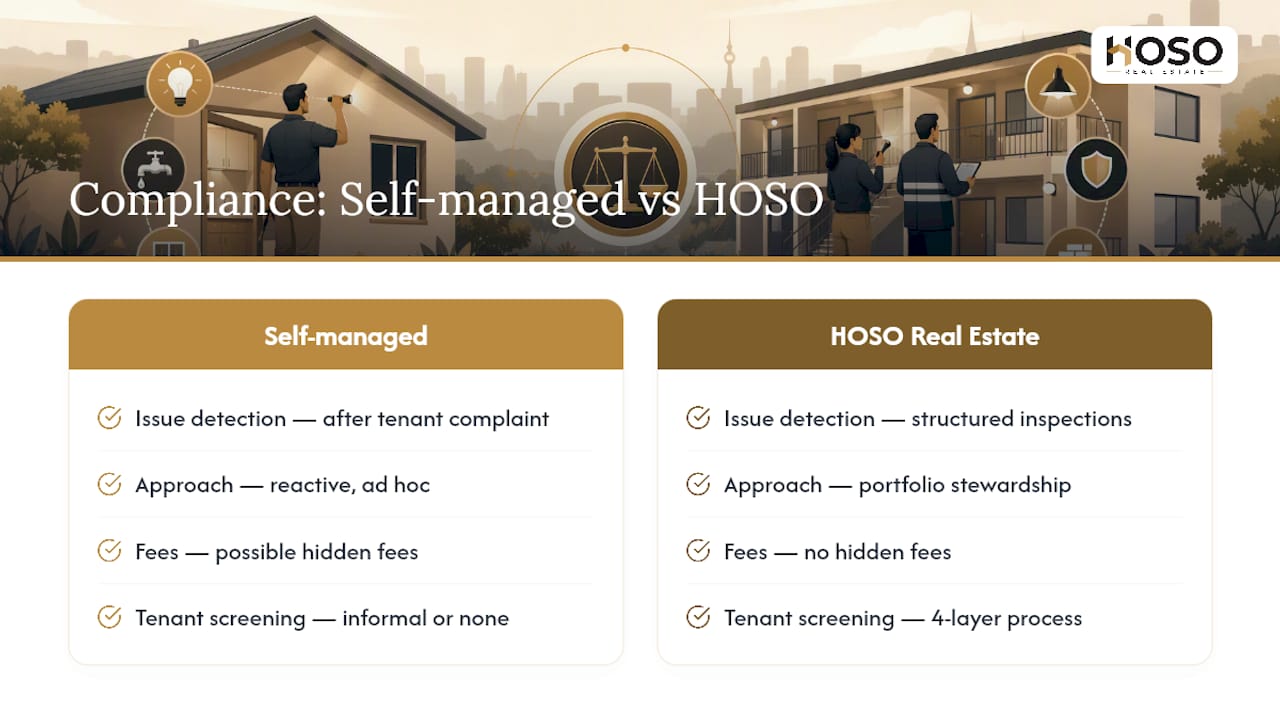
HOSO Real Estate is the alternative to chasing compliance yourself between other commitments. Where a self-managed landlord finds out about a plumbing fault or a failed smoke alarm only when a tenant complains, HOSO's structured property inspections and maintenance coordination catch it before it becomes a notice. Our approach centres on portfolio stewardship, not sales volume: no hidden fees, a 4-layer tenant screening process, and a 24/7 owner portal so you can see exactly what's happening with your property without waiting on a phone call.
If a pool sits on the property, specialist safety certification through a service like Local Pool Inspections closes that gap fast, and digital maintenance logging tools such as those covered in this residential maintenance app guide make record-keeping far less painful than a shoebox of receipts.
If your Adelaide rental hasn't had a proper compliance review lately, book a rental appraisal with HOSO Real Estate and find out exactly where it stands before your next tenancy begins.
Where to check the official rules
For the primary legal text, go straight to the Housing Improvement Act 2016, the Housing Improvement Regulations 2017, and the Housing Safety Authority's guidance page.
Sources
FAQ
What is category 1 in housing SA?
Category 1 generally refers to the most serious tier of non-compliance identified during a housing assessment under the Housing Improvement Act 2016, typically involving safety hazards that need urgent rectification. The exact categorisation and required response timeframes are set by the Housing Safety Authority on assessment.
What is the 30% rental rule?
The 30% rule is a general affordability benchmark suggesting a household should not spend an excessive share of its income on rent. It isn't a legislated minimum housing standard, it's a budgeting guide used in housing affordability discussions, separate from the structural and safety requirements under the Housing Improvement Regulations 2017.
What are the eligibility criteria for affordable housing in South Australia?
Eligibility for affordable or public housing in SA depends on income thresholds, asset limits, and household composition, assessed through SA Housing Authority applications rather than the private rental minimum standards covered here. This differs from the minimum housing standards, which apply to every private rental property regardless of a tenant's eligibility status.
What are the current tenancy laws in South Australia?
SA tenancies are governed by the Residential Tenancies Act, alongside the Housing Improvement Act 2016 for physical standards, with disputes handled through SACAT. Landlords must meet minimum housing standards at the start of every tenancy and maintain them throughout, not just at the initial inspection.
Do minimum housing standards apply to older rental properties in SA?
Yes. The Housing Improvement Act 2016 applies to all existing residential premises, not just new construction, so older Adelaide properties must be maintained to the same standards as recently built ones. Age is not an exemption, and landlords remain responsible for bringing older housing stock up to the prescribed minimums.