
Proactive property management is defined as the practice of anticipating and preventing property issues before they escalate, rather than responding to problems after they occur. This approach centres on scheduled inspections, preventive maintenance, clear tenant communication, and data-driven decision making. For landlords and investors in Adelaide and across South Australia, it is the difference between a property that holds its value and one that quietly deteriorates. HOSO Real Estate applies this model as standard practice, treating every managed property as a long-term asset that requires consistent, structured attention.
What is proactive property management?
Proactive property management is a systematic approach to rental property oversight that prioritises prevention over reaction. Where reactive management waits for a tap to fail or a tenant to complain, proactive management schedules plumbing checks before failure occurs. The industry also refers to this as preventive property management, and both terms describe the same core discipline: structured foresight applied to asset stewardship.
The core components are preventive maintenance, routine inspections, vendor relationship management, tenant communication protocols, and financial reporting. Each element works together. A missed inspection leads to an undetected leak, which leads to an emergency repair, which leads to a dispute. Proactive management breaks that chain at the first link.

For South Australian landlords, this approach also aligns with obligations under the Residential Tenancies Act 1995 and the processes administered by SACAT. Compliance with SACAT and local safety codes is mandatory, not optional. A proactive manager treats compliance as a built-in workflow, not a last-minute check.
The financial case is direct. Preventive maintenance costs 3–5 times less than emergency repairs. That figure alone justifies the entire model for any investor focused on net returns.
How do routine inspections extend property lifespan?
Scheduled inspections are the foundation of any effective preventive maintenance programme. The standard cadence, per 2026 industry guidance, is move-in inspections with tenants present, routine inspections every 6–12 months for single-family homes, and quarterly checks for multifamily common areas. Each inspection creates a documented record of the property's condition at a specific point in time.
The financial impact of this discipline is significant. Preventive maintenance can extend asset life by 20–40% by catching minor issues before they become structural problems. For a property in Norwood or Unley worth $700,000, that extension in usable asset life represents a material gain in investment return.
Preventive tasks typically include plumbing pressure checks, electrical safety testing, HVAC filter replacements, roof and gutter inspections, and smoke alarm compliance. None of these tasks is expensive in isolation. Collectively, they prevent the failures that generate the largest repair bills. Preventive programmes reduce equipment breakdowns by up to 70%, which directly reduces the volume of urgent maintenance calls a landlord receives.
The data on HVAC maintenance is particularly instructive. Preventive maintenance programmes reduce HVAC tickets by 38%. That reduction frees up both budget and management time for higher-value activities.
Pro Tip: Document every inspection with dated photographs, written condition notes, and tenant signatures. Move-in condition reports with photographic and signed evidence are the single most effective defence in tenancy disputes before SACAT.
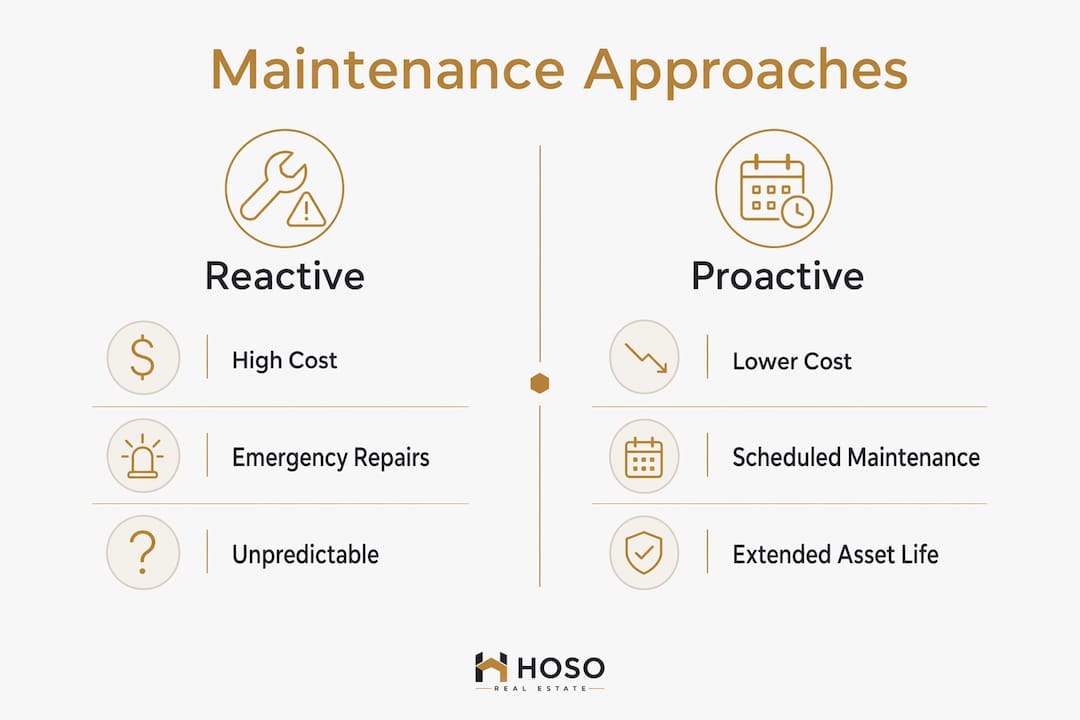
| Factor | Reactive maintenance | Proactive maintenance |
|---|---|---|
| Cost per repair event | High, often emergency rates | Low, scheduled trade rates |
| Asset lifespan impact | Shortened by deferred repairs | Extended by 20–40% |
| Tenant disruption | Frequent and unpredictable | Minimal and planned |
| SACAT dispute risk | Higher without documentation | Lower with inspection records |
| Budget predictability | Poor, driven by emergencies | Strong, based on schedules |
How does proactive management improve tenant satisfaction?
Tenant satisfaction is a direct output of how quickly and clearly a property manager responds to maintenance needs and communication. Proactive management addresses this at the system level, not the individual request level. When tenants know that inspections happen regularly and that maintenance requests receive a structured response, their confidence in the tenancy increases.
Proactive management improves tenant retention by providing timely maintenance and clear communication, which reduces vacancy periods and tenancy disputes. Fewer vacancies mean fewer letting fees, fewer periods of lost rent, and fewer tenant screening cycles. For a landlord with a property in Glenelg or Prospect, a single additional year of tenancy retention has a measurable impact on annual yield.
The communication infrastructure matters as much as the maintenance itself. Tenant portals, automated maintenance updates, and transparent workflows give tenants visibility into the process. That visibility reduces frustration and the number of follow-up calls a manager receives.
Proactive management techniques that directly improve tenant satisfaction include:
- Responding to maintenance requests within a defined timeframe, not when convenient
- Conducting safety checks on smoke alarms, gas fittings, and electrical switchboards before issues arise
- Providing tenants with clear written communication about upcoming inspections
- Addressing minor wear and tear during routine visits rather than waiting for it to worsen
- Using a tenant portal to log, track, and close maintenance requests with full transparency
Each of these practices reduces the friction that drives tenants to vacate. A tenant who feels heard and well-managed renews. A tenant who waits three weeks for a repair does not.
What operational workflows does proactive management require?
Proactive property management runs on structured workflows, not individual judgement calls. The difference between a well-managed portfolio and a chaotic one is rarely talent. It is process. A manager who relies on memory to track maintenance schedules, inspection dates, and compliance deadlines will eventually miss something. A manager with documented workflows will not.
Assigning clear task ownership for daily, weekly, and monthly activities is the operational backbone of any proactive system. Daily tasks include responding to maintenance requests and monitoring urgent issues. Weekly tasks cover lease renewals, arrears reviews, and vendor follow-ups. Monthly tasks include financial reporting, inspection scheduling, and compliance checks.
Vendor relationships are equally critical. A proactive manager maintains a pre-approved network of licensed tradespeople across plumbing, electrical, carpentry, and HVAC. When a maintenance issue arises, the response is a scheduled booking with a known contractor, not a frantic search for availability. This reduces repair time, controls costs, and maintains quality standards across the portfolio.
The key operational workflows for a proactive property management system are:
- Move-in and move-out inspection protocols with documented condition reports
- Scheduled preventive maintenance calendar covering all major property systems
- Tenant communication workflow with defined response timeframes
- Vendor management register with pre-approved contractors and service agreements
- Compliance monitoring schedule covering smoke alarms, electrical safety, and SACAT obligations
- Monthly financial reporting to owners covering income, expenditure, and maintenance activity
- Annual capital planning review to identify upcoming major works
Pro Tip: Tenant portals reduce the volume of phone calls and emails a manager handles by centralising maintenance requests and updates. For guidance on early repair intervention and how it reduces long-term costs, the PEAR framework offers a structured approach worth reviewing.
What are the financial and compliance benefits for South Australian landlords?
Proactive management produces measurable financial benefits that reactive management cannot replicate. The most direct is cost control. When maintenance is scheduled and preventive, trade costs are lower, repair scopes are smaller, and emergency call-out fees are avoided. A landlord who budgets for annual preventive maintenance spends predictably. A landlord who waits for failures spends unpredictably and usually more.
Budget accuracy improves when a manager tracks maintenance history and forecasts upcoming capital works. A property in Colonel Light Gardens with a 15-year-old hot water system should have a replacement budgeted, not discovered as an emergency in the middle of winter. That level of forward planning is a direct output of proactive management discipline.
Compliance is the second major financial benefit. South Australian property management must align with SACAT processes, habitability standards, and local safety codes. Non-compliance carries financial penalties and reputational risk. A proactive manager treats compliance as a scheduled task, not a reactive scramble after a complaint is lodged.
| Benefit area | Reactive approach | Proactive approach |
|---|---|---|
| Maintenance cost | Unpredictable, high per event | Predictable, lower per event |
| Compliance risk | High, often discovered late | Low, monitored continuously |
| Vacancy rate | Higher due to tenant dissatisfaction | Lower due to retention focus |
| Capital planning | Reactive, unbudgeted | Scheduled, budgeted annually |
| Landlord peace of mind | Low, frequent surprises | High, systematic oversight |
For interstate or overseas investors with Adelaide properties, this structure is particularly valuable. A landlord based in Sydney or Singapore cannot personally monitor a property in Henley Beach. A proactive management system means that monitoring happens systematically, with regular reporting that keeps the owner informed without requiring their direct involvement.
Key takeaways
Proactive property management reduces costs, extends asset life, and improves tenant retention by replacing reactive responses with scheduled, documented, and compliance-aligned systems.
| Point | Details |
|---|---|
| Prevention reduces costs | Preventive maintenance costs 3–5 times less than emergency repairs and extends asset life by 20–40%. |
| Inspections protect landlords | Documented, signed inspection reports are the strongest defence in SACAT tenancy disputes. |
| Tenant retention drives yield | Proactive communication and timely maintenance reduce vacancy periods and stabilise rental income. |
| Workflows replace guesswork | Assigning daily, weekly, and monthly task ownership prevents compliance gaps and missed maintenance. |
| Compliance is a scheduled task | South Australian landlords must align with SACAT processes and safety codes as a continuous obligation. |
What I've learned from watching landlords switch approaches
The transition from reactive to proactive management is not complicated. It is, however, uncomfortable for landlords who have managed their own properties for years. The instinct is to wait and see. The data says that instinct is expensive.
What I've observed consistently is that landlords who start with one change, typically a structured inspection schedule, see the value quickly. They find a gutter that hasn't been cleared in three years, or a smoke alarm with a dead battery, or a slow leak under a vanity that has been softening the subfloor for months. None of those issues were emergencies yet. All of them would have become emergencies within 12 months.
The pitfall I see most often is trying to implement every system at once. A landlord who overhauls their inspection schedule, vendor network, tenant communication, and financial reporting simultaneously usually abandons most of it within 90 days. The better path is sequential. Start with inspections. Add vendor pre-approval. Then build the communication workflow. Each layer reinforces the one before it.
The other common mistake is underestimating tenant communication. Landlords who focus entirely on maintenance but ignore how they communicate with tenants still experience high vacancy rates. Tenants do not just want a well-maintained property. They want to feel that someone is paying attention. Proactive communication delivers that feeling at almost no additional cost.
For investors managing multiple properties across Adelaide, the role of a property manager in building and maintaining these systems is not a luxury. It is the mechanism by which a portfolio scales without the owner's time scaling with it.
— HOSO
HOSO Real Estate and proactive property management in Adelaide
HOSO Real Estate delivers property management services built around the proactive model described throughout this article. Routine inspections, preventive maintenance coordination, tenant communication workflows, and detailed monthly financial reporting are standard components of every managed property. For Adelaide landlords in suburbs from Burnside to Semaphore, this means fewer surprises, stronger compliance, and tenants who stay longer.
If you own an investment property in South Australia and want to understand what your asset is currently worth on the rental market, a free rental appraisal is the practical first step. HOSO Real Estate provides appraisals with full market context, giving you the information needed to make decisions with confidence.
FAQ
What is proactive property management?
Proactive property management is the practice of anticipating and preventing property issues through scheduled inspections, preventive maintenance, and structured tenant communication, rather than responding to problems after they occur.
How does proactive management differ from reactive management?
Reactive management responds to failures after they happen. Proactive management schedules maintenance and inspections to prevent failures, which costs 3–5 times less per repair event and reduces tenant disruption.
How often should routine inspections occur in South Australia?
The standard guidance is every 6–12 months for single-family homes and quarterly for multifamily common areas, with a documented move-in inspection conducted with the tenant present.
What are the compliance obligations for SA landlords?
South Australian landlords must comply with the Residential Tenancies Act 1995, habitability and safety standards, and SACAT dispute processes. Proactive management treats these obligations as scheduled, ongoing tasks rather than reactive responses.
Does proactive management improve tenant retention?
Proactive management improves tenant retention by delivering timely maintenance and clear communication, which reduces the friction that causes tenants to vacate at the end of a lease.