
Responsive property management is defined as a proactive system that prioritises prompt tenant communication, swift issue resolution, and coordinated use of technology to protect property value and maintain tenant satisfaction. Unlike reactive management, which responds only after problems have already occurred, responsive management treats communication and maintenance as operational disciplines rather than afterthoughts. For landlords and investors in South Australia, the distinction matters financially. Reactive approaches drive up turnover costs, extend vacancy periods, and expose owners to compliance risk under SACAT frameworks. The principles behind responsive management are not new, but the systems available to implement them in 2026 have made the standard far more achievable.
What is responsive property management and how does it differ from traditional approaches?
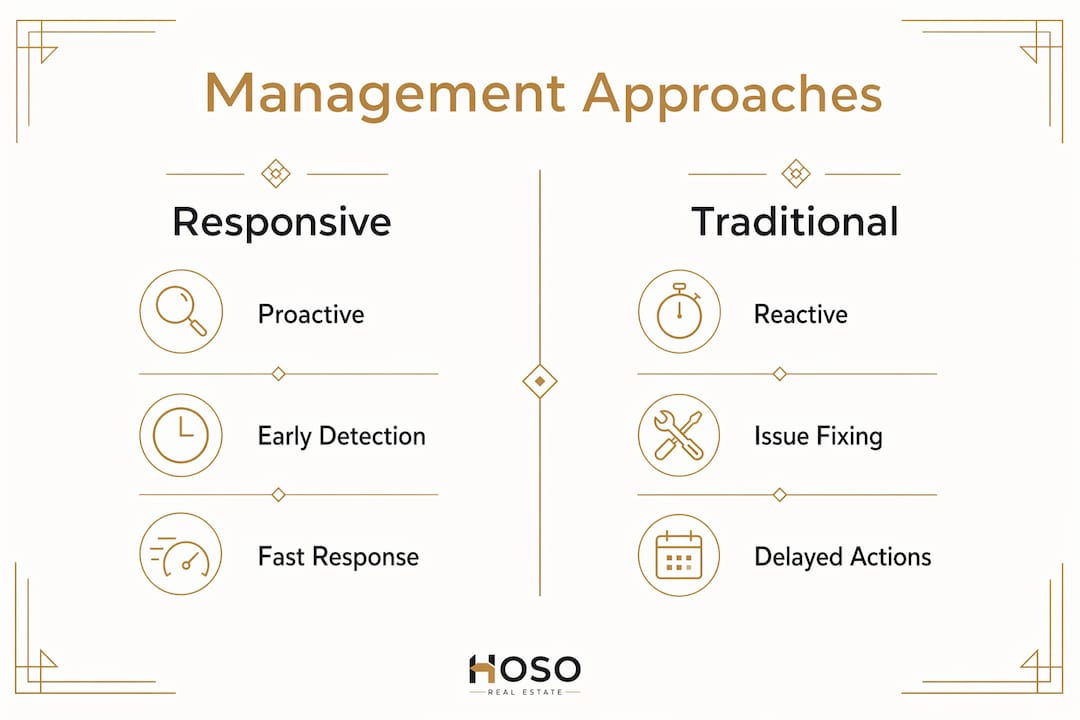
Responsive property management is built on a single premise: problems are cheaper to prevent than to fix. Reactive management fails as a system design, not just as a service style. When workflows are invisible and communication is ad hoc, issues compound before anyone acts.
The core difference between responsive and traditional management sits in workflow design. Traditional property management operates in silos. The owner waits for the agent to call. The agent waits for the tenant to complain. The tenant waits for the tradesperson to show up. Responsive management replaces that chain with a transparent system where owners, tenants, and vendors are aligned in one visible process.

Proactive property management, the industry term most closely aligned with this approach, goes further than simply answering calls quickly. It means designing workflows that surface issues before they escalate. A leaking tap reported through a digital portal on a Monday gets triaged, assigned, and scheduled before it becomes a burst pipe on a Friday night.
Pro Tip: When evaluating a property manager, ask specifically how they detect maintenance issues between inspections. The answer tells you whether their system is proactive or reactive.
Technology is the mechanism that makes this possible at scale. Property management platforms that integrate tenant communication, maintenance scheduling, and owner reporting give every stakeholder visibility into the same information at the same time. That transparency builds trust and reduces the volume of follow-up calls that consume management time.
The impact on lease length is direct. Tenants who experience consistent, predictable service renew leases at higher rates. For investors in suburbs like Norwood, Prospect, or Unley, where tenant quality and stability directly affect yield, that retention rate is a financial metric worth tracking.
How do tenant communication strategies shape management outcomes?
Tenant communication is the most visible part of responsive management and the area where most traditional agencies fall short. A formal written communication policy specifying channels, response times, and expectations is the foundation of reliable, repeatable service. Without it, communication becomes inconsistent and disputes become harder to resolve.
The best practices for property managers in 2026 follow a structured communication model built around defined timelines:
- Emergency maintenance receives a response within 30 minutes of the tenant's report. This covers issues such as no hot water, gas leaks, or security breaches.
- Routine maintenance requests are acknowledged within one business day and resolved within 3–5 business days. Proactive communication at these intervals reduces follow-up queries significantly.
- Lease renewal communications begin no later than 60 days before expiry, giving tenants adequate time to decide and owners time to plan.
- Routine inspection reports are delivered to owners within 48 hours of the inspection, with photos and condition notes attached.
- General enquiries receive a response within one business day, regardless of whether the answer is immediately available.
These timelines are not aspirational. They are operational standards that, when met consistently, reduce the volume of inbound tenant contact. Tenants who trust that their manager will follow through stop chasing updates.
Automated communication touchpoints reinforce this trust without adding workload. Automated tenant engagement at defined intervals, such as a confirmation message when a maintenance request is logged or a reminder before a routine inspection, manages expectations before the tenant has reason to feel uncertain.
The SACAT context matters here. South Australia's Civil and Administrative Tribunal handles tenancy disputes, and the quality of written communication records directly affects outcomes. Agencies with formal communication policies and documented response histories are better positioned to defend their processes if a dispute reaches SACAT. For landlords, this is risk reduction in practice.
Pro Tip: Request a copy of your property manager's written communication policy before signing a management agreement. If they do not have one, that tells you everything about how they operate.
Regular communication builds trust and prevents disputes from forming in the first place. When tenants feel heard and informed, they are less likely to escalate minor frustrations into formal complaints.
How does maintenance management support responsive property oversight?
Maintenance is where responsive management either delivers or fails. The distinction between preventive and proactive maintenance is worth understanding clearly. Preventive maintenance covers scheduled tasks: annual smoke alarm checks, gutter cleaning before winter, hot water system servicing. Proactive maintenance goes further by using condition data and inspection records to anticipate what will fail next.
Property management software for SA landlords enables both approaches through digital tools that were not widely accessible five years ago. The key capabilities that support responsive oversight include:
- Automated maintenance alerts triggered by tenant reports or scheduled inspection findings
- Vendor coordination platforms that assign, track, and close work orders without manual follow-up
- Condition tracking records that log the state of fixtures, appliances, and structural elements over time
- Owner reporting dashboards that give landlords real-time visibility into open maintenance items
- Tenant portals that allow renters to log requests, track progress, and receive updates without calling the office
The table below shows how proactive and reactive maintenance approaches compare across key performance areas.
| Performance area | Reactive approach | Proactive approach |
|---|---|---|
| Issue detection | After tenant complaint | During inspection or via data |
| Response time | Variable, often delayed | Defined and tracked |
| Cost per repair | Higher due to escalation | Lower due to early intervention |
| Tenant impact | Disruption and frustration | Minimal disruption |
| Owner visibility | Low, after the fact | High, in real time |
For properties in high-demand Adelaide suburbs such as Glenelg, Burnside, or Mitcham, where quality tenants have options, maintenance responsiveness directly affects whether they renew or leave. A well-maintained property with a responsive manager retains tenants longer. That retention reduces vacancy periods and the associated costs of re-leasing.
Technology also supports compliance. Smoke alarm legislation, pool safety requirements, and electrical safety standards in South Australia carry specific obligations for landlords. A digital maintenance system with scheduled task reminders reduces the risk of missing a compliance deadline.
What are the benefits of responsive property management for SA landlords?
The financial case for responsive management is straightforward. Responsive communication and regular maintenance improve profitability by reducing the costs associated with tenant turnover, vacancy, and reactive repairs. Each of those costs is measurable and avoidable.
The core benefits for South Australian landlords and investors include:
- Reduced vacancy rates. Tenants who receive consistent service renew leases. Shorter vacancy periods mean fewer re-leasing fees and uninterrupted rental income.
- Lower maintenance costs. Early detection of issues prevents minor problems from becoming expensive repairs. A responsive system catches a failing hot water system before it floods a bathroom.
- Stronger compliance position. Documented communication records and scheduled maintenance logs support landlords in SACAT proceedings and reduce exposure to compensation claims.
- Higher tenant quality over time. Responsive agencies attract and retain quality tenants because their reputation precedes them. Word of mouth in tight rental markets like Adelaide's inner north matters.
- Reduced owner workload. When a property manager operates a genuine responsive system, landlords receive fewer calls, fewer surprises, and cleaner financial reporting.
How property management protects landlords in 2026 is directly tied to the quality of the systems behind the service. An agency without documented workflows and communication standards cannot consistently deliver the outcomes listed above, regardless of how experienced individual staff members are.
For interstate or overseas investors managing Adelaide properties remotely, responsive management is not a preference. It is a necessity. The ability to view maintenance status, inspection reports, and financial summaries through a digital platform removes the uncertainty that makes remote ownership stressful.
Key takeaways
Responsive property management is the most direct path to lower vacancy rates, reduced maintenance costs, and stronger compliance outcomes for South Australian landlords.
| Point | Details |
|---|---|
| Definition is operational | Responsive management is a system design, not just a service attitude. |
| Communication needs structure | A formal written policy with defined response times prevents disputes and builds tenant trust. |
| Maintenance timing matters | Proactive maintenance catches issues early and reduces repair costs significantly. |
| Technology enables scale | Digital platforms give owners, tenants, and vendors real-time visibility into the same information. |
| SA compliance is non-negotiable | Documented communication and maintenance records support landlords in SACAT proceedings. |
What I have learned from watching landlords get this wrong
Most landlords who struggle with property management are not dealing with bad tenants. They are dealing with bad systems. The pattern is consistent: an owner chooses an agency based on a low management fee, the agency operates reactively, a maintenance issue escalates, the tenant loses confidence, and the lease is not renewed. The owner then pays a re-leasing fee that exceeds a year's worth of the fee saving they were chasing.
The agencies that deliver genuine responsive service share one characteristic: they have invested in systems before they needed them. Communication policies, maintenance workflows, and digital platforms are not responses to problems. They are the infrastructure that prevents problems from forming.
The other mistake I see regularly is owners treating communication as the tenant's responsibility. A tenant who has to chase their property manager for updates is a tenant who is already mentally preparing to leave. Proactive communication, even a brief update to say a repair is scheduled, costs almost nothing and changes the tenant's entire experience.
Choosing a professional property manager who operates with documented systems is the single highest-return decision most landlords can make. The fee difference between a reactive agency and a genuinely responsive one is small. The outcome difference is not.
— HOSO
HOSO Real Estate: responsive property management in Adelaide
HOSO Real Estate delivers property management built around the principles covered in this article. From formal communication policies and routine inspection reporting to maintenance coordination and compliance tracking, every service is designed to protect your asset and retain quality tenants.
HOSO Real Estate works with landlords and investors across Adelaide and South Australia, combining modern digital platforms with personalised service. Whether you manage one property in Norwood or a portfolio across the inner suburbs, the approach is the same: proactive, documented, and transparent. View HOSO's property management services or request a free rental appraisal to understand what your property should be earning under professional management.
FAQ
What is responsive property management?
Responsive property management is a proactive approach that prioritises prompt communication, early issue detection, and coordinated use of technology to maintain tenant satisfaction and protect property value.
How does responsive management differ from reactive management?
Reactive management responds only after problems occur. Responsive management uses visible workflows and structured communication to detect and resolve issues before they escalate.
What response times should a property manager meet?
Emergency maintenance should receive a response within 30 minutes. Routine maintenance requests should be resolved within 3–5 business days, with acknowledgement within one business day.
How does responsive management support SACAT compliance in South Australia?
Formal communication records and documented maintenance histories give landlords a clear evidence base if a tenancy dispute reaches SACAT, reducing exposure to adverse findings.
Do I need property management software to manage responsively?
Digital tools are not mandatory, but property management software significantly improves the consistency and visibility of communication, maintenance tracking, and owner reporting at scale.