
Professional property management is defined as the outsourcing of day-to-day property operations to a licensed agent who acts on behalf of the owner. Busy landlords and investors across Adelaide and South Australia engage property managers primarily to recover time, reduce legal exposure, and protect the financial performance of their assets. The advantages of hiring property managers extend well beyond convenience. They include structured compliance with the Residential Tenancies Act 1995 (SA), SACAT-ready documentation, professional tenant screening, and monthly financial reporting. Whether you own a single investment property in Norwood or a portfolio spread across Prospect, Glenelg, and Salisbury, the reasons to hire a property manager are grounded in measurable outcomes rather than preference.
Why professionals use property managers to save time
Time savings are the primary benefit of engaging a property manager, with multiple 2026 investor guides identifying the shift from reactive management to strategic oversight as the core value proposition. This matters because every hour spent fielding maintenance calls or chasing rent arrears is an hour not spent evaluating your next acquisition or reviewing your portfolio's performance.
Consider what a typical week looks like for a self-managing landlord with two properties. Tenant inquiries arrive at unpredictable hours. Maintenance requests require sourcing and coordinating tradespeople. Routine inspections must be scheduled, documented, and reported. Each task is individually manageable, but collectively they consume significant mental bandwidth and calendar time.
A property manager acts as the single point of contact for tenants, tradespeople, and regulatory bodies. This structure removes the owner from the operational loop entirely, which is particularly valuable for investors who live interstate, hold properties in suburbs distant from their home, or simply want to treat their portfolio as a financial asset rather than a second job.
- Tenant communication is handled end-to-end, including after-hours maintenance calls and lease queries.
- Maintenance coordination involves sourcing qualified tradespeople, obtaining quotes, and overseeing completion.
- Routine inspections are scheduled, conducted, and reported with photographic documentation.
- Lease renewals and rent reviews are managed proactively, reducing vacancy gaps between tenancies.
Pro Tip: If you own properties in more than one suburb or council area, the administrative complexity multiplies quickly. A property manager with local knowledge of areas like Unley, Burnside, or Tea Tree Gully can coordinate across locations without adding to your workload.
You can review a detailed breakdown of tasks to delegate to understand exactly which responsibilities transfer when you engage a professional manager.

How does compliance and risk management work in SA property management?
South Australian tenancy law is specific, detailed, and regularly updated. The Residential Tenancies Act 1995 (SA) governs notice periods, bond handling, breach processes, and termination rights. SACAT (South Australian Civil and Administrative Tribunal) is the forum for disputes, and procedural errors in documentation can undermine an otherwise valid claim.
Consistent legal and operational disciplines create measurable risk reduction for investors, replacing ad hoc management efforts with repeatable, auditable processes. This is not a minor distinction. A landlord who issues a breach notice on the wrong form, or with an incorrect notice period, may find the notice invalid at SACAT regardless of the underlying facts.
Professional managers maintain trust accounts that meet the audit standards required under the Land Agents Act 1994 (SA). Non-compliance with trust accounting obligations carries serious financial consequences. In comparable Australian jurisdictions, trust account penalties can reach $5,500 plus $550 per day for ongoing non-compliance. South Australian requirements are equally rigorous, and a licensed agent carries professional indemnity insurance that a self-managing landlord does not.
Key compliance functions a professional manager handles include:
- Issuing legally compliant entry notices, breach notices, and termination notices under SA law
- Maintaining bond lodgement records with Consumer and Business Services (CBS)
- Conducting and documenting routine inspections at legally prescribed intervals
- Tracking smoke alarm, electrical safety, and pool barrier obligations
- Preparing SACAT-ready files if a dispute proceeds to tribunal
Systematised compliance checklists reduce errors across these tasks by removing reliance on owner memory or improvisation. State-by-state differences in notice periods and documentation requirements demand standard operating procedures, and professional agencies build these into their workflows by default.
Pro Tip: Ask any property manager you are considering to show you their breach notice template and their inspection report format. If they cannot produce these immediately, their compliance systems may not be as structured as their pitch suggests.
For a broader view of how professional management reduces owner exposure, the HOSO Real Estate article on landlord risk protection covers the key mechanisms in detail.
How do property managers improve tenant screening and retention?
Tenant quality is the single largest variable in rental property performance. A well-screened tenant in a Prospect or Henley Beach property pays on time, maintains the property, and renews their lease. A poorly screened tenant generates arrears, damage, and potentially a SACAT hearing.
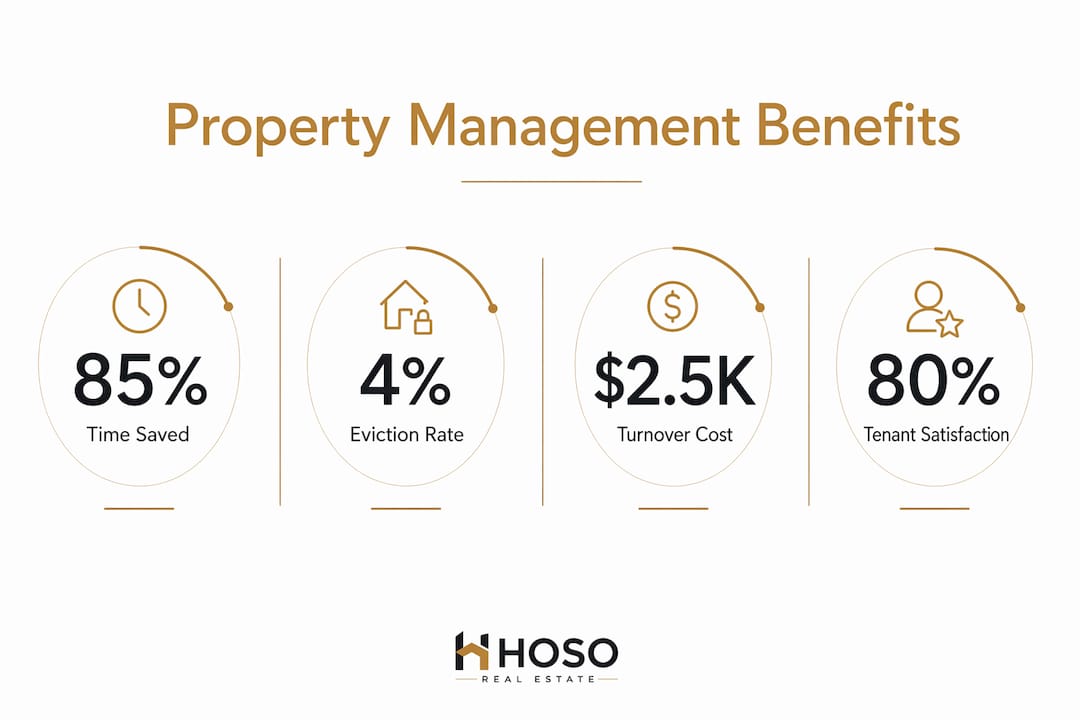
Professionally screened tenants produce eviction rates of 4.1% compared to 15.8% for unscreened tenants. Typical turnover costs average $2,500 per event, while eviction-related turnovers often exceed $10,000 when legal costs, lost rent, and re-letting fees are included. This data makes the property management advantages of professional screening concrete and quantifiable.
| Factor | Self-managed | Professionally managed |
|---|---|---|
| Eviction rate | 15.8% | 4.1% |
| Average turnover cost | $2,500+ | Significantly reduced |
| Screening compliance | Variable | Aligned with 2025 privacy laws |
| Lease renewal rate | Lower | Higher with proactive management |
Tenant screening workflows must now adapt to 2025 Australian privacy law changes, which require respectful handling of applicant personal information during the selection process. Professional managers apply these standards as a matter of course. Self-managing landlords who rely on outdated practices risk both regulatory exposure and reputational damage.
Beyond initial screening, retention depends on the quality of ongoing management. Tenant satisfaction levels above 80% are achievable when management applies balanced practices. The strongest predictors of satisfaction are lease enforcement, billing accuracy, and security controls. This finding is counter-intuitive to many owners who assume that a relaxed approach to enforcement builds goodwill. The data shows the opposite. Tenants respond positively to clear, consistent rules applied fairly.
The practical implications for Adelaide landlords are clear. A property manager who enforces lease terms consistently, responds to maintenance requests promptly, and communicates clearly creates a tenancy environment where good tenants stay longer. Reduced vacancy periods and lower turnover costs follow directly.
For SA-specific context on why screening quality matters, the HOSO Real Estate guide on tenant screening for SA landlords covers the local regulatory and practical considerations in full.
What financial oversight do property managers provide for investors?
Full-service property management includes online rent collection, monthly financial statements, maintenance cost tracking, and year-end tax summaries. For investors managing their portfolio as a financial asset, this reporting infrastructure is as important as the day-to-day operational functions.
Structured rent collection improves cash flow reliability. A property manager monitors arrears daily, issues formal notices at the correct legal threshold, and escalates to SACAT when required. This process removes the personal discomfort many self-managing landlords feel when pursuing overdue rent from a tenant they interact with directly.
Monthly statements provide a clear record of income, outgoings, and maintenance expenditure for each property. At tax time, this documentation supports deduction claims for repairs, management fees, insurance, and depreciation. Accountants working with investors who use professional managers consistently report cleaner records and fewer queries compared to self-managed properties.
| Reporting function | Benefit to investor |
|---|---|
| Monthly income statements | Clear cash flow visibility per property |
| Maintenance cost tracking | Supports repair deduction claims at tax time |
| Year-end financial summaries | Simplifies accountant preparation and ATO compliance |
| Rent arrears reporting | Early identification of cash flow risk |
Portfolio planning also benefits from professional oversight. An experienced property manager in Adelaide can advise on rent review timing relative to local market conditions in suburbs like Mawson Lakes, Mitcham, or Port Adelaide. This local knowledge, combined with structured reporting, supports informed decisions about holding, selling, or refinancing individual assets.
The question of self-managing versus professional management often comes down to this financial reporting layer. Owners who self-manage frequently underestimate the cost of their own time and the value of audit-ready financial records.
Key takeaways
Professional property management delivers measurable advantages across time savings, compliance, tenant quality, and financial reporting that self-management cannot replicate at scale.
| Point | Details |
|---|---|
| Time recovery | Property managers remove owners from daily operations, freeing time for investment decisions. |
| Compliance protection | Licensed managers apply SA-specific processes that reduce SACAT exposure and trust account risk. |
| Tenant quality | Professional screening reduces eviction rates from 15.8% to 4.1%, cutting turnover costs significantly. |
| Tenant retention | Consistent lease enforcement and responsive service produce satisfaction rates above 80%. |
| Financial clarity | Monthly statements and year-end summaries support tax preparation and portfolio performance review. |
What experience with SA landlords has taught us about professional management
The conversation about why hire a property manager often starts with cost. Owners look at the management fee percentage and weigh it against what they believe they can handle themselves. This framing misses the point entirely.
The real cost of self-management is not the fee you avoid paying. It is the compliance breach you do not catch until it reaches SACAT. It is the tenant you accepted without adequate screening because the property sat vacant for three weeks and you felt pressure to fill it. It is the rent review you delayed because the conversation felt awkward, leaving your yield below market for eighteen months.
What we observe consistently across Adelaide's investment property market is that owners who engage professional management earlier in their portfolio journey build better habits, better records, and better tenant relationships from the start. Those who wait until a problem forces their hand often do so after absorbing costs that professional management would have prevented.
The regulatory environment in South Australia is not getting simpler. Privacy law changes affecting tenant screening, updated safety compliance obligations, and SACAT procedural requirements all demand current knowledge and documented processes. A landlord managing one or two properties part-time cannot reasonably stay across all of it without meaningful risk.
Professional property management is not a luxury for large portfolios. It is a risk management decision that applies from the first investment property onwards.
— HOSO
How HOSO Real Estate supports Adelaide landlords and investors
HOSO Real Estate provides professional property management services for landlords and investors across Adelaide, with a focus on compliance, tenant quality, and transparent financial reporting. Every management engagement includes structured tenant screening aligned with current Australian privacy standards, SA-specific lease documentation, routine inspections with detailed reports, and monthly financial statements prepared for tax purposes.
For owners who want to protect their investment and remove themselves from day-to-day operations, HOSO Real Estate delivers the systems, local knowledge, and professional oversight that the Adelaide market demands. Contact HOSO Real Estate to discuss a management arrangement tailored to your portfolio.
FAQ
Why do professionals use property managers instead of self-managing?
Professionals use property managers primarily to recover time and reduce legal risk. Risk transfer and operational discipline are the core reasons owners outsource, as consistent procedures reduce compliance failures that self-managing owners frequently miss.
What are the main benefits of property management in South Australia?
The main benefits include compliance with the Residential Tenancies Act 1995 (SA), SACAT-ready documentation, professional tenant screening, structured rent collection, and monthly financial reporting. These functions collectively protect the asset and reduce the owner's administrative burden.
How much does poor tenant screening cost a landlord?
Turnover costs average $2,500 per event, with eviction-related turnovers often exceeding $10,000 when legal fees and lost rent are included. Professional screening reduces eviction rates from 15.8% to 4.1%, making the cost difference substantial over a portfolio's lifetime.
Does professional property management improve tenant satisfaction?
Tenant satisfaction above 80% is achievable with balanced management practices. The strongest predictors are lease enforcement, billing accuracy, and security controls, not a relaxed approach to rules.
What financial reports does a property manager provide?
A full-service property manager provides monthly income and expenditure statements, maintenance cost records, rent arrears reports, and year-end tax summaries. These documents support accountant preparation and ATO compliance for investment property owners.