
The role of landlord in property maintenance is the legal and practical obligation to keep a rental property safe, functional, and habitable throughout the entire tenancy. In South Australia, this duty is non-negotiable. The warranty of habitability cannot be waived by lease terms, even when a property is leased "as is." Landlords who understand their maintenance obligations protect their asset, reduce legal exposure, and build the kind of tenant relationships that reduce vacancy. This guide covers what you must do, how fast you must act, and how to stay ahead of costly reactive repairs.
What are the core maintenance responsibilities of landlords?
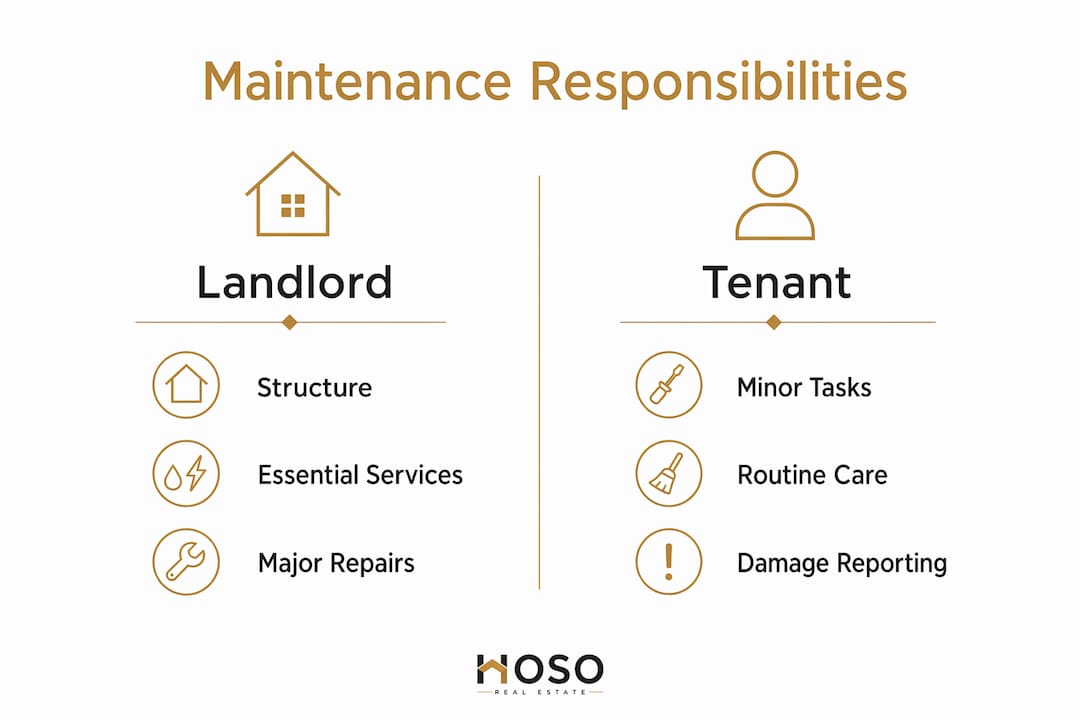
Landlord responsibilities for maintenance cover three broad categories: the physical structure, essential services, and any appliances or fixtures supplied with the property.
Structure and exterior
Landlords must maintain the property's structure and exterior in sound condition throughout the tenancy. This includes:
- Roof, walls, ceilings, and foundations
- External doors, windows, and locks
- Gutters, downpipes, and drainage
- Fencing and pathways where they affect safe access
Structural defects are not optional repairs. A leaking roof in a Norwood terrace or a cracked foundation in a Glenelg investment property are landlord obligations, regardless of how long the tenant has occupied the property.
Essential services
Plumbing, electrical installations, heating, and sanitation are all landlord obligations. Gas connections, hot water systems, and sewerage must remain functional. If a hot water system fails in a Prospect rental in the middle of winter, restoring it is not discretionary.

Landlord-provided appliances must also be maintained in working order throughout the tenancy. This includes refrigerators, stoves, dishwashers, and any washer or dryer supplied as part of the lease. If you put it in the property, you are responsible for keeping it functional.
What tenants handle
Tenants are responsible for minor maintenance tasks such as changing lightbulbs, replacing batteries in smoke alarms, garden care, and keeping the property clean. The distinction matters. Major repairs and system failures sit with the landlord. Consumables and day-to-day upkeep sit with the tenant.
Pro Tip: Document every appliance and fixture included in the tenancy at the start of the lease. A detailed condition report signed by both parties removes ambiguity about what you supplied and what state it was in.
How quickly must landlords respond to maintenance requests?
Response time is where many landlords create legal and financial risk. Industry standard response times set clear benchmarks that South Australian landlords should treat as minimum requirements.
| Repair Type | Response Time | Examples |
|---|---|---|
| Emergency | Within 24 hours | Gas leaks, flooding, no hot water, electrical failure |
| Urgent non-emergency | Within 2–3 days | Broken appliances, minor plumbing leaks, faulty locks |
| Routine maintenance | Within 5–7 business days | General wear and tear, cosmetic repairs, garden issues |
These timeframes are not suggestions. Failing to respond promptly to maintenance issues gives tenants legal grounds to pursue remedies including rent deductions, rent withholding, or lease termination. In South Australia, unresolved maintenance disputes can be escalated to SACAT, and the costs of a tribunal hearing far exceed the cost of the original repair.
A gas leak at a Henley Beach rental or a burst pipe in a Burnside property requires same-day action. Waiting until Monday because it happened on a Friday is not an acceptable position.
Pro Tip: Use a dedicated maintenance request system, whether through a property management platform or a simple shared inbox, to log every request with a timestamp. This creates a paper trail that protects you if a dispute reaches SACAT.
What are tenant maintenance rights and how do they affect you?
Tenant maintenance rights define what tenants can expect from you and what they are responsible for themselves. Understanding this boundary reduces disputes and protects your property.
Tenants have the right to a property that remains safe and habitable for the full duration of the tenancy. Clear lease terms and open communication are the most effective tools for managing this relationship. When both parties know what is expected, minor issues get reported early before they become expensive problems.
What tenants are responsible for
Tenant obligations typically include:
- Keeping the property clean and free of damage caused by misuse
- Replacing consumables such as lightbulbs and smoke alarm batteries
- Maintaining gardens and lawns to a reasonable standard
- Reporting maintenance issues to the landlord promptly
Tenants are liable for damage caused by negligence or deliberate misuse. A broken window from a tenant's actions is not a landlord repair. A window that fails due to age or structural movement is.
Where landlord obligations continue
Your obligation to maintain habitability does not pause because a tenant has caused damage elsewhere in the property. If a tenant damages a wall but the hot water system also fails, you still must repair the hot water system. The two issues are separate. Mixing them up is a common mistake that creates unnecessary disputes.
Landlord maintenance obligations also continue even when a tenant does not report an issue. If you become aware of a problem through an inspection or other means, you are required to act. Ignorance is not a defence once you have knowledge of a defect.
How can landlords prevent costly repairs through proactive upkeep?
Routine inspections and preventative maintenance are the most cost-effective tools available to landlords. Reactive repairs are almost always more expensive than scheduled upkeep. A $200 gutter clean prevents a $4,000 ceiling repair. A $150 plumbing check prevents a $3,500 emergency callout.
Here is a practical framework for proactive property upkeep by landlords:
- Schedule routine inspections every 3 months. In South Australia, landlords are permitted to conduct inspections at reasonable intervals with proper notice. Use these to identify wear, check appliances, and spot early signs of structural issues.
- Create a seasonal maintenance checklist. Gutters before winter, air conditioning servicing before summer, roof checks after major storms. Adelaide's climate creates predictable maintenance cycles you can plan around.
- Engage licensed tradespeople for safety compliance. Electrical safety checks, gas appliance servicing, and smoke alarm compliance require qualified professionals. Do not rely on visual inspections for these items.
- Keep a maintenance log for every property. Record every repair, inspection, and service call with dates, costs, and contractor details. This history is valuable for budgeting, insurance claims, and SACAT proceedings.
- Delegate to a property manager for consistent follow-through. Property management tasks like maintenance coordination, contractor management, and inspection scheduling are time-intensive. A qualified property manager handles these systematically, reducing the risk of missed obligations.
Effective property maintenance relies on balancing legal compliance, prompt communication, and proactive upkeep to preserve both tenant relationships and asset value. Landlords who treat maintenance as a cost centre rather than an investment consistently face higher vacancy rates, more disputes, and lower long-term returns.
Pro Tip: Budget 1% of your property's value annually for maintenance. A $600,000 Unley property should have $6,000 set aside each year for upkeep. This figure aligns with industry practice and prevents reactive spending from disrupting your cash flow.
Key takeaways
Effective property upkeep by landlords requires legal compliance, defined response times, and a proactive maintenance schedule to protect both tenants and asset value.
| Point | Details |
|---|---|
| Habitability is non-negotiable | The warranty of habitability cannot be waived by lease terms, regardless of how the property is listed. |
| Response times carry legal weight | Emergency repairs require action within 24 hours; delays give tenants grounds for rent deductions or lease termination. |
| Tenant and landlord duties are distinct | Tenants handle minor consumables and cleanliness; landlords own all structural, system, and appliance repairs. |
| Preventative maintenance reduces costs | Scheduled inspections and seasonal upkeep consistently cost less than emergency reactive repairs. |
| Documentation protects landlords | Maintenance logs, condition reports, and timestamped requests are your primary defence in any dispute. |
What HOSO real estate has observed about maintenance management
Most landlord maintenance problems are not caused by bad intentions. They are caused by poor systems. A landlord managing one or two properties in Adelaide's inner suburbs, say Norwood or Prospect, often handles maintenance reactively because there is no process in place to do otherwise. A tenant sends a text message. The landlord forgets to follow up. Three weeks later, a minor leak has caused water damage to a ceiling. That is a $200 repair that became a $3,500 problem.
The landlords who manage maintenance well share one common trait: they treat it like a business function, not a personal favour. They have a system for logging requests, a roster of reliable tradespeople, and a schedule for inspections. They do not wait for tenants to escalate before acting.
There is also a compliance dimension that many self-managing landlords underestimate. South Australia's tenancy legislation, administered through Consumer and Business Services and enforceable at SACAT, places clear obligations on landlords. The property manager licence requirements in SA exist precisely because property management is a compliance-heavy function. Getting it wrong is not just inconvenient. It can result in orders, fines, and damaged tenant relationships that take years to recover from.
My honest advice: if you own more than one investment property, or if you live interstate or overseas, self-managing maintenance is a liability. The cost of professional management is almost always recovered through better maintenance outcomes, lower vacancy, and avoided disputes.
— HOSO
How HOSO real estate supports landlords with maintenance obligations
Managing maintenance obligations across one or more Adelaide investment properties takes time, systems, and local knowledge. HOSO Real Estate handles the full scope of property management services for South Australian landlords, including maintenance coordination, routine inspections, contractor management, and compliance support.
Whether you own a unit in Glenelg, a house in Burnside, or a portfolio across multiple suburbs, HOSO Real Estate provides the structure to meet your landlord maintenance obligations without the administrative burden. Our team manages repair requests, coordinates licensed tradespeople, and keeps records that protect you if a dispute arises. To see how we manage properties across Adelaide, visit our managed property portfolio or speak with our team directly about your specific obligations and how we can help.
FAQ
What is the landlord's legal duty to maintain a rental property?
A landlord's legal duty is to keep the rental property safe, habitable, and in good repair throughout the tenancy. This includes the structure, essential services, and any landlord-supplied appliances.
Can a lease agreement remove a landlord's maintenance obligations?
No. The warranty of habitability is a non-negotiable legal obligation that cannot be waived by lease terms, including "as is" clauses.
How long does a landlord have to fix a repair in south australia?
Emergency repairs require action within 24 hours. Urgent non-emergency repairs should be addressed within 2–3 days, and routine maintenance within 5–7 business days.
Who is responsible for garden maintenance in a rental property?
Tenants are generally responsible for routine garden care such as mowing and weeding. Landlords are responsible for major tree work, structural garden elements, and any issues affecting safe access.
What happens if a landlord ignores a maintenance request?
Tenants may pursue legal remedies including rent deductions, rent withholding, or lease termination. In South Australia, unresolved disputes can be escalated to SACAT for a formal determination.