
Property management is the professional oversight and day-to-day administration of real estate on behalf of an owner, designed to protect both the property's physical condition and financial performance. A qualified property manager handles operations, maintenance coordination, financial administration, and tenant relations under a formal management agreement. For landlords in South Australia, whether you own a single rental in Norwood or a portfolio spread across Prospect, Unley, and Glenelg, understanding what property management entails is the foundation of every sound investment decision. This guide covers responsibilities, agreement structures, and the practical workflows that separate average oversight from genuine asset stewardship.
What is property management and what does it cover?
Property management is defined as the professional, third-party administration of income-producing real estate, covering daily operations, tenant relations, maintenance, and financial reporting. The property manager acts as a fiduciary, meaning they are legally obligated to act in the owner's best interest within the boundaries set by a management agreement. This is not a passive role. It requires active decision-making on maintenance, compliance, and tenant matters every week.
The scope of property management extends well beyond collecting rent. A competent manager handles lease administration, routine inspections, bond lodgement with Consumer and Business Services (CBS) in South Australia, and dispute resolution through SACAT when required. They also maintain financial records, coordinate tradespeople, and keep the property compliant with the Residential Tenancies Act 1995 (SA). For interstate or overseas investors with properties in Adelaide, this operational coverage is what makes remote ownership viable.

Modern property management also relies on digital tools. Software platforms track rent payments, generate owner statements, log maintenance requests, and store lease documents in one place. This gives owners real-time visibility without requiring them to manage day-to-day contact with tenants directly.
What responsibilities does a property manager handle?
Property managers perform a broad range of operational duties, and in smaller agencies, one manager handles all of them. In larger portfolios, responsibilities may be divided among regional and site managers. Either way, the core duties remain consistent.
Daily and weekly tasks include:
- Rent collection and arrears follow-up
- Responding to tenant maintenance requests and complaints
- Lease administration, including renewals and rent reviews
- Coordinating tradespeople for repairs and emergency works
- Conducting routine inspections and documenting property condition
Monthly and ongoing responsibilities include:
- Preparing owner financial statements and disbursing funds
- Trust accounting in compliance with SA regulations
- Tracking lease expiry dates and vacancy planning
- Bond management and end-of-tenancy reconciliations
- Monitoring compliance with the Residential Tenancies Act 1995 (SA)
Defined workflows and checklists for daily, weekly, and monthly tasks prevent costly errors. A missed lease expiry, for example, can result in a property sitting vacant for weeks while the manager scrambles to re-let. A missed routine inspection can mean a maintenance issue goes undetected until it becomes a structural problem.
Pro Tip: Ask your property manager to share their inspection schedule and reporting cadence before signing any agreement. A manager who cannot produce a clear schedule is likely operating without one.
How do property management agreements work?
A property management agreement is a written contract that specifies the property, the scope of services, compensation, duration, and the limits of delegated authority between owner and manager. It is the legal document that defines what the manager can and cannot do without your approval. Without a clear agreement, disputes over fees, maintenance decisions, and liability are almost inevitable.
Most residential management agreements in South Australia include the following elements:
- Scope of services: What the manager will handle, from leasing and inspections to maintenance and financial reporting.
- Fee structure: Management fees (typically a percentage of rent), letting fees, inspection fees, and any additional charges.
- Duration and renewal: The initial term of the agreement and how it renews or terminates.
- Authority thresholds: The dollar value below which the manager can approve repairs without owner consent, and the point at which owner approval is required.
- Termination terms: Notice periods and conditions under which either party can end the agreement.
Tiered authority structures are a critical clause that many owners overlook. A typical threshold allows a manager to approve routine repairs up to $500 without contacting the owner. Anything above that requires written approval. This directly affects your cash flow timing and your exposure to unexpected costs. If the threshold is set too high, a manager could commit you to significant expenditure without your knowledge.
A well-structured agreement prevents future disputes by clarifying financial and operational responsibilities from the outset. If you are considering changing managers or need to terminate a property management agreement, the notice period and exit conditions in your current contract will govern that process. In South Australia, standard agreements typically require 30 to 90 days written notice, though this varies by agency.
Pro Tip: Before signing, negotiate the maintenance approval threshold to a level you are comfortable with. A $300 threshold gives you more control over spending than a $1,000 threshold, particularly for older properties with higher maintenance frequency.
Property management vs. asset management vs. facilities management
These three roles are often confused, but they serve distinct functions. Understanding the difference helps you engage the right professional for the right purpose.
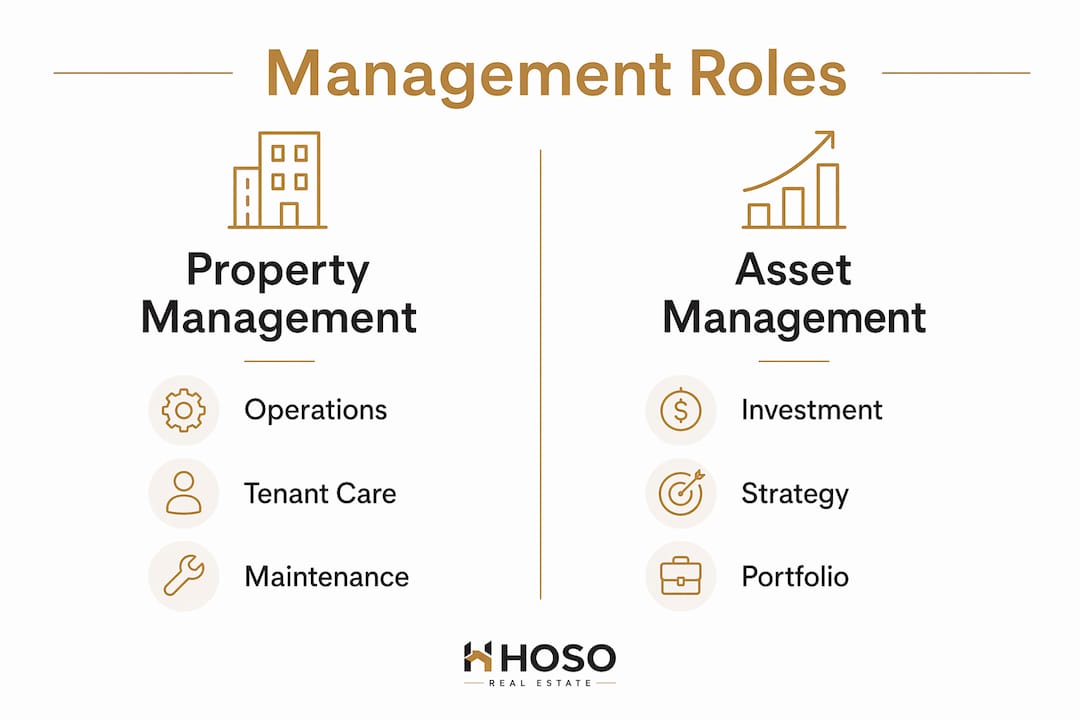
| Role | Focus | Time horizon | Typical tasks |
|---|---|---|---|
| Property management | Day-to-day operations and tenant relations | Short to medium term | Rent collection, maintenance, leasing, compliance |
| Asset management | Investment strategy and portfolio performance | Long term | Acquisition, disposal, capital allocation, returns analysis |
| Facilities management | Building systems and physical infrastructure | Ongoing | HVAC, lifts, fire systems, building maintenance contracts |
Property management focuses on operational stewardship of income-producing property for daily performance, while asset management targets long-term investment strategy and facilities management addresses building infrastructure. For most residential landlords in Adelaide, property management is the primary service they need. Asset management becomes relevant when you hold multiple properties and are making active decisions about buying, selling, or refinancing. Facilities management is more relevant to commercial or strata properties.
The overlap between property management and asset management is worth noting. A good property manager will flag when a property is underperforming relative to the local market, advise on rent reviews, and provide data that informs your investment decisions. This is not full asset management, but it is a value-add that distinguishes a proactive manager from a passive one.
How do workflows and technology improve property oversight?
Effective property management depends on repeatable, documented processes. Checklists and workflows prevent missed inspections or lease renewals that cause costly vacancies or undetected repairs. Technology amplifies this by centralising information and automating routine tasks.
Modern property management software used by agencies across Adelaide provides the following capabilities:
- Rent tracking and arrears alerts: Automated notifications when rent is overdue, with a clear audit trail for SACAT proceedings if required.
- Maintenance ticketing: Tenants log requests digitally, managers assign tradespeople, and owners receive updates without phone calls.
- Digital leasing: Lease documents are signed electronically, stored securely, and accessible to all parties.
- Owner reporting: Monthly financial statements are generated automatically, showing income, expenses, and net returns.
- Inspection scheduling: Routine inspections are booked, completed with photo documentation, and shared with owners via the platform.
Monthly owner statements and exception-based approvals balance owner oversight with manager autonomy. This reporting cadence is standard among experienced managers and maintains owner trust without requiring constant involvement. For a landlord in Sydney or overseas with a rental property in Mitcham or Burnside, this level of transparency is what makes the arrangement workable.
The practical benefit for South Australian landlords is compliance confidence. SA tenancy law requires specific notice periods, bond lodgement timelines, and inspection frequencies. A manager using documented workflows is far less likely to miss a statutory obligation than one operating from memory.
What best practices should property owners follow?
Working effectively with a property manager requires more than signing an agreement and stepping back. Active partnerships prevent misunderstandings and promote smooth management over the long term.
- Define expectations at the start. Before the agreement is signed, confirm the communication frequency, reporting format, and response time standards you expect. Put these in writing where possible.
- Review monthly statements thoroughly. Do not treat owner statements as background noise. Check that income matches your lease terms, that expenses are itemised, and that trust account disbursements are on schedule.
- Understand your agreement's authority limits. Know the maintenance threshold in your contract and review it annually. As your property ages, you may want to adjust this figure.
- Stay across SA compliance obligations. Bond lodgement with CBS, routine inspection frequency, and notice periods for rent increases are all governed by the Residential Tenancies Act 1995 (SA). Your manager handles these, but you remain liable as the owner if they are not met.
- Know how to exit if needed. If the relationship is not working, understand the process to terminate a property management agreement. Review your notice period, confirm there are no outstanding fees, and arrange a handover of all documentation, keys, and bond records before the transition.
Pro Tip: Request a rental property oversight review at least once a year. This gives you a structured opportunity to assess whether your manager's performance aligns with your investment goals, and whether the fee structure still reflects the service being delivered.
Key takeaways
Property management is the professional, contractually governed administration of real estate that protects both the physical condition and financial returns of an investment property.
| Point | Details |
|---|---|
| Core definition | Property management covers daily operations, tenant relations, maintenance, and financial reporting on behalf of the owner. |
| Agreement structure | A management agreement defines authority thresholds, fees, and termination terms. Review it carefully before signing. |
| Role distinctions | Property management handles daily operations. Asset management handles strategy. Facilities management handles building systems. |
| Technology and workflows | Documented checklists and software platforms reduce compliance risk and keep owners informed without micromanagement. |
| Owner responsibilities | Review monthly statements, understand your agreement's authority limits, and know how to exit if the relationship is not working. |
What HOSO Real Estate has observed in practice
The most common failure point in property management is not incompetence. It is ambiguity. Owners who do not read their management agreement carefully, managers who do not document their authority thresholds clearly, and both parties who assume the other understands their expectations. The result is a dispute over a $600 repair, or a lease renewal that was missed because no one confirmed who was responsible for initiating it.
What distinguishes genuinely effective property management in Adelaide is not the software or the fee structure. It is the discipline of documented process combined with direct, timely communication. A manager who sends a monthly statement with clear line items and flags a maintenance issue before it becomes a capital expense is worth more than one who charges a lower fee but operates reactively.
For SA landlords specifically, the compliance dimension is non-negotiable. SACAT proceedings, bond disputes, and tenancy breaches all hinge on whether the correct notices were served, within the correct timeframes, with the correct documentation. A manager who treats these as administrative formalities rather than legal obligations creates real liability for the owner.
The property management contract negotiation guide is worth reading before you engage any manager. Understanding what you are agreeing to is the single most protective step you can take as a landlord.
— HOSO
Property management in Adelaide, done properly
HOSO Real Estate provides premium property management services for residential landlords and investors across Adelaide, including tenant screening, routine inspections, maintenance coordination, trust accounting, and full compliance management under SA tenancy law.
Whether you own a single investment property in Norwood or a portfolio across the inner suburbs, HOSO Real Estate delivers transparent, detail-oriented management with a reporting structure that keeps you informed without requiring your daily involvement. Every managed property receives a dedicated manager, documented workflows, and monthly financial statements as standard. Contact HOSO Real Estate to discuss your property and find out how professional management protects your investment.
FAQ
What is property management in simple terms?
Property management is the professional administration of a rental property on behalf of the owner, covering rent collection, maintenance, tenant relations, and legal compliance. A property manager acts as the owner's representative under a formal management agreement.
What does a property management service agreement include?
A property management service agreement specifies the scope of services, fee structure, maintenance authority thresholds, duration, and termination terms. It is the legal document that defines what the manager can do independently and when owner approval is required.
How do you terminate a property management agreement in South Australia?
To terminate a property management agreement in SA, you must provide written notice as specified in your contract, typically 30 to 90 days. Confirm there are no outstanding fees and arrange a full handover of documentation, keys, and bond records before the transition date.
What is the difference between property management and asset management?
Property management handles day-to-day operations including leasing, maintenance, and compliance. Asset management focuses on long-term investment strategy, including acquisition, disposal, and portfolio performance analysis.
How often should a property manager report to the owner?
Monthly owner statements are standard practice among experienced property managers, supplemented by exception-based alerts for significant maintenance issues or tenant matters requiring owner approval.