
Before anything else: serve a written notice at least 7 days and no more than 28 days before the inspection, specifying a period of up to two hours within normal hours (8am–8pm, Monday to Saturday). The Residential Tenancies Act 1995 caps routine inspections to a limited number per 12-month period, and the South Australian Civil and Administrative Tribunal (SACAT) treats any entry without compliant notice as unlawful. Your immediate next step is to download the CBS Notice to enter premises PDF and complete every required field before scheduling the visit.
Key takeaways
A compliant SA routine inspection requires written notice served 7–28 days in advance, a maximum of four inspections per year, a 2-hour on-site window, and a documented report sent to both parties within 48 hours.
| Point | Details |
|---|---|
| Notice window | Written notice must be served 7–28 days before entry, stating date, time window, reason and contact details. |
| Frequency cap | No more than four routine inspections per 12-month period under the Residential Tenancies Act 1995. |
| On-site time limit | Each inspection is capped at two hours, within 8am–8pm Monday to Saturday. |
| 48-hour report rule | Email the inspection report and photo pack to tenant and landlord within 48 hours to build a SACAT-ready evidence trail. |
| HOSO Real Estate | Manages compliant inspections for Adelaide landlords, with templates available at hoso.com.au/forms-guide. |
Table of Contents
- Your tenant inspection preparation checklist for inspection day
- What SA law requires before you enter a rental property
- What to prepare before you arrive at the property
- Room-by-room rental inspection checklist
- How to record and store inspection evidence
- How to conduct yourself during the inspection
- Post-inspection workflow: what to do in the 48 hours after
- Common inspection findings and what to do about them
- Ready-to-use templates for SA-compliant inspections
- HOSO Real Estate's view on why this method works
- HOSO Real Estate's inspection and property management services
- Sources
Your tenant inspection preparation checklist for inspection day
Use this list on the day. Print it or load it on a tablet.
Before entering:
- Written notice served 7–28 days prior, with date, 2-hour window, reason and contact details confirmed
- Inspection falls within 8am–8pm, Monday to Saturday
- No more than three prior routine inspections conducted in the current 12-month period
- Original condition report and previous inspection notes in hand
- Camera or phone with automatic date/time stamp enabled
During the inspection:
- ID and attendee names recorded
- Each room checked against the condition report
- Wide-angle and close-up photos taken for every area of concern
- Maintenance items logged separately from tenant-damage items
- Tenant requests noted in writing, no verbal commitments made
After the inspection:
- Inspection report and photo pack sent to tenant and landlord within 48 hours
- Maintenance items scheduled or escalated
- Breach notice issued if required, with re-inspection notice served within 7–14 days
Pro Tip: Send a short written summary to the tenant within 48 hours of every inspection. This single step reduces escalation and creates a clear paper trail if the matter reaches SACAT.
What SA law requires before you enter a rental property
South Australian landlords must meet precise legal standards before conducting any routine inspection. The Residential Tenancies Act 1995, Section 72 limits routine inspections to four per 12-month period. Each requires written notice given no fewer than 7 and no more than 28 days before entry, specifying a period of up to two hours within normal hours
CBS guidance confirms the notice must state the date of proposed entry, the approximate time window, the reason for entry, and the name and contact details of the person entering. A notice missing any of these fields is invalid.
For breach-remedy inspections, the notice period is 7–14 days, and the prescribed form is CBS Form 2. For non-emergency repairs, 48 hours' written notice applies. The 2026 rental reforms codified these inspection caps and extended notice periods, so any practice that predates those changes needs reviewing now.
For photography or video that may be distributed, a separate 7-day written notice is required. Where personal possessions appear in the footage, the tenant's written consent is also needed, as confirmed by Landlord Wise.
What to prepare before you arrive at the property
Preparation before the visit determines whether the inspection is efficient and defensible.
Notice and scheduling: Confirm the written notice was served within the 7–28 day window. Space your four annual inspections roughly every three months — quarterly scheduling reduces tenant friction and surfaces issues earlier, helping landlords assess costs with the rental property comparison calculator.
Documents to bring:
- Original ingoing condition report
- Notes from the previous inspection
- Any current breach notices or outstanding maintenance requests
- A blank condition report for supplementary notes
Equipment:
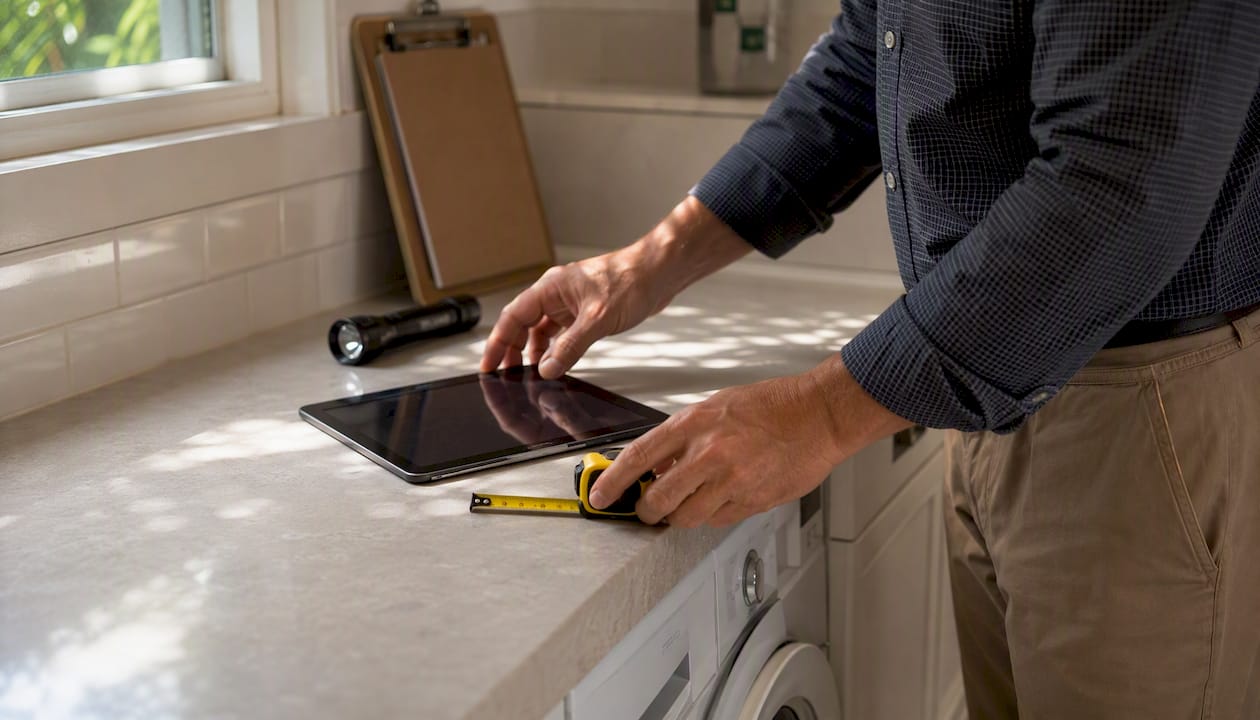
- Phone or camera with automatic date/time stamping active
- Torch for roof voids, under-sink spaces and dark corners
- Tape measure for any damage requiring a dimension record
- Spare printed inspection form
Confirm with the tenant how they prefer to communicate and whether they will be present. If you plan to photograph areas where personal possessions are visible and the images may be distributed, obtain written consent before the visit. Keep that consent record with the inspection file.
Room-by-room rental inspection checklist
Work through each area methodically. For every item, note whether the condition is acceptable, requires maintenance, or constitutes tenant damage.
Exterior and entry
- Roof condition: visible tiles, flashing, gutters clear of debris
- External walls and paint: cracks, peeling, impact damage
- Entry door locks, deadbolts and security screens functioning
- Pathways clear, no trip hazards
- Garden and lawn: overgrowth, edging, dead plants
- Sheds and garages: doors operational, no unauthorised storage
Photo targets: gutters from ground level, front door lock, any visible wall damage, garden from the boundary.
Living areas
- Walls and ceilings: stains, scuffs, holes, mould
- Windows: operation, locks, seals, condition of coverings
- Flooring: scratches, stains, lifting edges
- Smoke alarms: test each unit, record pass or fail
- Heating and cooling: filters clean, remote controls present
- Any signs of unauthorised alterations
Kitchen
- Benches and splashbacks: stains, burns, chips
- Cupboards and drawers: operation, condition of hinges
- Appliances included in the lease: oven, cooktop, rangehood
- Under-sink plumbing: leaks, moisture, pest evidence
- Exhaust fan: operational, filter condition
Bathrooms
- Grout and silicone: mould, deterioration, gaps
- Shower screen and bath: chips, cracks, seals
- Hot water system: visible corrosion, pressure relief valve accessible
- Exhaust fan: operational
- Taps and drainage: leaks, slow drainage
- Door locks functioning
Bedrooms
- Window coverings: operation, condition
- Floor condition: scratches, stains
- Built-in robes: doors, shelving, condition
- Smoke alarm: test and record
- Keys and locks: all present and functional
Laundry and garage
- Taps and drainage: leaks, blockages
- Dryer venting: clear, no lint build-up
- Garage door: operation, remote present
- Meter box: accessible, no obstructions
- No unauthorised items stored
Yard and garden
- Fencing: stability, damage, gates latching
- Pool or spa (if applicable): fencing compliant, water condition, equipment operational
- External safety hazards: broken paving, exposed wiring, overhanging branches
Photo targets: each room from the doorway (wide), then close-ups of any damage or maintenance item. Include a fixed reference object or ruler for scale where dimensions matter.
How to record and store inspection evidence
Solid documentation is what converts an inspection into admissible SACAT evidence. The condition report best practices HOSO Real Estate follows combine dated photos, signed checklists and summary lines mapped directly to the original ingoing condition report.
Photography standards:
- Date/time stamp must be active before the first photo
- Take one wide shot from the doorway, then close-ups of each item of concern
- Include a ruler or common object for scale on damage photos
- Photograph all tenancy-fixed items (smoke alarms, locks, appliances) at every inspection
File naming convention: suburb_address_YYYYMMDD_room_issue.jpg
Example: Norwood_42MainSt_20260315_kitchen_benchtop_burn.jpg
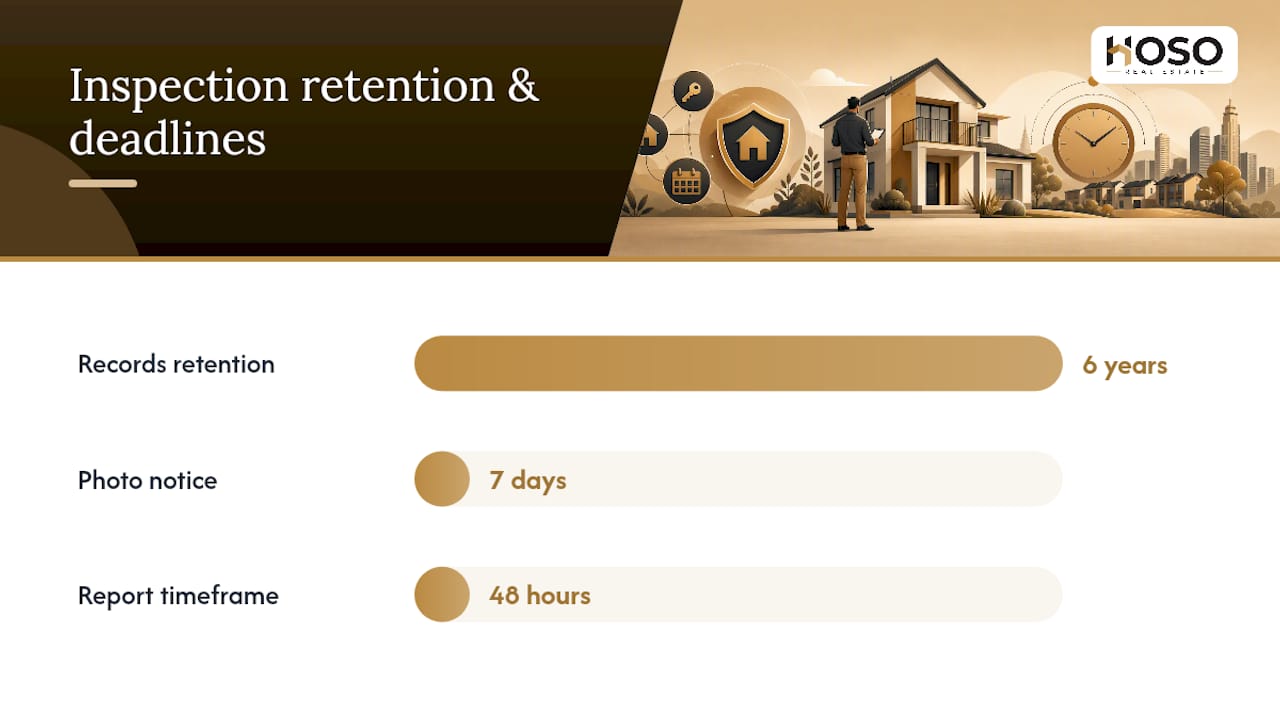
Retention: Keep inspection records for at least six years, covering the standard SACAT dispute window. Store files in a cloud folder mirroring the naming structure above.
Post-inspection report: Email a concise summary to both the tenant and the landlord within 48 hours. The report should list each room, note the condition, attach photo links, and flag required actions with estimated timeframes. This single step, as noted in Rental 360's SA inspection guide, significantly reduces escalation risk.
Since 1 July 2024, any photography or video that may be distributed requires at least 7 days' written notice, and written consent is needed when personal possessions are visible in the footage.
How to conduct yourself during the inspection
A professional, calm approach protects the landlord-tenant relationship and keeps the inspection on record.
- Open with a brief, factual statement. State the purpose, the 2-hour maximum duration, and what you will be recording. Hand the tenant a copy of the notice if they request it.
- Log tenant requests in writing on the spot. Do not make verbal commitments about repairs or timelines. Note the request, confirm you will follow up in writing, and move on.
- Stay within the notified time window. If the inspection is running long, prioritise the remaining rooms rather than extending beyond the 2-hour limit.
- De-escalate calmly if tension arises. Refer to the written notice and the legal timeframe. Offer to note any disagreement and respond in writing after the visit. Never argue on site. If a tenant refuses entry without lawful grounds, document the refusal and seek SACAT guidance before re-entering.
- Maintain professional communication standards throughout. HOSO Real Estate's approach to tenant communication treats every inspection interaction as a record-building exercise, not a confrontation.
Post-inspection workflow: what to do in the 48 hours after
Speed and accuracy in the follow-up phase determine whether findings translate into protected assets or unresolved disputes.
- Within 24 hours: Compile photos, label files using the naming convention, and draft the inspection report.
- Within 48 hours: Email the report and photo pack to the tenant and landlord. Flag each item as routine maintenance, urgent repair, or tenant responsibility.
- Maintenance items: Book trades or issue maintenance requests within the same 48-hour window where urgency applies. Log estimated completion dates.
- Breach identified: Issue a formal breach notice. Serve a re-inspection notice using CBS Form 2 within 7–14 days to confirm remedy. Keep the breach notice, the re-inspection notice and the follow-up photos together in one folder.
- Unresolved after re-inspection: File the complete evidence package (notices, photos, reports, correspondence) and apply to SACAT. For landlords managing complex breach sequences, the SA tenancy termination guide outlines the SACAT pathway and timelines.
Common inspection findings and what to do about them
| Finding | Urgency | Recommended action | Notice period |
|---|---|---|---|
| Minor scuffs or surface marks | Routine | Note in report; monitor at next inspection | None |
| Mould (surface, bathroom) | Routine to urgent | Arrange trades; note if ventilation is tenant-controlled | 48 hours (repair notice) |
| Unattended maintenance request | Routine | Book repair; confirm in writing to tenant | 48 hours |
| Garden neglect | Tenant responsibility | Issue written reminder; photograph evidence | Breach notice if unresolved |
| Unauthorised alteration | Urgent | Photograph, document, issue breach notice | 7–14 days re-inspection |
| Smoke alarm non-functional | Urgent | Arrange same-day replacement | Immediate |
Short action phrases for reports:
- Surface scuff — monitor; no action required unless progressive.
- Mould noted in bathroom grout — trades booked; ventilation reminder issued to tenant.
- Garden overgrowth — written reminder sent; re-inspection scheduled.
For maintenance standards applicable to premium Adelaide properties, the threshold between routine wear and landlord-actionable damage is worth reviewing before each inspection cycle.
Ready-to-use templates for SA-compliant inspections
Sample written notice wording
Notice of Routine Inspection
Property address: [Full address] Date of proposed entry: [Date] Time window: Between [e.g. 10:00am and 12:00pm] Purpose: Routine property inspection Person entering: [Name], [Contact phone/email]
This notice is given in accordance with the Residential Tenancies Act 1995 (SA), Section 72. Entry will not exceed two hours.
This wording mirrors the required fields in the CBS Notice to enter premises PDF. Use the official CBS form where possible; this wording is a compliant alternative when the form is unavailable.
Official forms and resources:
- CBS Notice to enter premises PDF — routine inspection notice
- CBS Form 2 — Notice to enter premises (breach remedy)
- HOSO Real Estate Forms & Guides — downloadable inspection templates and checklists
- CBS Right of entry guidance — plain-language summary of landlord entry rules
HOSO Real Estate's view on why this method works
Inspections done poorly create two problems at once: they fail to protect the asset, and they create legal exposure. The approach outlined in this guide reflects how HOSO Real Estate runs inspections across Adelaide properties, from Norwood to Glenelg to Prospect, because it is the only method that holds up at SACAT and maintains tenant relationships simultaneously.
The checklist, notice wording and documentation workflow here align directly with CBS forms and the Residential Tenancies Act 1995. That alignment is deliberate. A landlord who cannot produce a compliant notice, a timestamped photo set and a post-inspection report within 48 hours is not protected, regardless of what the property actually looked like on the day.
HOSO Real Estate's position is that compliance and asset care are the same discipline, not separate tasks. The Adelaide rental compliance framework is not a bureaucratic hurdle; it is the evidence structure that protects your investment when a dispute arises.
HOSO Real Estate's inspection and property management services
HOSO Real Estate manages routine and remedial inspections for Adelaide landlords as part of a full property management service, handling notice preparation, on-site documentation, photo evidence management and post-inspection reporting. The difference from self-managing is a complete, SACAT-ready evidence file after every visit, with no gaps in the paper trail.
Landlords who want compliant inspection templates can download them directly from the HOSO Forms & Guides page. For landlords considering full management, the HOSO services overview covers the complete scope of inspection, maintenance coordination and compliance management available for Adelaide investment properties. Contact HOSO Real Estate to arrange a compliance review of your current inspection process.
Sources
Save these links in your inspection folder or property management system.
- RESIDENTIAL TENANCIES ACT 1995 - SECT 72
- Landlord's rights to enter a property
- Notice_to_enter_premises.pdf
- Residential Tenancies Act SA — What Landlords Need to Know - Landlord Wise