
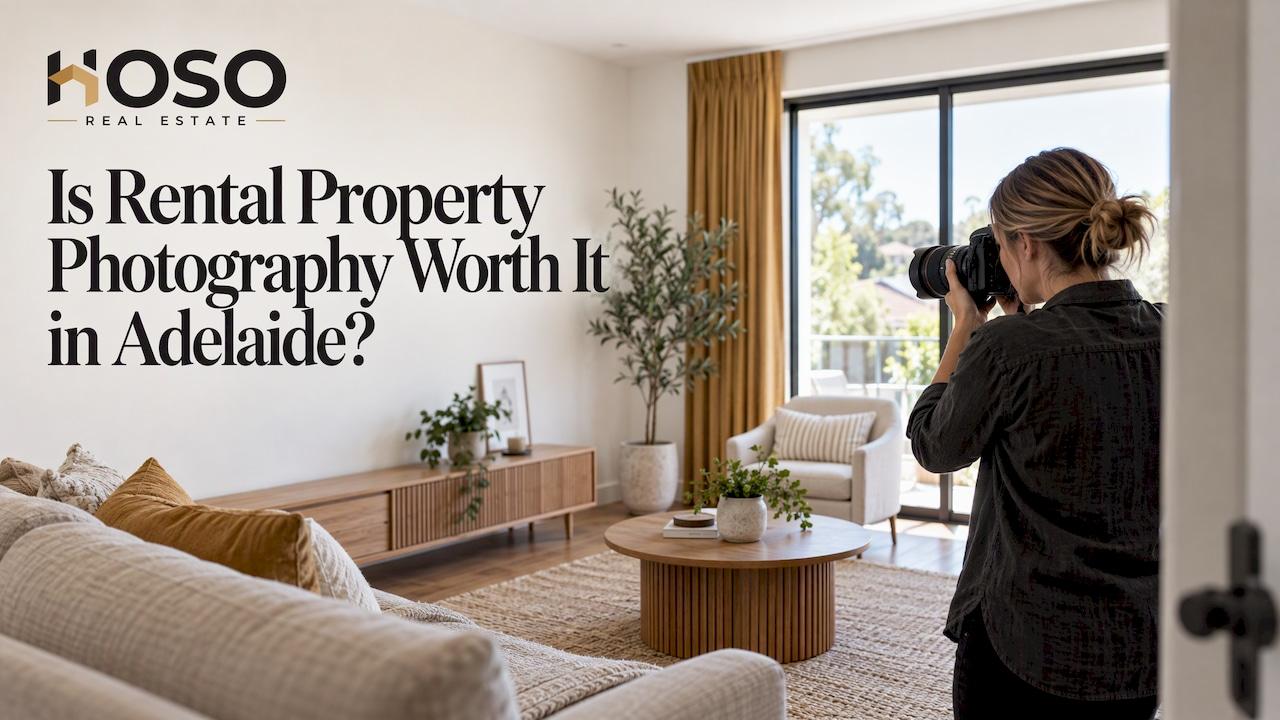
Yes, for most Adelaide landlords it is. A rental listing is judged in seconds, on a phone, by people comparing it with a dozen others. Strong photography sets the first impression, brings in better-qualified enquiries and, kept on file, gives you evidence if a tenancy ends in dispute. The only real question is how to get it done well: with a professional, with hired equipment, or with gear you buy and rarely use.
This guide covers what good rental photography does for your asset, when hiring a camera makes sense and when owning one does not, how to prepare a property so the images work, and how the same photos protect you in South Australia.
TL;DR
- Photos are the first screening step: they decide who books an inspection and who scrolls past.
- Good images shorten vacancy and attract tenants who value the home, which supports long-term asset performance.
- If you shoot yourself, hiring a camera usually beats buying one unless you use it more than 15 to 20 times a year.
- Preparation, such as cleaning, decluttering and lighting, matters more than the camera.
- Dated photos taken at the start of a tenancy support your condition report if a bond matter reaches SACAT.
Table of Contents
- What good photography does for a rental listing
- Rental photography versus a premium market
- Hire, buy or commission: the three ways to get the photos
- Does the camera matter most? No, preparation does
- The photos that protect you in South Australia
- Photography and your insurance
- A simple decision guide
- Our perspective
- Let us handle the listing and the tenant
- FAQ
- Sources
What good photography does for a rental listing
Most prospective tenants in Adelaide first meet your property through a portal thumbnail. Before they read the description, they have already decided whether the home looks cared for, bright and well kept. That reaction is the first filter on your enquiry pool.
Three effects matter to an investor:
- Vacancy. Every week a property sits empty is rent you do not collect. Images that show the layout, light and condition clearly reduce the number of wasted inspections and speed up genuine applications.
- Tenant quality. A listing that looks premium draws applicants who expect to look after a premium home. A dark, cluttered or inconsistent set of photos tends to draw the opposite.
- Accuracy. Honest images that match the property avoid disappointed applicants at the door, which saves everyone's time and keeps your listing credible.
Photography does not replace the fundamentals. Presentation, pricing and a thorough rental appraisal still decide how the property performs. Photos make sure those fundamentals are seen.
Rental photography versus a premium market
Adelaide's investor stock ranges from character homes in Unley and Norwood to townhouses in Prospect, apartments in the CBD and Glenelg, and family homes in Mawson Lakes and Golden Grove. Each suits a different image strategy.
| Property type | What the photos should show | Common mistake |
|---|---|---|
| Character home (Unley, Norwood, Walkerville) | Period features, ceiling height, natural light, garden | Shooting on a grey day with every light off |
| Townhouse or villa unit (Prospect, Mile End) | Flow between rooms, outdoor area, parking | Cramped angles that hide the floor plan |
| Apartment (CBD, Glenelg, Adelaide Oval precinct) | Views, balcony, storage, building amenities | Showing the view but not the kitchen or bedrooms |
| Family home (Mawson Lakes, Golden Grove, Seaford) | Living zones, yard, bedrooms, garage | Visible personal items or clutter in the yard |
For a deeper look at how property type affects returns, see our guide to matching your goal to a house or apartment investment. If you are positioning a home at the upper end of the market, our 2026 guide to professional leasing in the premium Adelaide market covers how presentation and tenant selection work together.
Hire, buy or commission: the three ways to get the photos
Landlords who ask whether rental photography is worth it are usually weighing three paths.
Commissioning a professional
A working photographer brings lighting control, lens choice and editing. The result is consistent and suited to portal listings. For a premium property, or any property where the first impression carries weight, this is the path that most directly supports the outcome you want. Allow time for the booking and image delivery before your target listing date.
Hiring equipment
Some owners prefer to photograph the property themselves, particularly interstate investors with a local contact on site. In that case hiring is the sensible equipment choice. Australian camera hire is priced per day: one published price list shows a full-frame mirrorless body at $200 a day and a pro softbox at $80 a day, ex GST. Hire rates, deposits and insurance terms differ between suppliers, so read them before booking.
Hire suits the owner with one or two properties because the use is occasional. One Australian retailer says that for most photographers the threshold for owning is more than 15 to 20 uses per year. A landlord listing a property once a year or less sits far below that line.
Buying equipment
Buying only pays when you use the gear often. The same source gives a simple break-even test: divide the purchase price by the daily hire rate. A $2,000 lens that costs $100 a day to hire breaks even at twenty days a year. A landlord with a small portfolio will not reach that, which is why a hybrid approach tends to work: own what you use constantly, hire what you need occasionally.

Does the camera matter most? No, preparation does
The most expensive body will not rescue a cluttered lounge. The work that lifts a listing happens before anyone presses a shutter.
Clear, clean and neutral
Remove personal items, bins, pet bowls and anything stored on benchtops. If the property was lived in by a long-term tenant, a cleanout may be needed first. This photo-ready property cleanout guide sets out a practical timeline for clearing a property so it is ready to be photographed.
Light and timing
Open every blind and curtain, switch on all lights for a consistent colour, and shoot in daylight. Photograph each room from a corner at roughly chest height so the walls stay straight and the room reads as spacious.
Repairs before the lens
A chipped skirting board, a stained ceiling or a tired garden bed shows up in high resolution. Fix what is cheap to fix and note larger items for a considered maintenance plan. If you are unsure whether the work is a repair or a capital improvement for tax purposes, our quick ATO tests for capital works versus repairs are a good starting point.

Furnished or unfurnished
If you present the home furnished, the styling must match what the tenant receives. See our guide to furnished rentals in Adelaide for the options and rules.
The photos that protect you in South Australia
Listing photography has a second job that many landlords overlook. Under the Residential Tenancies Act 1995 (SA), the condition report records the state of the property at the start of the tenancy. One compliance resource notes that the report is the main evidence at SACAT in end-of-tenancy bond disputes, and that the tenant has 14 days after taking possession to review it and return a copy.
Clear, dated photographs that match the condition report make your position easier to prove. Listing photos are not a substitute for the condition report, but a consistent set of images taken at the same stage gives a useful record of presentation before the tenant moved in.
Two practical points:
- Keep originals. Store the full-resolution, date-stamped files, not only the compressed portal versions.
- Respect privacy. Photos taken during routine inspections or while a tenant is in residence involve consent. Read our guide to routine inspection photos and consent before SACAT disputes before you photograph an occupied home.
Our guide on rental listing photos and SACAT evidence sets out how to organise these images. If you are considering video, see our piece on mobile-first rental video tours and consent. Owners thinking about cameras on the property itself should read what the law allows for security cameras in SA rentals.
Photography and your insurance
Images also help when something goes wrong. A clear before-and-after record of the property supports a claim with your insurer. Cover for landlords in South Australia has its own features, which we cover in our Adelaide investor guide to landlord insurance. If you hire gear and plan to use it on site, check how your hire supplier handles loss and damage, and what your own policy covers, before the shoot.
A simple decision guide
| Your situation | Sensible approach |
|---|---|
| Premium home, or a property you want leased quickly | Commission professional photography |
| One or two properties, you are on site and keen to shoot | Hire a camera and lens for the day |
| Interstate or overseas owner | Arrange local photography through your manager |
| Large portfolio with frequent turnover | Standardise a process, and own gear only if usage passes the break-even point |
The point is the same in every row: the images are an investment in the listing, and they are cheap next to a week or two of extra vacancy.
Our perspective
We focus exclusively on property management, not sales. That means we care about what happens after the photos are taken: the quality of the tenant, the condition of the property over years, and the evidence behind every decision.
In our experience, owners who treat the listing as the start of the asset's management record get better results. Strong presentation brings applications. Our four-layer tenant screening and HPTS process then help us identify the right applicant, and our premium advertising on the major portals puts the property in front of them.
After that, the 24/7 owner portal keeps inspection reports, maintenance records and communication in one place, so you can see what is happening to your property at any time. We back our service with a 60-day satisfaction guarantee, and we believe a transparent, detail-oriented approach is the best way to protect a long-term investment.
HOSO
Let us handle the listing and the tenant
If you would like a clear view of how your property should be presented and what it can achieve, start with a rental appraisal. You can also see our recently leased properties or read about our leasing and management services. Interstate owners and busy professionals are welcome: our approach is built around keeping you informed without needing to be in Adelaide.
If you are comparing options, our article on property management versus self-managing lays out the trade-offs.
FAQ
Is professional photography worth it for a rental property?
For most landlords, yes. Listing images are the first thing applicants see, and they influence who books an inspection. Clear, well-lit photos help a quality property attract quality applicants and reduce time on the market.
Should I buy a camera to photograph my own rental?
Usually not. Ownership only pays if you use the gear often. One Australian retailer puts the threshold at more than 15 to 20 uses a year, and most landlords list a property far less often than that. Hiring for the day covers occasional use.
Can listing photos be used as evidence at SACAT?
The condition report is the key document in a South Australian bond dispute. Dated photos that match it add useful support, so keep the original files. Photos of an occupied home involve consent, so follow the proper process and seek advice if a dispute is under way.
How should I prepare a property before it is photographed?
Clean it, clear surfaces, remove personal items, open all blinds and switch on every light. Fix small defects first, as they show clearly in high-resolution images. If a property needs clearing out, allow a week or two before the shoot.
Can interstate owners arrange photography remotely?
Yes. An Adelaide property manager can coordinate the shoot, the listing and the tenant screening on your behalf, and you can follow progress through an owner portal.
Sources
- Camera Rental vs Buying: Which Is Right for Your Project? (Camera Electronic)
- Equipment hire price list 2026 (Ripe Studios)
- South Australia Landlord Required Disclosures (Landager)
- Get Photo Ready Listings in 10 to 14 Days With Realtor Cleanout Playbook