
Landlord insurance in South Australia covers risks that a standard home insurance policy does not, specifically tenant-related income loss, tenant-caused damage, and legal costs tied to tenancy disputes. Three differences stand out immediately for Adelaide property owners:
- Landlord policies include loss of rent and tenant default cover, which home insurance policies typically exclude entirely.
- SA-specific factors, including the review of renting laws administered through Consumer and Business Services (CBS) and dispute resolution via SACAT, directly affect the evidence landlords need to support a claim.
- Local hazard profiles, from bushfire-prone hills suburbs like Stirling and Crafers to flood-mapped areas near the River Torrens, influence premiums and waiting periods in ways that differ from interstate properties.
The ATO confirms that insurance premiums related to producing rental income may be deductible, making the right policy both a risk tool and a tax consideration. HOSO Real Estate works with Adelaide landlords to align their cover with their actual property risk before something goes wrong.
Key takeaways
Landlord insurance in South Australia is a materially different product from standard home insurance, covering tenant-related income loss, damage, and legal costs that owner-occupier policies exclude entirely.
| Point | Details |
|---|---|
| Landlord cover fills the tenant-risk gap | Home insurance does not cover loss of rent, tenant damage, or legal costs for tenancy disputes. |
| SA tenancy law shapes your evidence needs | CBS and SACAT reforms mean landlords need thorough documentation to support claims and dispute applications. |
| Read the PDS trigger clauses | The four-week tenancy rule and natural-peril waiting periods are the most commonly missed policy conditions. |
| Property condition drives premiums and claims | Documented maintenance and inspection records reduce premium loading and support claim success. |
| HOSO Real Estate manages the evidence trail | Professional management from HOSO produces the documentation insurers and SACAT require. |
Table of Contents
- What landlord insurance typically covers for SA investment properties
- Landlord insurance versus standard home insurance: what actually differs
- Common optional extras worth considering in SA
- What drives landlord insurance premiums in South Australia
- Policy wording you must check before buying
- How to make a claim and reduce dispute risk in South Australia
- How Adelaide property managers improve insurance outcomes
- HOSO Real Estate's view on why insurance alignment matters
- HOSO Real Estate supports better insurance outcomes for Adelaide landlords
- Sources
What landlord insurance typically covers for SA investment properties
A landlord policy is built around the specific risks of having a paying tenant in your property. Standard inclusions across most Australian insurers cover:
- Building (structure): walls, roof, fixed fixtures, and outbuildings.
- Landlord-owned contents: carpets, blinds, curtains, and appliances you supply as part of the tenancy.
- Public and landlord liability: injury or property damage claims made against you as the property owner.
- Emergency repairs: urgent call-outs for burst pipes or electrical faults that make the property unsafe.
Beyond those core items, landlord-specific benefits are where the policy earns its keep. Loss of rent cover pays you when a tenant vacates unexpectedly or the property becomes uninhabitable after an insured event. Tenant default cover, where offered, responds when a tenant stops paying rent and abandons the property. Malicious or accidental damage by tenants or their guests, replacement locks and keys after a tenancy ends badly, and legal expenses for SACAT proceedings are all covers that a standard owner-occupier policy will not provide.
iSelect notes that optional extras and waiting periods vary between insurers, so not every benefit listed above is automatically included. Some insurers require the tenancy to have been active for four weeks before rent default cover can be triggered. Flood and cyclone cover on new policies often carries a short exclusion period, typically 72 hours to 14 days depending on the insurer.
For apartments in suburbs like Norwood or Unley, strata insurance covers the building structure and common areas under the owners corporation policy. Your landlord policy then sits on top, covering landlord contents inside the unit, loss of rent, and tenant-related risks that the strata policy does not touch. Checking that the two policies do not overlap or leave a gap is worth doing before settlement.
Duo Insurance explains that landlord insurance fills gaps that a bond cannot. A bond is capped under SA law and cannot cover extended rent loss beyond standard limits and cannot cover extended rent loss, malicious damage above that amount, or legal costs.
Landlord insurance versus standard home insurance: what actually differs
The clearest way to see why landlord insurance differs in SA is to compare the two policies line by line. QBE's comparison of home and landlord insurance shows that landlord-specific covers are absent from standard home policies by design, because the risk profile of a tenanted property is fundamentally different.
| Cover dimension | Standard home (owner-occupier) | Landlord insurance |
|---|---|---|
| Building structure | Yes | Yes |
| Owner's personal contents | Yes | Not typically (landlord contents only) |
| Landlord-owned contents (carpets, appliances) | No | Yes |
| Loss of rent after insured event | No | Yes |
| Tenant default / rent arrears | No | Optional add-on |
| Malicious damage by tenants | No | Yes (check PDS) |
| Legal expenses for tenancy disputes | No | Yes (check limits) |
| Replacement locks after tenancy | No | Yes |
| Liability for tenant injury | Limited | Yes |
| Claims evidence required | Photos, receipts | Lease, condition report, SACAT records |
Furnished vs unfurnished scenario: A furnished rental in Prospect suffers deliberate damage to furniture and appliances after a difficult tenancy ends. A standard home policy would not respond because the property is not owner-occupied and the damage was tenant-caused. A landlord policy with malicious damage cover responds to the furniture and appliances as landlord contents, covers the loss of rent during the repair period, and may cover legal costs if the landlord pursues the matter through SACAT. The claim route requires the original condition report, photographs from the exit inspection, and the lease agreement as minimum evidence.

For unfurnished properties, the landlord contents component is less critical, but loss of rent and malicious damage to the building fabric remain just as relevant.
Common optional extras worth considering in SA
Optional add-ons are where landlord policies diverge most between insurers. When comparing product disclosure statements (PDS), watch for these extras:
- Tenant default and rent guarantee extension: extends the standard rent-loss period beyond the base limit, useful for longer SACAT proceedings.
- Accidental damage by tenants: covers unintentional damage, not just deliberate acts, which matters for furnished properties.
- Malicious damage: covers deliberate destruction by tenants or their guests; check whether the definition requires a police report.
- Legal expense top-up: base legal cover limits can be low; a top-up matters if a SACAT dispute runs to multiple hearings.
- Chemical decontamination (drug lab) cover: QBE lists this as an optional limit for landlord contents; remediation costs for a property used as a drug lab can be substantial.
- Arrears recovery assistance: some policies include a debt recovery service or legal referral for unpaid rent.
Two triggers that landlords frequently miss: the four-week tenancy rule, noted by iSelect, means rent default cover cannot be claimed until the tenant has been in the property for at least four weeks under a valid lease. BankSA's summary of Allianz cover highlights that cyclone, flood, and bushfire cover on new or increased policies often carries an exclusion period, so buying cover the week before a storm event will not help.
Pro Tip: Before purchasing an optional add-on, find the trigger clause in the PDS. Search for the exact phrase "rent default" or "malicious damage" and read the conditions that must be met before the insurer pays. If the trigger requires a formal SACAT order before the claim is accepted, factor in how long that process takes in SA.
What drives landlord insurance premiums in South Australia
Premiums for SA investment properties are set by a combination of property-level and location-level factors. The main cost drivers are:
- Sum insured for loss of rent: calculated from your weekly rent, so higher-rent properties in suburbs like Burnside or Glenelg carry higher loss-of-rent premiums.
- Suburb crime rates: insurers use postcode-level crime data; properties in higher-crime postcodes attract higher premiums for malicious damage and theft.
- Property condition and maintenance record: a well-documented maintenance history reduces the insurer's perception of risk and supports claims if they arise.
- Proximity to bushfire, flood, or storm zones: hills suburbs face bushfire loading; low-lying areas near the Torrens or coast face flood and storm-surge loading.
- Strata vs standalone: strata properties carry lower building-sum-insured premiums because the owners corporation covers the structure, but the landlord policy still needs to cover contents and liability.
- Security measures: deadlocks, monitored alarms, and security screens typically attract a discount.
- Claims history: a recent claim, particularly for tenant damage or rent default, can increase renewal premiums.
SA's overall natural-disaster frequency is lower than Queensland or northern Western Australia, which tends to moderate base premiums. However, local micro-risks matter. The ARPC cyclone reinsurance pool was established to stabilise insurer capacity for extreme events, and reinsurance costs flow through to retail premiums when catastrophe risk rises. Climate-driven increases in extreme weather events are already influencing how insurers price risk nationally, and SA is not exempt from that trend.
Key cost signal: Insurers assess risk at the individual property level, not just the suburb. A well-maintained property with documented inspections in a moderate-risk postcode will almost always attract a lower premium than a comparable property with a poor maintenance record in the same street.
Policy wording you must check before buying
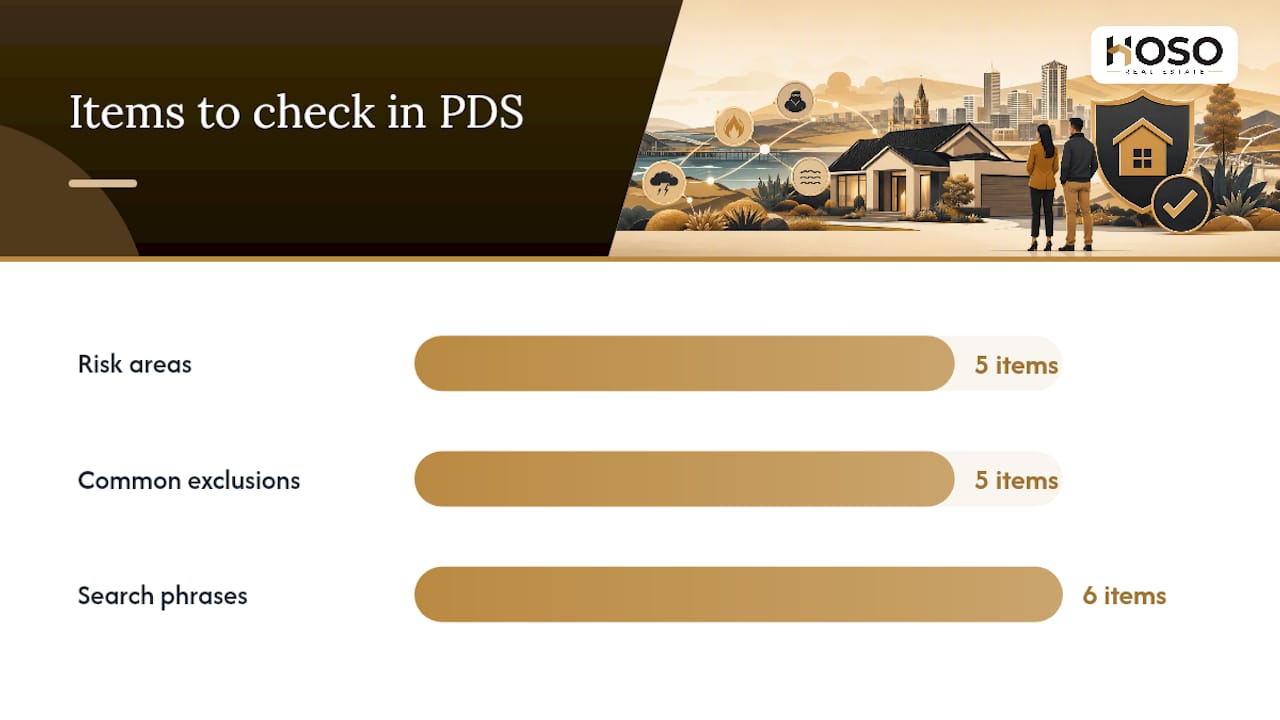
Reading a PDS takes time, but five areas carry the most risk for SA landlords:
- Definition of "tenant": some policies require a formal written lease; a verbal or informal arrangement may void cover.
- Exact trigger for "loss of rent": does cover start when the property becomes uninhabitable, when the tenant vacates, or when a SACAT order is made? The answer changes your cash-flow exposure.
- Tenant default exclusions: check whether the policy excludes default if the landlord accepted a reduced rent or varied the lease without insurer notification.
- What counts as "malicious damage": some policies require proof of intent; others accept evidence of deliberate act without a conviction.
- Waiting periods for natural perils: as BankSA notes, new or increased cover for cyclone, flood, and bushfire typically carries an exclusion period.
Common exclusions to flag: repeat tenant events within a short period, pre-existing damage visible at the start of the tenancy, general wear and tear, body corporate or common property items (covered by strata), and damage caused by certain pets or illegal activity not disclosed to the insurer.
Pro Tip: Use your PDF reader's search function and look for these exact phrases in the PDS: "waiting period", "exclusion period", "tenant default", "malicious damage", "maintenance", and "wear and tear". Each hit tells you a condition or limit you need to understand before you need to claim. Keep digital copies of your condition reports, lease, and inspection records in a cloud folder labelled by property address.
NRMA's comparison of homeowner and landlord policies reinforces that reading the PDS is not optional; the differences between policies are in the detail, not the product name.
How to make a claim and reduce dispute risk in South Australia
When something goes wrong, the order of your actions affects whether the claim succeeds. Follow these steps:
- Secure the property. If the property is unsafe, arrange emergency repairs immediately. Most landlord policies cover emergency call-out costs; keep receipts.
- Photograph and record all damage. Take timestamped photos and video of every affected area before any repairs begin. Compare against your entry condition report.
- Contact your insurer. Call with your policy number, property address, and a brief description of the event. Ask specifically what evidence they require for your claim type.
- Lodge a police report where applicable. Theft, vandalism, and malicious damage claims almost always require a police report number. Do this within 24 hours of discovering the damage.
- Notify the tenant in writing. Send written notice of the damage and your intention to claim. Keep a copy. This creates a record if the matter escalates to SACAT.
- Preserve all evidence for SACAT. SA's review of renting laws has changed notice periods and dispute pathways; landlords now need more thorough documentary evidence to support applications. Keep the lease, all inspection reports, rent ledger, and written communications.
For ongoing risk reduction, proactive maintenance scheduling and documented tenant communication are the two practices that most consistently improve claim outcomes. An insurer will look for evidence that the landlord maintained the property and acted promptly when issues arose.
Pro Tip: Involve your property manager at step one, not step five. A manager who has been conducting routine inspections already has a documented evidence trail. For theft or vandalism, call the police before calling the insurer, and get the event number in writing. For rent default, do not wait more than two weeks of arrears before issuing a formal breach notice, as delay can affect the trigger date for your insurance claim.
How Adelaide property managers improve insurance outcomes
Professional property management directly affects how well a landlord insurance claim performs. At HOSO Real Estate, the practices that protect cover include:
- Routine inspections with written reports: conducted at regular intervals, these create a dated evidence trail that insurers and SACAT both rely on.
- Tenant vetting at application stage: thorough rental application screening reduces the probability of rent default and malicious damage claims.
- Maintenance scheduling and prompt response: documented repair requests and completion records counter maintenance-exclusion arguments from insurers.
- Entry and exit condition reports: detailed, photographic condition reports are the single most important document in any tenant-damage claim.
- Emergency repair coordination: fast response to urgent maintenance limits property damage and keeps the property habitable, which directly limits loss-of-rent exposure.
When a claim does arise, a manager who has maintained complete records can lodge the claim with the insurer the same day, with the lease, inspection reports, rent ledger, and photographs already compiled. That speed and completeness consistently produces better claim outcomes than a self-managed landlord assembling documents under pressure.
Questions to ask your insurer and your property manager when reviewing cover:
- "Will my rent-loss period be linked to repair time or to a declared uninhabitable period?"
- "Does my policy require a SACAT order before rent default cover pays out?"
- "How does the insurer define 'malicious damage' and what evidence do they require?"
- "Are my landlord contents listed and valued correctly on the policy?"
Pro Tip: Ask your property manager to confirm that your entry condition report includes photographs of every room, all appliances, and all floor coverings. A condition report without photos is difficult to use as evidence in a SACAT hearing or an insurance claim.
HOSO Real Estate's view on why insurance alignment matters
At HOSO Real Estate, we see landlords underinsured in one of two ways: either they hold a home policy on a tenanted property, or they hold a landlord policy with optional covers that do not match their actual risk. Both situations cost money when a claim arises.
The single most practical step a landlord can take today is to pull out the current PDS, find the loss-of-rent trigger clause, and confirm it matches how their tenancy agreement is structured. If the policy requires a formal SACAT order before rent-loss payments begin, and the landlord has never been through that process, the gap between expectation and reality can be significant. A current, detailed condition report filed at the start of every tenancy is the document that makes every other step easier.
HOSO Real Estate supports better insurance outcomes for Adelaide landlords
Adelaide landlords who want their insurance to actually work when it matters need documentation, fast response, and a manager who understands the claim process. HOSO Real Estate provides property management services that cover routine inspections, maintenance coordination, tenant vetting, compliance management, and claims liaison, all of which directly support insurer requirements and SACAT evidence standards.
If you are unsure whether your current cover matches your property's actual risk profile, a free rental appraisal with HOSO is a practical starting point. The appraisal covers rental market positioning and gives you the opportunity to discuss your property's specific risk factors with a manager who knows the Adelaide market.
Sources
- Ato
- Landlord Insurance Comparison Australia
- Landlord Insurance South Australia | Cover your Property Today
- Landlord vs Home Insurance | QBE AU
- Cbs
This article provides general information only and is not a substitute for professional insurance or legal advice. Confirm current policy terms with your insurer and current SA tenancy rules with CBS or a qualified professional.