

A repair that restores wear and tear on a rented property is deductible immediately; a capital works item, an improvement, or a fix that existed at the time you bought the property, is claimed over years at 2.5% or 4%. Mixing the two on a single invoice is the mistake the ATO sees most often, and Taxation Ruling TR 97/23 is the document that settles the argument when it happens.
TL;DR:
- Repairs must be clearly separated from capital works on invoices, with repairs claimed in the year incurred and capital works deducted over 40 or 25 years at the correct percentage.
- The character, entirety, and initial repairs rules determine whether work is classified as a repair or a capital expense, with pre-existing defects and full replacements leaning towards capital.
- Common disputes relate to painting, roofing, fencing, appliances, and renovations, where the work’s scope and timing influence its classification as repair or capital works.
- Proper records, including itemized invoices, construction dates, contracts, and consultant reports, are essential to substantiate claims and avoid ATO reclassification risks.
- Outsourcing maintenance coordination ensures itemized invoicing and record-keeping that align with tax requirements, reducing the risk of costly classification errors.
Table of Contents
- What does the ATO say about capital works vs repairs?
- How do you tell a repair from an improvement?
- Are painting, roofs and fences repairs or capital works?
- How do you actually claim repairs and capital works?
- What mistakes trigger ATO attention on rental claims?
- What should you collect before tax time?
- How HOSO Real Estate keeps landlord records classification-ready
- Why outsourcing maintenance protects your deductions
- Sources
What does the ATO say about capital works vs repairs?
The distinction sits on four terms, and landlords who blur them tend to either under claim or invite a reassessment.
Repairs remedy damage or deterioration that occurred while you owned and rented the property. Think a cracked window pane, a leaking tap, or a section of damaged guttering. These are deductible in the year you pay for them, under section 25-10 of the Income Tax Assessment Act 1997.
Capital works cover structural improvements: extensions, new roofs, added carports, or major renovations that change the fabric of the building. The ATO allows these to be written off at 2.5% per year over 40 years for most residential construction after mid-1985, or at 4% over 25 years for particular categories of income-producing building work, as explained in this guide on house demolition costs in Australia.
Improvements upgrade an asset beyond its original condition, replacing a laminate kitchen bench with stone, for instance, and are treated as capital even when they look like a repair on the surface.
Depreciating assets, carpets, hot water systems, dishwashers, sit outside both categories and are claimed through separate capital allowance schedules rather than the capital works rate.
- Repairs: deductible in full, in the year the cost is incurred
- Capital works: claimed annually at a statutory rate, only once construction is finished
- Improvements: treated as capital, added to the depreciation schedule or cost base
- Depreciating assets: written off under their own effective life schedules
Statistic callout: Capital works deductions run for either 40 years at 2.5% or 25 years at 4%, depending on the construction type and start date, according to the ATO's capital expenses guidance. Get the rate wrong on a $40,000 renovation and you could misstate a deduction by hundreds of dollars a year for decades.
TR 97/23 and the NAT 75208 toolkit are the two documents worth bookmarking. One sets the legal test, the other gives worked, plain-English examples landlords can compare their own invoices against.
How do you tell a repair from an improvement?
Three tests do most of the heavy lifting, and you can run through them on-site before a contractor even picks up a tool.

The character test asks whether the work changes what the asset fundamentally is. Patching a section of fibro fence restores it. Replacing that fence with a rendered brick wall changes its character entirely, even if the old fence was falling down anyway.
The entirety test asks whether you replaced part of an item or the whole thing. Fixing three broken palings is a repair. Tearing out the entire fence line and rebuilding it, even with identical materials, tips toward capital because you have replaced the whole entity rather than a component of it.
The initial repairs rule catches the trap most new investors fall into. If a defect existed when you bought the property, even one you didn't know about, fixing it afterwards is capital expenditure and adds to your cost base for CGT purposes rather than being deducted outright. TR 97/23 is explicit on this point: your intention or ignorance at settlement doesn't matter, the condition of the asset does.
A practical decision flow for reviewing any job:
- Did the defect exist when you purchased the property, or arose during a rental period? If it predates your ownership, it's capital.
- Does the finished work restore the item to its prior function, or does it change what the item is? Restoration points to repair; transformation points to capital.
- Are you replacing a component, or the entire asset? Component replacement is usually a repair; whole-of-asset replacement is usually capital.
- Is this job bundled with an unrelated improvement on the same invoice? If so, separate the costs before you claim anything.
Are painting, roofs and fences repairs or capital works?
Most disputes with the ATO come down to five job types landlords deal with constantly. Here's how each typically lands.
- Painting: repainting a rental after years of tenant wear is a standard repair and immediately deductible, per ATO guidance on painting and wear and tear. Painting immediately after purchase, before the first tenant moves in, is treated as an initial repair and is capital.
- Roofs: patching a handful of damaged tiles after a storm is a repair. Replacing the entire roof, or altering its structure, is capital works claimed at the applicable rate.
- Fencing: refixing loose posts or replacing a few palings is a repair. Tearing out the whole fence and installing a new colorbond or rendered version is capital, even where the old fence needed replacing regardless.
- Appliances and carpets: these generally sit outside capital works altogether. A new dishwasher or replacement carpet is a depreciating asset, claimed on its own effective life schedule rather than the building rate.
- Bathroom and kitchen renovations: swapping a broken tap washer is a repair. A full renovation, new cabinetry, retiling, reconfigured plumbing, changes the room's character and is capital.
Statistic callout: Under TR 97/23, the legal test hinges on whether work restores efficiency of function without changing character, or amounts to reconstructing the whole item. Landlords most often misjudge partial replacements, assuming a "like for like" swap is automatically a repair when the ATO may view it as capital if it upgrades the asset beyond its original standard.
A rental in Prospect with an original 1960s bathroom, replaced wholesale with a new layout, waterproofing and fittings, is capital works, not a repair, however overdue the job felt.
How do you actually claim repairs and capital works?
Repairs are claimed as an ordinary deduction in the financial year you pay for them, provided the property was rented or genuinely available to rent at the time. There is no apportionment across years and no need to track a schedule.
Capital works are different. The ATO calculates the annual deduction at either 2.5% or 4% of the construction cost, starting only from the date construction is completed, not the date you paid the invoice. Get the start date wrong and you either claim too early or lose months of eligible deduction.
If you don't know what the original construction cost was, perhaps you bought an established property with no builder's records, the ATO accepts an estimate from a quantity surveyor or other suitably qualified independent person. The surveyor's own fee is then deductible too.
Records worth keeping for every job:
- Construction or completion dates for any structural work
- Itemised invoices separating labour, materials and distinct tasks
- Signed contracts for larger renovations
- Contractor ABNs on every invoice
- Quantity surveyor reports where original costs are unknown
Pro Tip: Ask your quantity surveyor for a full depreciation schedule up front rather than a one-off capital works estimate. It typically covers both the building rate and any depreciating assets in the property, saving you commissioning two reports later.
What mistakes trigger ATO attention on rental claims?
The five errors below account for most of the reclassification risk landlords carry, and every one is preventable at invoice stage.
- Lumping a repair and an improvement into a single invoice line, which lets the ATO treat the whole job as capital because the costs aren't separable.
- Claiming an initial repair, one that existed at purchase, as an immediate deduction instead of adding it to the cost base.
- Holding no construction date or cost breakdown for a capital works claim, leaving nothing to substantiate the annual rate.
- Paying a contractor with no ABN and failing to withhold the required amount, which the ATO's rental expense guidance flags as a compliance failure in its own right.
- Assuming a "like for like" replacement is automatically a repair without applying the entirety test.
If you discover a prior return misclassified a job, an amendment is usually straightforward within the ATO's standard review period. Beyond that window, a registered tax agent can advise on voluntary disclosure, which typically produces a better outcome than waiting for an audit to find the error first.
What should you collect before tax time?
Build the habit at the point you commission the work, not in June when your tax agent asks for it.
- Brief every trade in writing. Ask for itemised invoices showing labour and materials separately, the contractor's ABN, the date the work was completed, and a short description of what was actually done.
- Split mixed jobs immediately. If a contractor is fixing a leak and upgrading a fitting in the same visit, ask for two line items or two invoices, not one bundled figure.
- Engage a quantity surveyor for renovations or unknown-cost properties. Ask specifically for a capital works schedule alongside any depreciating asset report.
- File everything digitally, by property and financial year. A simple folder structure, address, then year, then job, beats a shoebox of receipts every time.
Pro Tip: Keep a running spreadsheet per property logging job description, cost, date and classification (repair or capital) as work happens. It turns a stressful June scramble into a five-minute handover to your accountant.
How HOSO Real Estate keeps landlord records classification-ready
Maintenance coordination is where most classification errors are born, at the point a job is booked, not at tax time. HOSO Real Estate briefs every tradesperson with itemised scope requirements, separate invoicing for mixed jobs, and dated records that hold up if the ATO ever asks questions.
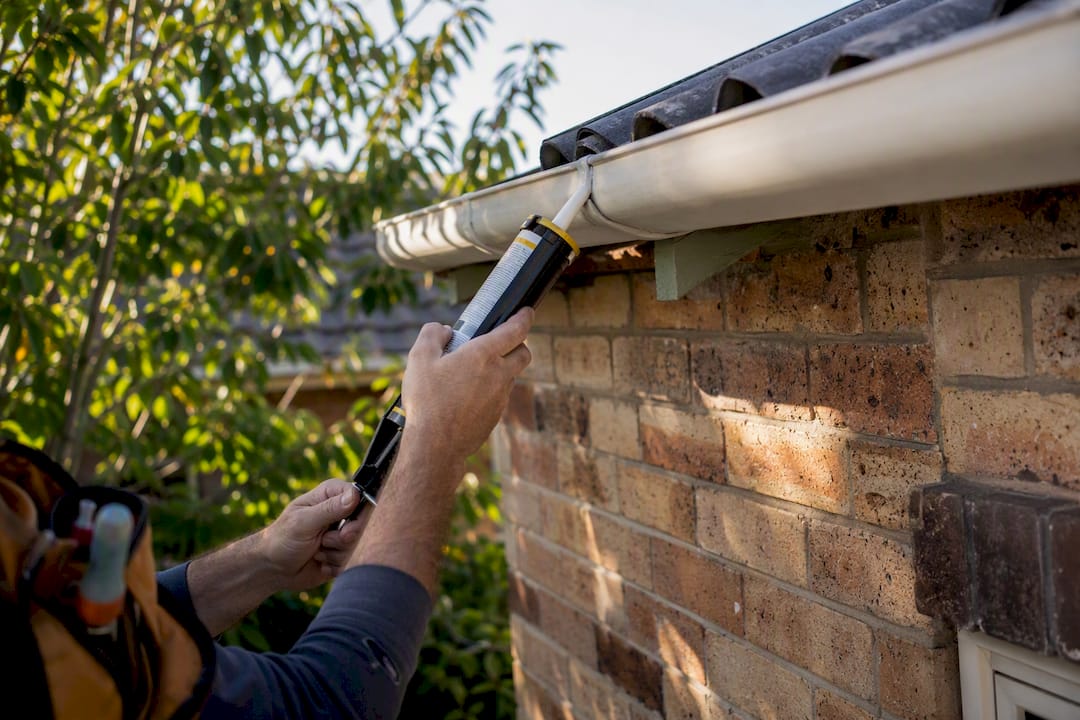
A landlord we manage for in Unley had a decade of undocumented repairs behind an older kitchen. Once maintenance requests were logged and invoiced separately by task, their accountant could finally distinguish genuine repairs from the earlier capital works with confidence.
If your portfolio's paperwork wouldn't survive a closer look, it's worth asking HOSO Real Estate for a maintenance and compliance review before your next tax return, not after.
— HOSO
Why outsourcing maintenance protects your deductions
Reviewing invoices line by line isn't where most landlords want to spend their weekends, and getting the classification wrong costs real money over the life of a property. HOSO Real Estate is the alternative to doing this yourself: our property management services coordinate every repair and capital job with itemised, dated invoicing from the outset, so the record your accountant needs already exists when tax time arrives.
Landlord advisory and portfolio stewardship sit alongside maintenance coordination, meaning bathroom renovations, roof work, and everyday repairs are tracked and separated as they happen rather than reconstructed months later from memory. High-net-worth investors with larger, more complex portfolios can look at HOSO Sovereign, our private estate office service built for owners who need the same rigour applied across multiple properties.
If your current records wouldn't stand up to an ATO query, contact HOSO Real Estate to talk through a compliance review of your maintenance workflow.
This article is general information, not a substitute for advice from a qualified financial advisor. Consult a qualified financial professional about your own circumstances before acting on anything here.