
The property management complaint process is a structured series of steps that takes landlords from direct negotiation through to a binding tribunal decision when disputes with tenants or agencies cannot be resolved informally. In South Australia, this process is governed by the Residential Tenancies Act 1995 and ultimately administered by the South Australian Civil and Administrative Tribunal, known as SACAT. Understanding each stage of the landlord complaint process protects your asset, preserves your legal standing, and prevents costly delays. Whether you manage a property in Norwood, Prospect, or Burnside, the same sequential pathway applies.
What initial steps should landlords take before filing a formal complaint?
Direct negotiation is the required first step in any property management issue resolution. Tribunals expect landlords to show good-faith negotiation efforts before they will accept an application. Skipping this stage does not save time. It typically results in an application being rejected or delayed.
Written communication is the foundation of effective early negotiation. Send all requests, notices, and follow-ups by email or registered post. Verbal conversations carry no weight in a formal complaint or tribunal hearing. Every written exchange creates a dated record that supports your position later.

Setting a clear timeline for response is equally important. When you contact a tenant or property manager about an issue, state the deadline for resolution in writing. A reasonable timeframe is typically 7 to 14 days for non-urgent matters. Urgent issues such as safety hazards warrant a shorter window.
A good-faith effort at resolution includes the following:
- Sending a written notice that clearly describes the issue and the outcome you are seeking
- Providing the other party with a reasonable opportunity to respond
- Keeping copies of all correspondence, including text messages and emails
- Noting dates, times, and outcomes of any phone calls in writing immediately after they occur
- Retaining photos, inspection reports, and maintenance records as supporting evidence
Pro Tip: Create a dedicated folder for each tenancy, digital or physical, and file every document from day one. If a dispute arises six months later, you will have a complete, dated record ready to present.
How do property management agencies handle complaints internally?
Agencies in South Australia are required to acknowledge written complaints promptly. The standard expectation is acknowledgement within 2 business days of receiving a formal complaint. That timeframe is not a courtesy. It reflects a professional and legal obligation to respond.
Once acknowledged, the agency must investigate and work toward resolution within a reasonable period. Most agencies aim to resolve complaints within 10 to 15 business days, depending on complexity. During this period, the agency should keep both parties informed of progress.
Agencies are also required by law to maintain a complaints register. That register must be kept for at least three years after a complaint is resolved. This matters to landlords because you have the right to request a summary of how your complaint was handled. Many landlords are unaware of this right, and it is worth exercising if you feel a complaint was not managed properly.
The internal complaint handling process typically follows this sequence:
- Submit your complaint in writing to the agency principal or complaints officer
- Receive written acknowledgement within 2 business days
- Agency investigates and contacts relevant parties, including the tenant if applicable
- Agency provides a written outcome or proposed resolution
- If unsatisfied, request a formal review or escalate to an external body
Pro Tip: Always address your complaint to the agency principal directly, not just your property manager. The principal carries legal responsibility for the agency's conduct and is more likely to act decisively.
Understanding your landlord rights with property managers at this stage gives you a clear basis for escalation if the internal process fails.
What role does mediation play in resolving property management disputes?
Mediation is a voluntary process where a neutral third party helps both sides reach an agreed outcome without going to tribunal. In South Australia, conciliation and mediation services are available through Consumer and Business Services, and they are often a recommended preliminary step before a SACAT application. Conciliation services in SA significantly reduce the time to resolution compared to direct tribunal applications.
The process is straightforward. Both parties agree to participate, present their positions to a mediator, and work toward a written agreement. Mediation typically takes 2–4 weeks to complete. That is considerably faster than waiting for a tribunal hearing.
Preparation is the difference between a productive mediation and a wasted session. Before attending, landlords should gather the following:
- A written summary of the dispute, including dates and key events
- Copies of all relevant correspondence with the tenant and agency
- Photos or video evidence of any property condition issues
- Copies of the lease agreement, condition report, and any breach notices
- A clear statement of the outcome you are seeking
Mediation works best when both parties arrive prepared and willing to negotiate. A mediated agreement carries the same practical weight as a negotiated contract. If either party breaches it, the other can use it as evidence in subsequent tribunal proceedings. The goal is not to win the argument. The goal is to resolve the issue at the lowest possible cost to both parties.
Mediation also preserves the landlord-tenant relationship where that matters. For landlords who want to retain a good tenant but resolve a specific dispute, mediation avoids the adversarial dynamic of a tribunal hearing.
What is the SACAT tribunal process for unresolved disputes?
SACAT is the final formal step in the property management grievance process for South Australian landlords. When direct negotiation and mediation have both failed, a SACAT application provides a legally binding resolution. The tribunal is designed to be accessible without legal representation, though strict evidentiary standards apply and preparation is non-negotiable.
Preparing your SACAT application
Before lodging, compile a complete, chronological evidence packet. Tribunal outcomes depend on well-organised documentary evidence, not on subjective accounts of what happened. The following table outlines the key evidence types and their purpose.
| Evidence type | Purpose |
|---|---|
| Dated email and letter trail | Proves communication history and good-faith negotiation |
| Entry condition report | Establishes the property's baseline condition at lease start |
| Exit condition report | Documents changes or damage at the end of tenancy |
| Dated photographs | Provides visual proof of property condition at specific points in time |
| Maintenance records and receipts | Demonstrates costs incurred and repair history |
| Breach notices and responses | Shows formal steps taken prior to tribunal application |
Lodging and hearing timelines
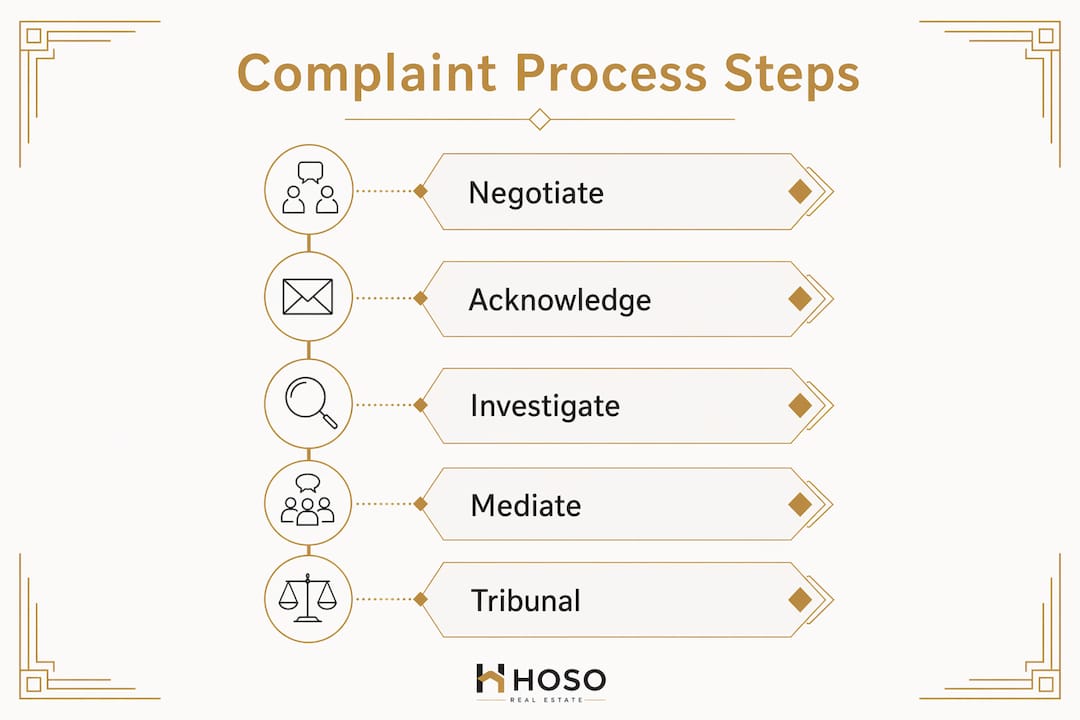
The formal dispute resolution process moves from direct negotiation to mediation, then tribunal when unresolved. Once you lodge your SACAT application, hearings are typically scheduled within 4–8 weeks. Decisions are usually issued within days of the hearing. Refer to tribunal filing procedures for current lodgement requirements and applicable filing details in your jurisdiction.
SACAT decisions are legally binding. If a tenant or agency fails to comply with a SACAT order, enforcement mechanisms are available through the court system. This is why thorough documentation from the very first step matters. Every piece of evidence you collect from day one contributes to the strength of your tribunal case if it reaches that stage.
Pro Tip: Organise your evidence chronologically before the hearing, not by category. Tribunals process information more efficiently when they can follow a clear timeline of events from start to finish.
Understanding how to vet your agency before a dispute arises is equally valuable. The 2026 agency vetting guide covers what to look for in an agency's complaint handling policies before you sign a management agreement.
Key takeaways
The property management complaint process requires documented evidence, sequential escalation through negotiation, mediation, and SACAT, and strict adherence to South Australian procedural requirements at every stage.
| Point | Details |
|---|---|
| Start with written negotiation | Document all communication from the first contact to establish a good-faith record. |
| Know your agency's obligations | Agencies must acknowledge complaints within 2 business days and maintain registers for 3 years. |
| Use mediation before tribunal | SA conciliation services resolve disputes faster and at lower cost than SACAT proceedings. |
| Build a chronological evidence file | Dated photos, emails, and condition reports determine tribunal outcomes more than verbal accounts. |
| SACAT provides binding resolution | Hearings are typically scheduled within 4–8 weeks, with decisions issued shortly after. |
What I have learned managing complaints in South Australia
The most common mistake I see landlords make is treating the complaint process as something that starts when things go wrong. By the time a dispute reaches SACAT, the outcome is almost entirely determined by what was documented in the first weeks of the tenancy. Landlords who keep thorough records from day one, condition reports, entry photos, written communications, are in a fundamentally stronger position than those who scramble to reconstruct a paper trail after the fact.
There is also a tendency to avoid early escalation out of concern for damaging the landlord-tenant relationship. That instinct is understandable, but it often works against landlords. A written notice sent promptly and professionally is far less damaging to a relationship than months of unresolved tension. Most tenants respond better to clear, documented expectations than to informal conversations that leave room for misinterpretation.
SACAT proceedings are not as intimidating as many landlords expect. The tribunal is accessible and does not require legal representation. What it does require is preparation. Landlords who arrive with a clear, dated, well-organised evidence file consistently achieve better outcomes than those who rely on memory or general assertions. The property manager performance review process is also worth completing regularly. It surfaces issues before they become formal complaints.
My honest view is that most disputes in South Australia are avoidable with the right agency, the right documentation habits, and a clear understanding of the process from the outset.
— HOSO
How HOSO Real Estate supports landlords through the complaint process
HOSO Real Estate works with South Australian landlords who want professional, compliant property management without the stress of managing disputes alone. Our property management services cover the full complaint and dispute resolution process, from maintaining detailed tenancy records and coordinating written communications, to guiding landlords through mediation preparation and SACAT proceedings when required. We handle compliance, documentation, and landlord advisory as part of our standard approach to portfolio management. If you are dealing with a tenant dispute or want to put better systems in place before one arises, contact HOSO Real Estate to discuss how we can support your investment.
FAQ
What is the first step in the property management complaint process?
The first step is direct written negotiation with the tenant or property manager. Tribunals require evidence of good-faith efforts before accepting a formal application.
How long does SACAT take to schedule a hearing?
SACAT hearings are typically scheduled within 4–8 weeks of lodgement, with binding decisions issued within days of the hearing.
Can landlords request their agency's complaint handling records?
Yes. Agencies must maintain complaints registers for at least three years, and landlords can request a summary of how their complaint was handled.
Is legal representation required at SACAT?
Legal representation is not required at SACAT. The tribunal is designed to be accessible, but success depends on presenting clear, organised evidence rather than legal argument.
What evidence is most important for a SACAT hearing?
Dated photographs, email correspondence, entry and exit condition reports, and breach notices carry the most weight. Subjective accounts without documentary support rarely influence tribunal decisions.