
Transparent property management is defined as the practice of providing property owners with full, written disclosure of fees, services, and potential conflicts of interest, combined with open and ongoing communication throughout the management relationship. In the Australian context, this practice is grounded in Australian Consumer Law and state tenancy legislation, including South Australia's Residential Tenancies Act 1995. The core components are a signed management agreement, clear fee structures, third-party commission disclosures, and real-time access to property data. HOSO Real Estate builds every client relationship on these principles, treating transparency not as a bonus feature but as the baseline standard for professional property management.
What is transparent property management under Australian law?
Transparent property management, in legal terms, requires a written management agreement that explicitly details the scope of services, all fees, any commissions paid to third parties, and conflict-of-interest disclosures. Australian Consumer Law prohibits misleading conduct, which means any undisclosed fee or hidden benefit from a trades referral can render that fee unenforceable. This is not a technicality. It is the legal foundation on which every compliant agency must operate.
In South Australia, the Residential Tenancies Act 1995 and the Land Agents Act 1994 govern the conduct of property managers. Agents must hold a current licence, act within the authority granted by the management agreement, and comply with prescribed disclosure obligations. Disputes between landlords, tenants, and agents are resolved through SACAT, the South Australian Civil and Administrative Tribunal, which relies heavily on documented agreements and written communication when determining outcomes.

A critical compliance risk that many landlords overlook is the disclosure of third-party benefits. Undisclosed rebates or commissions from trades contractors, such as referral fees paid to an agency by a plumber or electrician, must appear explicitly in the management agreement. If they do not, those fees become legally void. That means an agency could lose its right to collect commissions entirely if this disclosure is absent.
Key legal requirements for a compliant management agreement include:
- Written, signed agreement provided before services commence
- Full disclosure of all fees and the basis on which they are calculated
- Explicit listing of any third-party commissions or referral benefits
- Defined authority limits for repair and maintenance spending
- Conflict-of-interest disclosures where the agency has a financial interest in recommended trades
Pro Tip: Ask your agent to walk you through every line of the management agreement before signing. If any fee or third-party arrangement is described vaguely, request a written amendment before proceeding.
How does transparent property management work day to day?
Transparent rental management practices operate through consistent communication, documented processes, and technology that gives landlords direct access to their property's performance data. Being upfront about issues such as maintenance delays or tenant payment concerns sets realistic expectations and prevents conflicts from escalating. Transparency is less about having perfect answers and more about communicating honestly and promptly when issues arise.
The most visible operational tool is the digital owner portal. Leading agencies provide 24/7 digital portals that integrate rent payment records, maintenance requests, inspection reports, and financial statements in one place. Landlords with properties in suburbs like Norwood, Unley, or Burnside no longer need to wait for a monthly statement to know whether rent was received or a repair was completed. The information is available in real time, on demand.
Day-to-day transparency also covers how tenant issues are handled. A transparent agent reports a lease breach promptly, documents the notice served, and keeps the landlord informed at each stage rather than resolving the matter quietly and reporting it weeks later. This approach protects the landlord's legal position, particularly if the matter escalates to SACAT.
Practical features of transparent rental management include:
- Real-time rent tracking and arrears alerts through the owner portal
- Routine inspection reports with photos delivered within agreed timeframes
- Written maintenance approvals before work is authorised above the agreed threshold
- Prompt written updates when a tenant issue, breach, or vacancy arises
- Clear records of all communications between the agency, tenant, and owner
Pro Tip: Request a demonstration of the agency's owner portal before signing. If the portal does not show live rent data and maintenance status, the agency's transparency is limited to what they choose to tell you.
What are the key benefits of transparent rental management?
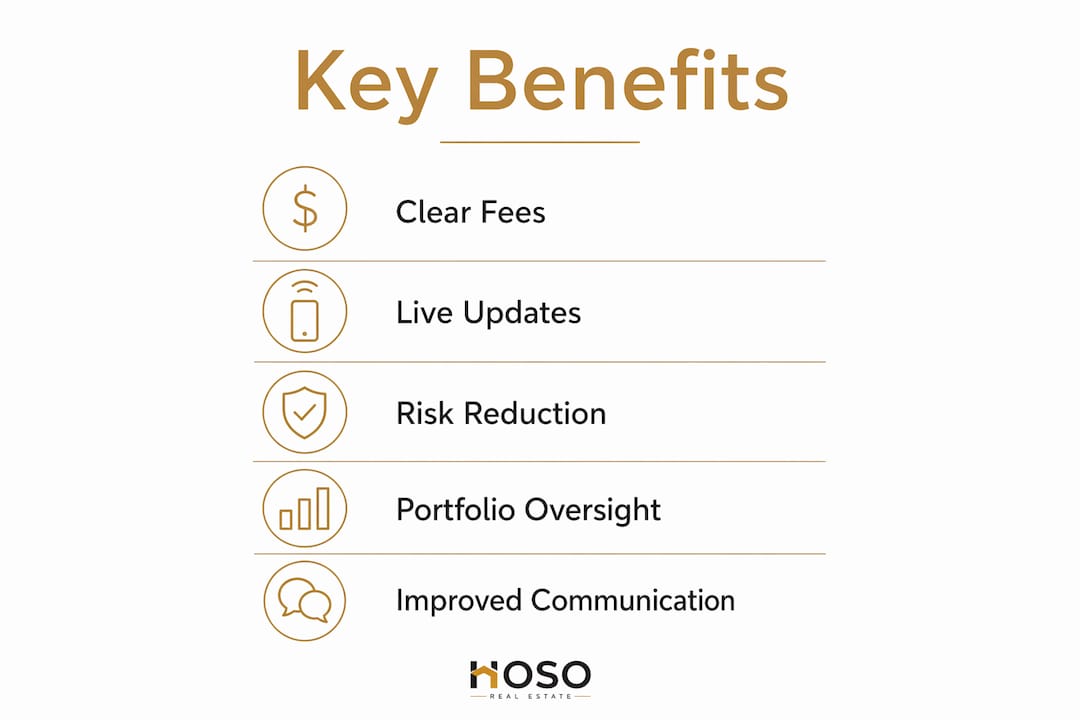
The benefits of transparent property management are measurable and directly affect the financial performance of a rental investment. Digital portals with real-time access to rent, maintenance, and inspection data increase owner trust and reduce reactive enquiries. That reduction in back-and-forth communication frees both the landlord and the agent to focus on outcomes rather than chasing information.
The four primary benefits for property owners and investors are:
-
Improved trust and longer tenancies. When landlords understand exactly how their property is being managed, they make faster decisions on repairs and tenant matters. Faster decisions mean fewer vacancies and better tenant retention.
-
Financial clarity and fewer surprises. A management agreement that clearly documents all fees removes the risk of unexpected deductions. Landlords can budget accurately and assess the true cost of management against their investment returns.
-
Legal risk reduction. Transparency documents every relationship detail, reducing disputes and evidencing compliance under Australian Consumer Law. If a matter reaches SACAT, a well-documented file is the landlord's strongest asset.
-
Better decision-making through informed oversight. Landlords who receive honest, timely updates on their property make better decisions about maintenance spending, rent reviews, and lease renewals. Informed decisions protect long-term asset value.
For investors managing multiple properties across Adelaide, transparent management also simplifies portfolio oversight. A single portal showing all properties, their rent status, and outstanding maintenance items replaces the need for multiple phone calls and manual reconciliation.
What should property owners look for when vetting a transparent agent?
Choosing a transparent property manager requires more than reviewing a website. The management agreement is the single most important document in the relationship, and scrutinising it before signing is the most effective way to assess an agency's commitment to transparency. Reviewing the written management agreement for fee clarity and third-party commission disclosures is the first step every landlord should take.
Questions to ask when selecting a property manager:
- Is the management agreement provided in full before any services commence?
- Are all fees itemised, including any charges for lease renewals, inspections, or maintenance coordination?
- Does the agreement disclose any third-party commissions or referral arrangements with trades?
- What is the repair spending threshold, and can it be customised to my financial preferences?
- Does the agency provide a digital owner portal with real-time data access?
- How and when will I be notified of tenant issues, breaches, or maintenance requests?
Customising repair approval thresholds in the management agreement is widely overlooked but critically important. A generic threshold of $500 may suit one landlord and expose another to unexpected costs. Negotiating a personalised limit that reflects your cash flow and risk appetite is a direct form of financial protection. For guidance on vetting a property management agency, the process involves reviewing compliance credentials, communication protocols, and technology platforms together.
Property owners should also assess how an agency handles risk management in property agreements more broadly. Documenting terms, expectations, and approval processes at the outset reduces the likelihood of disputes and gives both parties a clear reference point throughout the management relationship.
Pro Tip: Ask the agency to show you a sample management agreement and a sample owner portal report before committing. An agency confident in its transparency will share both without hesitation.
Key takeaways
Transparent property management protects landlords through written agreements, real-time data access, and honest communication that reduces disputes and supports compliance under Australian law.
| Point | Details |
|---|---|
| Written agreements are non-negotiable | Every fee, commission, and authority limit must appear in the signed management agreement before services begin. |
| Third-party disclosures prevent legal voids | Undisclosed referral fees or rebates from trades can render those fees legally unenforceable. |
| Digital portals replace reactive communication | Real-time access to rent, maintenance, and inspection data reduces owner enquiries and builds confidence. |
| Custom repair thresholds protect your finances | Negotiating a personalised spending cap aligns management decisions with your cash flow and risk appetite. |
| SACAT outcomes depend on documentation | In South Australia, well-documented agreements and written communications are the strongest evidence in a tribunal dispute. |
Why I believe transparency is the most underrated protection for Adelaide landlords
Most landlords focus on finding a good tenant. The smarter focus is finding a transparent agent. After working with property owners across Adelaide, from investors in Prospect to professionals with properties in Glenelg, the pattern is consistent. Landlords who experience disputes, unexpected costs, or poor outcomes almost always trace the problem back to a management agreement that was vague, verbal, or never properly explained.
Transparency is not a soft concept. It is a legal and financial protection mechanism. A management agreement that discloses every fee, every commission, and every authority limit is a document that protects the landlord in court, at SACAT, and in every conversation with the agent. An agency that resists providing that level of detail is signalling something worth paying attention to.
The shift toward digital portals is accelerating this in 2026. Landlords who previously accepted monthly statements as their only window into their property's performance now expect live data. That expectation is reasonable, and agencies that cannot meet it are operating below the standard that informed investors now require. Understanding how digital portals work for investors is a practical starting point for any landlord reassessing their current management arrangement.
The future of property management in South Australia belongs to agencies that treat transparency as a structural commitment, not a marketing claim.
— HOSO
Transparent property management with HOSO Real Estate
HOSO Real Estate delivers property management services built on written agreements, full fee disclosure, and real-time owner portal access. Every landlord receives a clear management agreement before services commence, with all fees, authority limits, and third-party arrangements documented in writing. The owner portal provides live access to rent status, inspection reports, and maintenance records, removing the need to chase updates. HOSO Real Estate works with landlords across Adelaide who want compliant, professional management that protects their asset and keeps them informed at every stage. For landlords seeking a management partner that treats transparency as a standard, not an exception, HOSO Real Estate is the starting point.
FAQ
What is transparent property management?
Transparent property management is the practice of providing property owners with full written disclosure of all fees, services, and third-party arrangements, combined with real-time access to property data and honest, ongoing communication. It is grounded in Australian Consumer Law and state tenancy legislation.
What must a management agreement include to be transparent?
A compliant, transparent management agreement must detail all fees, the scope of services, any third-party commissions or referral benefits, and personalised repair spending thresholds. Agreements that omit third-party disclosures risk rendering those fees legally unenforceable.
How does a digital owner portal support transparency?
A digital owner portal gives landlords real-time access to rent payments, maintenance requests, inspection reports, and financial statements. Leading agencies integrate these platforms to replace manual reporting and reduce communication delays.
Why does transparency matter for SACAT disputes in South Australia?
SACAT relies on documented agreements and written communications when resolving disputes between landlords, tenants, and agents. A well-documented management file is the most effective evidence a landlord can present at tribunal.
How do I check if my property manager is truly transparent?
Request the full management agreement before signing and ask for a demonstration of the owner portal. Check that all fees, third-party commissions, and repair thresholds are explicitly documented. If any of these are absent or vague, the agency does not meet the standard of transparent rental management.