
A property management portal is a secure, online platform that gives property owners, tenants, and property managers centralised access to leasing, payments, maintenance, and reporting functions from a single interface. Platforms like Buildium, MagicDoor, and Fast.io represent the current standard for what these systems deliver. The industry term for the broader category is property management software, and the portal is the client-facing layer sitting on top of that back-end system. For landlords managing one property in Norwood or a portfolio spread across Prospect, Glenelg, and the Adelaide Hills, understanding how these portals operate is the difference between reactive management and genuine portfolio control.
What is a property management portal and how does it work?
A property management portal is the front-end interface through which owners, tenants, and property managers interact with an underlying property management system (PMS). The PMS handles the back-end accounting, lease tracking, and workflow logic. The portal surfaces that data in a usable, permission-controlled view for each user type.
The distinction matters. When a tenant pays rent through a portal, that transaction automatically posts to accounting in real time, removing the manual reconciliation step that creates errors in traditional management. When a maintenance request is submitted, it generates a trackable work order in the PMS without a property manager needing to re-enter the information. The portal and the PMS are not the same product. They are complementary layers.
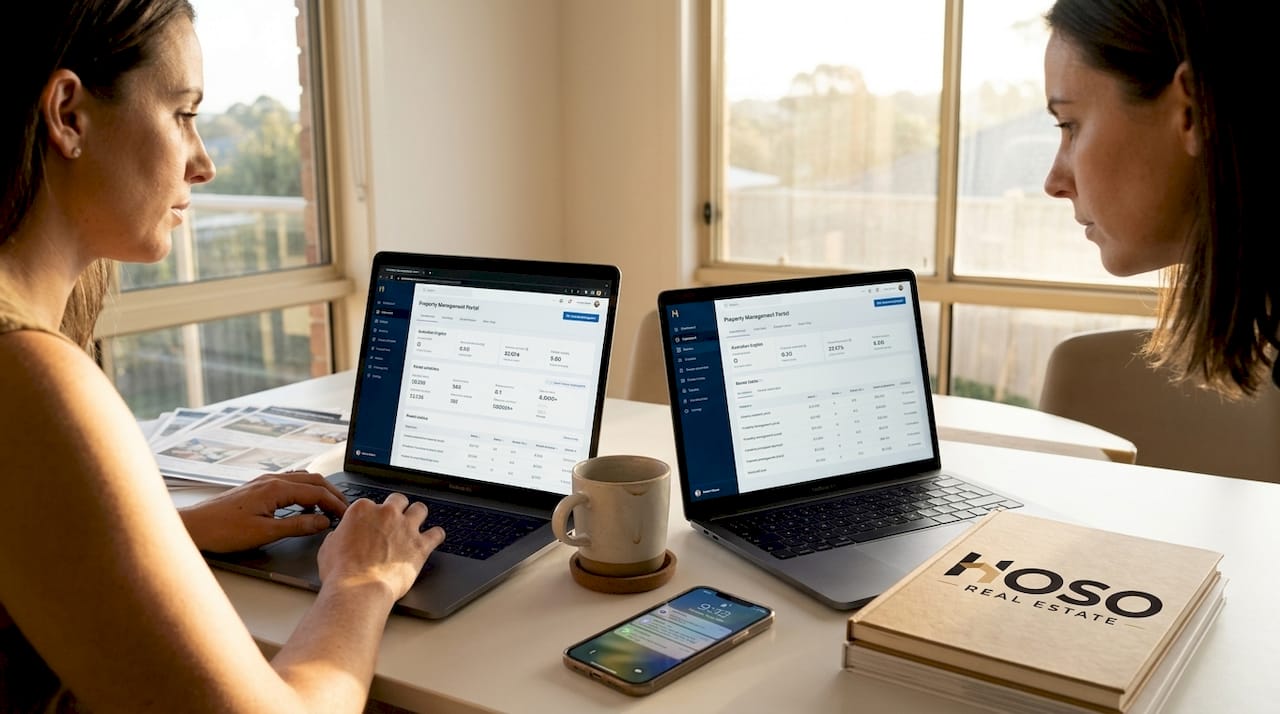
Security and permissions are built into how portals function. Role-based access means a tenant sees only their own lease and payment history, while an owner sees financial performance across their properties. A maintenance contractor sees only the work orders assigned to them. Platforms like Buildium and ProdataKey extend this further, with audit trail features that log every action taken within the system, which is particularly relevant for South Australian compliance requirements under the Residential Tenancies Act 1995.
Workflow automation is where portals deliver their most measurable operational value. Rent reminders, lease renewal notices, and maintenance status updates can all be triggered automatically based on dates or actions within the system. This reduces the volume of inbound calls and emails that consume property manager time, and it creates a documented communication trail that protects landlords in the event of a dispute before SACAT.
Pro Tip: When evaluating a portal, ask the provider specifically how it handles audit trails for document delivery. Fast.io and similar platforms separate document lifecycle management from general PMS functions, giving you versioned records of every lease document sent and acknowledged.
- Portals provide role-based access for owners, tenants, and contractors
- Rent payments post automatically to accounting with no manual entry
- Maintenance requests generate trackable work orders in the back-end PMS
- Audit trails log all actions for compliance and dispute protection
- Workflow automation handles reminders and notices without manual intervention
Key features of owner portals that matter for investors
Owner portals are the component of property management software that most directly affects investor decision-making. Per-property reporting and granular access controls give investors the visibility they need to assess performance without relying on periodic phone calls or emailed spreadsheets.
MagicDoor's platform, for example, provides live portfolio dashboards with automated financial reporting. An investor managing four properties across Burnside, Unley, and the inner north can view vacancy rates, rental yield, outstanding maintenance, and income summaries for each property individually or across the whole portfolio. That level of granular access control is not a luxury feature. It is the baseline expectation for any investor making data-driven decisions about their assets.
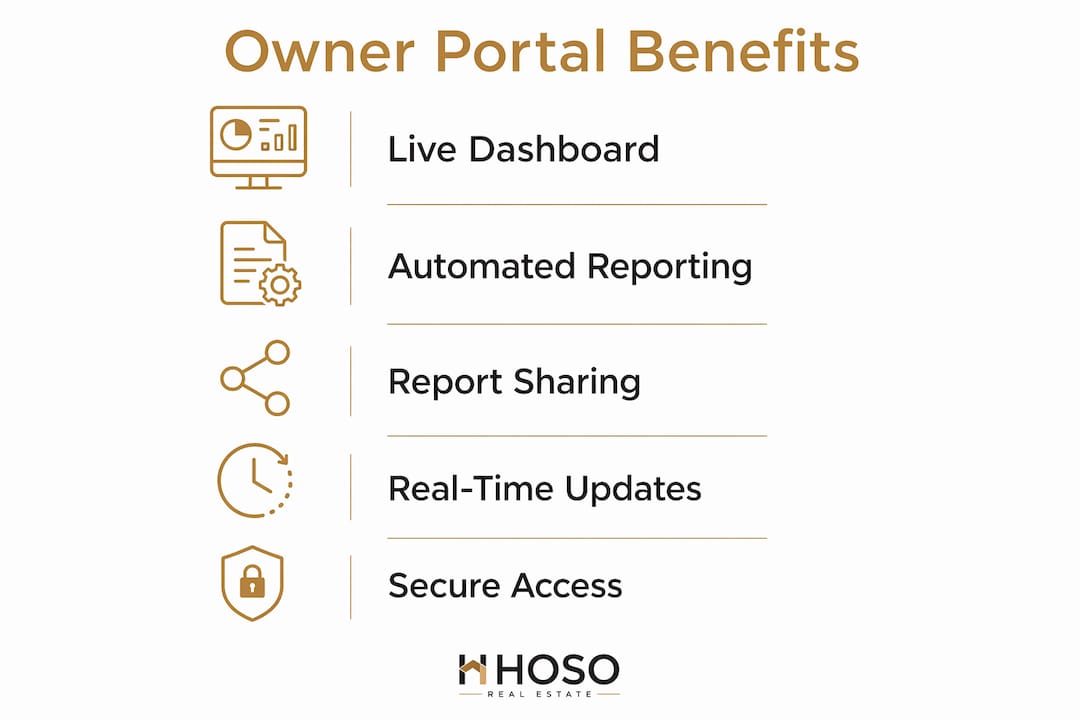
Report sharing is a practical feature that is often underestimated. When an investor needs to present portfolio performance to a financial adviser, accountant, or lending institution, a well-designed owner portal generates investor-ready reports with a single action. This removes the back-and-forth between landlord and property manager that delays financial planning.
The table below outlines the core owner portal features and their direct benefit to investors.
| Feature | Benefit for investors |
|---|---|
| Live portfolio dashboard | Real-time visibility of income, vacancies, and maintenance across all properties |
| Per-property financial reporting | Isolates performance data for individual assets to support buy, hold, or sell decisions |
| Granular access controls | Restricts data visibility by user role, protecting sensitive financial information |
| One-click report sharing | Produces investor-ready documents for accountants, advisers, or lenders without manual formatting |
| Document audit trail | Maintains versioned records of leases and notices for compliance and dispute purposes |
For interstate or overseas investors managing South Australian properties remotely, these features are not optional. The ability to log in from Sydney or Singapore and view a current rent ledger, outstanding maintenance, and lease expiry dates removes the information asymmetry that makes remote ownership feel risky. Platforms that offer portfolio oversight tools reduce that risk materially.
What can tenants do through a self-service portal?
Tenant self-service is the feature set that most directly reduces property manager workload. Portals that handle end-to-end tenant interaction can reduce inbound calls by up to 80%, which translates directly into lower management overhead and faster response times for the issues that genuinely require human attention.
The core self-service functions available to tenants through a well-configured portal include the following:
- Rent payments. Tenants can pay via multiple methods including direct debit, card, and BPAY, with autopay options that eliminate late payments. Buildium's platform supports ACH and card payment automation with real-time posting to the owner's account.
- Maintenance requests. Tenants submit requests with photos and descriptions, which automatically create work orders. The tenant can track progress through the portal without needing to contact the property manager for updates.
- Lease documents. Digital signing and 24/7 access to current and historical lease documents removes the friction of paper-based processes. Fast.io's approach to document lifecycle management includes versioning and delivery confirmation, which is directly relevant to South Australian tenancy compliance.
- Communication. Announcements, direct messages, and notice delivery through the portal create a documented communication record. This protects both the landlord and the tenant in any dispute.
- Access management. Some platforms, including ProdataKey, integrate physical access control so tenants can manage key codes and guest fobs through the same portal interface they use for rent and maintenance.
Pro Tip: Tenants who use self-service portals consistently report higher satisfaction with their rental experience. Higher tenant satisfaction correlates with longer tenancy duration, which reduces vacancy costs and leasing fees for owners. The portal is not just an administrative tool. It is a retention tool.
The 24/7 availability of tenant self-service functions is particularly relevant for properties in high-demand Adelaide suburbs like Hackney, Bowden, and Prospect, where younger professional tenants expect digital-first service as a baseline, not a bonus.
How to roll out a property management portal effectively
Portal adoption fails most often not because of technology limitations but because of poor implementation. Launching a portal without a structured rollout plan produces low uptake, continued reliance on phone and email, and a system that adds cost without delivering value.
Phased rollout is the approach recommended by Buildium and supported by practical experience. The first phase activates core functions: rent payment and maintenance requests. These are the two tasks tenants perform most frequently, so adoption is naturally higher when the portal solves an immediate, recurring need. Lease documents and communication tools follow in a second phase once tenants are comfortable with the interface.
Resident communication before and during the rollout determines whether adoption succeeds. Tenants need a clear explanation of what the portal does, how to register, and what support is available if they encounter problems. Property managers who treat the portal launch as an IT event rather than a resident engagement exercise consistently report lower adoption rates.
The integration architecture of the portal matters as much as the features it offers. Interconnected modules that link tenant records, leases, rent processing, and maintenance into a single system prevent the workflow silos that emerge when separate tools are used for each function. A portal that does not connect to the accounting system, for example, requires manual reconciliation and defeats the purpose of automation.
Common rollout pitfalls to avoid:
- Launching without notifying tenants in advance or providing registration instructions
- Activating all features simultaneously before tenants are familiar with the interface
- Using the portal for some communications while continuing to use email for others, which fragments the record
- Selecting a platform that does not integrate with the existing PMS, creating duplicate data entry
Key takeaways
A property management portal delivers measurable value only when it is properly integrated with the underlying PMS, configured with role-based permissions, and adopted by both tenants and owners through a structured rollout.
| Point | Details |
|---|---|
| Portal versus PMS | The portal is the client-facing interface; the PMS handles back-end accounting and workflow logic. |
| Owner visibility | Live dashboards and per-property reporting give investors real-time performance data without manual reporting. |
| Tenant self-service | Portals reduce inbound calls by up to 80% when tenants can pay, request maintenance, and access documents independently. |
| Compliance and audit trails | Document versioning and action logs protect landlords in SACAT disputes and meet SA tenancy compliance requirements. |
| Phased rollout | Starting with rent payments and maintenance requests maximises early adoption before expanding to full portal functionality. |
What HOSO Real Estate has observed about portal adoption
The technology is not the hard part. Every platform worth considering, whether it is Buildium, MagicDoor, or a comparable system, offers the core features that owners and investors need. What separates a portal that delivers results from one that collects dust is the commitment of the property management team to actually use it as the primary channel for every interaction.
What I have seen repeatedly in South Australian property management is that portals are deployed but not embedded. Rent payments go through the portal, but maintenance requests still come in via text message. Lease renewals are still sent by email. The audit trail is incomplete, and when a dispute reaches SACAT, the documentation is fragmented across three different communication channels. That is not a technology problem. It is a process problem.
For investors managing properties in Adelaide, the portal's value is directly proportional to how consistently it is used. An owner portal that shows live financial data is only useful if the data is current and accurate. That requires a property management team that posts transactions promptly, closes maintenance work orders when completed, and uses the portal as the single source of truth rather than a supplementary tool.
The other observation worth sharing is that owner portals are increasingly a factor in how investors evaluate property management agencies. Landlords with multiple properties in suburbs like Prospect, Norwood, or Glenelg are asking, before they sign a management agreement, what reporting they will have access to and how frequently it will be updated. The answer to that question now reflects directly on the quality of the agency.
— HOSO
Manage your Adelaide portfolio with the right tools behind it
HOSO Real Estate integrates modern property management technology into every aspect of how we manage South Australian rental properties. Our owners receive direct access to portfolio reporting, financial summaries, and maintenance records through a structured owner portal, giving you the visibility your investment deserves without requiring you to chase updates.
Whether you own a single investment property in Unley or a portfolio spread across multiple Adelaide suburbs, our property management services are built around transparent reporting, documented compliance, and proactive communication. We do not treat the portal as an add-on. It is central to how we operate. If you are reviewing your current management arrangement or considering professional management for the first time, explore what HOSO Real Estate delivers at hoso.com.au.
FAQ
What is a property management portal?
A property management portal is a secure, online platform that gives owners, tenants, and property managers access to leasing, payments, maintenance, and reporting functions from a single interface. It sits on top of a property management system (PMS), which handles the back-end accounting and workflow logic.
How does a property management portal differ from property management software?
Property management software is the full back-end system that manages accounting, lease tracking, and workflows. The portal is the client-facing interface that owners and tenants use to interact with that system. They work together but serve different functions.
What can tenants do through a self-service portal?
Tenants can pay rent, submit maintenance requests with photos, sign and access lease documents, send messages, and in some platforms manage access credentials such as key codes. Tenant self-service reduces property manager inbound calls by up to 80%.
What reporting do owner portals provide for investors?
Owner portals provide live portfolio dashboards, per-property financial reporting, income and expense summaries, and one-click generation of investor-ready reports. Granular access controls allow report sharing with accountants or financial advisers without exposing unrelated data.
How long does it take to roll out a property management portal?
A phased rollout typically activates rent payments and maintenance requests in the first stage, with lease documents and communication tools following once tenants are comfortable. The timeline depends on the number of properties and the level of resident engagement during the transition.