

Tenant vetting for premium rentals is the deliberate process of screening applicants to confirm they meet income, rental history, and behavioural standards that protect your property and income. In the industry, this process is formally called tenant screening, and it carries more weight in the premium segment than anywhere else in the residential market. A poorly placed tenant in a high-value property in suburbs like Burnside, Unley, or Glenelg does not just cause inconvenience. It triggers arrears, tribunal proceedings through SACAT, and repair bills that compound quickly. The role of tenant vetting in premium rentals is to prevent exactly that outcome before a lease is ever signed.
What key criteria define a qualified premium rental tenant?
The industry benchmark for tenant gross household income is at least three times the annual rent. That ratio exists because it leaves enough financial headroom for a tenant to absorb unexpected costs without falling behind on rent. For a premium Adelaide property leasing at $3,500 per month, that means verifiable gross household income of at least $126,000 per year. Income alone, however, does not tell the full story.
Rental history is equally decisive. A consistent record of on-time payments across two or more tenancies, confirmed by direct contact with previous landlords, signals reliability far more than a high salary figure. Landlords should ask previous agents or owners specific questions: Did the tenant report maintenance promptly? Did they leave the property in good condition? Were there any lease breaches? Vague or evasive references deserve the same scepticism as no reference at all.

Behavioural indicators during the application process also carry weight. Applicants who push back against standard checks, submit incomplete forms, or offer verbal explanations in place of documentation are signalling risk. Evasive applicants regarding tenancy database and credit checks are a major red flag. The application itself, its completeness, accuracy, and professionalism, reflects how a tenant will treat your property.
Key premium rental qualifications to assess include:
- Income verification: Payslips, tax returns, or accountant letters confirming gross household income at the 3:1 ratio or above
- Rental history: Minimum two verifiable references from previous landlords or property managers, not personal contacts
- Tenancy database status: Clear records on TICA (Tenancy Information Centre Australasia) and the National Tenancy Database (NTD)
- Credit file standing: No unpaid defaults, court judgements, or patterns of late payment
- Application completeness: All fields completed, all supporting documents supplied without prompting
How does rigorous screening reduce costs in premium rentals?
Thorough tenant screening reduces rental management issues like arrears and property damage by up to 85%. That figure reflects the direct relationship between applicant quality and tenancy outcomes. Landlords who skip or abbreviate the screening process are not saving time. They are absorbing risk that will eventually cost them money.
The financial exposure from a failed tenancy is significant. A failed high-risk tenancy costs an average of $12,500 when you account for lost rent, SACAT tribunal costs, and remedial repairs. That figure does not include the opportunity cost of vacancy during the re-letting period or the management time absorbed by the dispute. For a premium property, the total impact is often higher.
Well-vetted tenants also reduce ongoing costs. Properly screened premium tenants reduce annual maintenance costs by approximately 22%, largely because they report issues early rather than letting problems escalate. A tenant who flags a slow drain or a faulty seal prevents the $200 call-out from becoming a $4,000 bathroom repair. This is one of the clearest financial arguments for premium property management that prioritises tenant quality from day one.
Many landlords fear prolonged vacancy from being too selective. The data does not support that fear. A two-week vacancy costs a fraction of what a failed tenancy costs over six to twelve months of arrears, legal proceedings, and remediation. Selectivity is not a risk. Rushing placement is.
Pro Tip: Before approving any application, calculate the total cost of a worst-case tenancy failure for your specific property. That number makes the case for thorough screening far more clearly than any general advice.
What are the components of an effective tenant screening process?
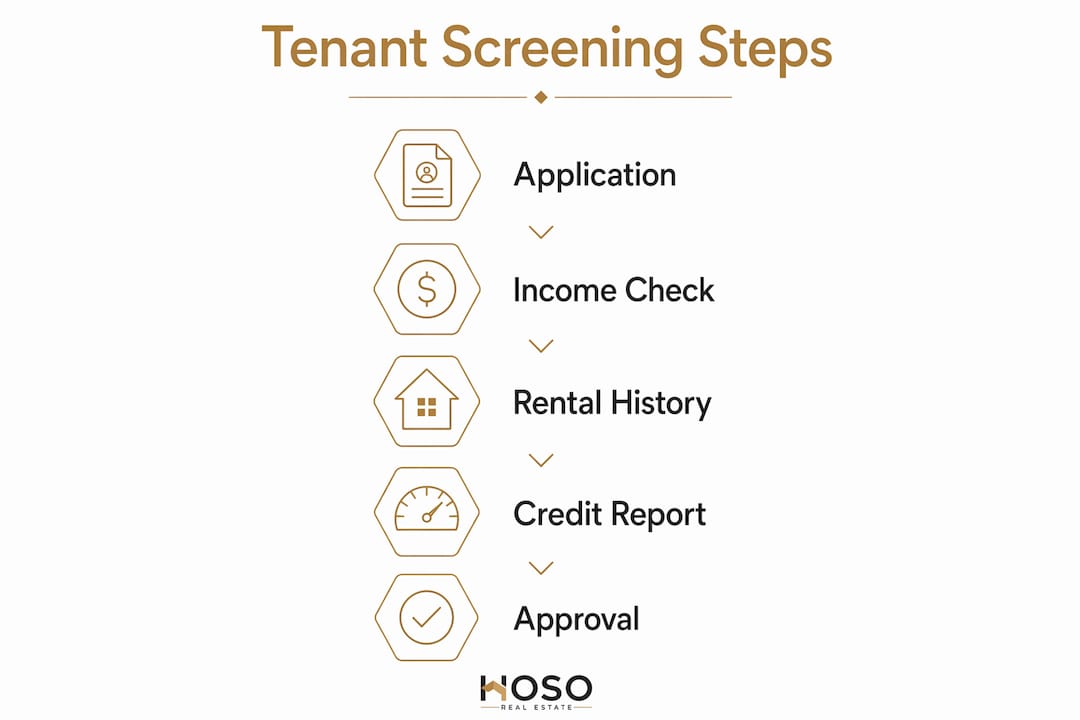
The tenant screening process for premium properties follows a defined sequence. Each step builds on the last, and skipping any one of them creates a gap that risk can enter through.
-
Identity verification. Confirm the applicant is who they claim to be. Accepted documents include a current Australian driver's licence, passport, or Medicare card. Cross-check the name against all other submitted documents.
-
Employment and income confirmation. Request the last three payslips for salaried applicants. For self-employed applicants, require the last two years of tax returns and an accountant's letter. Verbal confirmation of employment is not sufficient.
-
Tenancy database checks. Search TICA and the NTD for any prior listings. A listing does not automatically disqualify an applicant, but it requires a clear explanation supported by documentation.
-
Credit file checks. Credit file checks via Equifax or illion are now standard in premium rental markets, used alongside tenancy database searches. A single unpaid default of $300 or more on a credit report is a major red flag, frequently outweighing strong income evidence. The pattern of financial behaviour matters more than the income figure alone.
-
Landlord reference checks. Contact previous landlords directly, not just the agent. Ask specific questions about payment history, maintenance behaviour, and property condition at vacate. Document the responses.
-
Application review. Assess the application for completeness and consistency. Gaps, inconsistencies, or missing documents without explanation are grounds for further inquiry before proceeding.
Legal compliance runs through every step. Under South Australian anti-discrimination law, all screening decisions must be based on objective, documented criteria. Standardised scorecards protect landlords legally and ensure consistency across all applicants. Every decision should be recorded against preset criteria, not impressions.
Pro Tip: High-calibre tenants often review their own tenancy and credit files before applying. An applicant who volunteers this information is signalling transparency. That behaviour is worth noting.
How can landlords integrate vetting into premium property management?
Effective tenant vetting does not operate in isolation. It works best when it is built into a consistent property management system that applies the same standards to every applicant, every time.
Criteria-based scorecards are the most reliable tool for this. Each applicant is assessed against the same weighted criteria: income ratio, rental history, database status, credit standing, and application quality. Scoring removes subjectivity and creates a defensible record if a decision is ever challenged. Landlords who rely on gut feeling instead of documented criteria expose themselves to both poor outcomes and legal risk.
Communicating your screening standards clearly in the listing itself also filters the applicant pool before the first inquiry arrives. When a listing states that applicants must provide full documentation, references, and consent to credit checks, unsuitable tenants self-select out. That saves time and reduces the volume of applications that require full assessment.
Professional property managers add significant value at this stage. A manager with deep knowledge of SA tenancy screening methods conducts reference checks with the right questions, interprets credit file results accurately, and applies consistent criteria across every application. They also understand the nuances of SACAT processes, which matters when a tenancy does go wrong. Platforms that use AI-assisted tenant matching are also emerging as a complement to traditional screening, helping identify qualified applicants earlier in the process.
The benefits of placing a well-vetted tenant extend well beyond the first month. High-calibre tenants report maintenance early, respect lease terms, and tend to stay longer. Longer tenancies reduce vacancy periods, reduce re-letting costs, and reduce the wear that comes with frequent turnover. The role of the landlord in property maintenance becomes far more manageable when the tenant is a reliable partner in the process.
Key practices for integrating vetting into your management system:
- Apply the same scorecard to every applicant without exception
- Retain all application documents and assessment notes for a minimum of 12 months
- Use premium marketing channels to attract applicants who match your property's profile
- Brief your property manager on your specific criteria before advertising begins
- Review your screening criteria annually against current SA tenancy compliance requirements
Key takeaways
Thorough tenant screening is the single most effective action a premium landlord can take to protect rental income, reduce maintenance costs, and avoid costly tenancy failures.
| Point | Details |
|---|---|
| Income ratio benchmark | Gross household income must be at least three times the annual rent to meet premium rental qualifications. |
| Credit checks are now standard | Equifax or illion credit file checks complement TICA and NTD searches in premium markets. |
| Failed tenancy cost | A failed high-risk tenancy averages $12,500 in lost rent, tribunal costs, and repairs. |
| Scorecards protect landlords | Documented, criteria-based decisions defend against discrimination claims under SA law. |
| Vetted tenants cut maintenance costs | Well-screened tenants reduce annual maintenance costs by approximately 22% through early reporting. |
What I have learned about tenant vetting in Adelaide's premium market
The most common mistake I see landlords make is treating income as the primary filter. A high income does not predict a good tenancy. Payment consistency does. A tenant earning $180,000 a year with three credit defaults and a history of late rent is a worse risk than a tenant earning $110,000 with a clean file and two glowing landlord references. The numbers look different, but the outcome is predictable.
South Australia's premium rental market has shifted noticeably in recent years. Applicants are more financially sophisticated, and so are the risks. Credit file checks, once considered optional, are now a baseline expectation in suburbs like Norwood, Prospect, and Henley Beach. Landlords who still rely solely on TICA searches are working with incomplete information.
The other mistake I see regularly is inconsistency. A landlord applies rigorous criteria to one applicant and then relaxes them for the next because the property has been vacant for three weeks. That inconsistency creates legal exposure and almost always produces a worse outcome. Document your criteria. Apply them every time. The short-term discomfort of a longer vacancy is far less costly than a tenancy that fails at month four.
Objective, documented decision-making is not just good practice. It is the only defensible position if a rejected applicant lodges a complaint with the Equal Opportunity Commission of South Australia. The paperwork that feels like overhead is actually your protection.
— HOSO
How HOSO Real Estate supports landlords with premium tenant vetting
HOSO Real Estate works with landlords across Adelaide who want their premium properties managed to a consistent, high standard. The tenant screening process at HOSO covers identity verification, income confirmation, TICA and NTD database checks, credit file assessment, and direct landlord reference checks. Every application is assessed against documented criteria, and every decision is recorded. Landlords receive clear recommendations supported by evidence, not impressions. For landlords who want expert support with premium property management services in Adelaide, or who want to understand what their property could achieve in the current market, a free rental appraisal is a practical starting point.
FAQ
What is the income-to-rent ratio for premium rental applicants?
The industry benchmark is gross household income of at least three times the annual rent. For a property leasing at $3,500 per month, that means a minimum gross household income of approximately $126,000 per year.
Are credit checks required for rental applications in South Australia?
Credit checks are not legally required, but they are now standard practice in premium rental markets. Checks via Equifax or illion are used alongside TICA and NTD tenancy database searches to give a complete picture of an applicant's financial behaviour.
What does a failed tenancy actually cost a landlord?
A failed high-risk tenancy averages $12,500 in combined losses from unpaid rent, SACAT tribunal costs, and remedial repairs. That figure does not include re-letting costs or the management time absorbed during the dispute.
How does tenant vetting reduce property maintenance costs?
Well-vetted tenants report maintenance issues early, which prevents minor problems from becoming major repairs. This behaviour reduces annual maintenance costs by approximately 22% compared to tenancies placed without rigorous screening.
What screening criteria must landlords apply consistently under SA law?
South Australian anti-discrimination law requires that all screening decisions be based on objective, documented criteria applied consistently to every applicant. Standardised scorecards are the most reliable method for meeting this requirement and defending decisions if challenged.