

Rental property insurance, usually sold as landlord insurance, covers the building, the items you supply to the tenant, your legal liability and, on many policies, lost rent after an insured event. Standard home insurance is built for owner-occupiers and does not do this job. The cover is only as good as the policy conditions, and those conditions depend on how the property is leased, tenanted and maintained. That is where a disciplined management routine protects your claim as well as your asset.
TL;DR
- Landlord insurance typically combines building cover, landlord contents cover, legal liability and optional rent-related benefits. Insurers set the limits and exclusions in each Product Disclosure Statement (PDS).
- Wear and tear, gradual deterioration, lack of maintenance and tenant-owned belongings are commonly excluded.
- Tenant default and tenant theft cover usually depend on a valid rental agreement, a bond held and no existing arrears.
- Short-term and holiday letting, long vacancies and strata title properties are treated differently by insurers.
- Good records, regular inspections and prompt maintenance make a claim easier to support.
Table of Contents
- What landlord insurance covers
- Building, contents, liability and lost rent compared
- Tenant-related cover and its conditions
- What is commonly excluded
- Why a home policy is not enough
- Strata, short-term letting and vacancy
- Checking a policy fits your South Australian investment
- Making a claim
- How HOSO supports a claim-ready property
- FAQ
- Sources
What landlord insurance covers
Landlord insurance is designed around the risks of letting a property to someone else. One major insurer's guide describes three core areas of cover: loss or damage to the building, landlord contents, and legal liability. Insured events on that policy include fire, storm, flood, lightning, theft or burglary, escape of liquid, impact, explosion, animal damage, riot and vandalism.
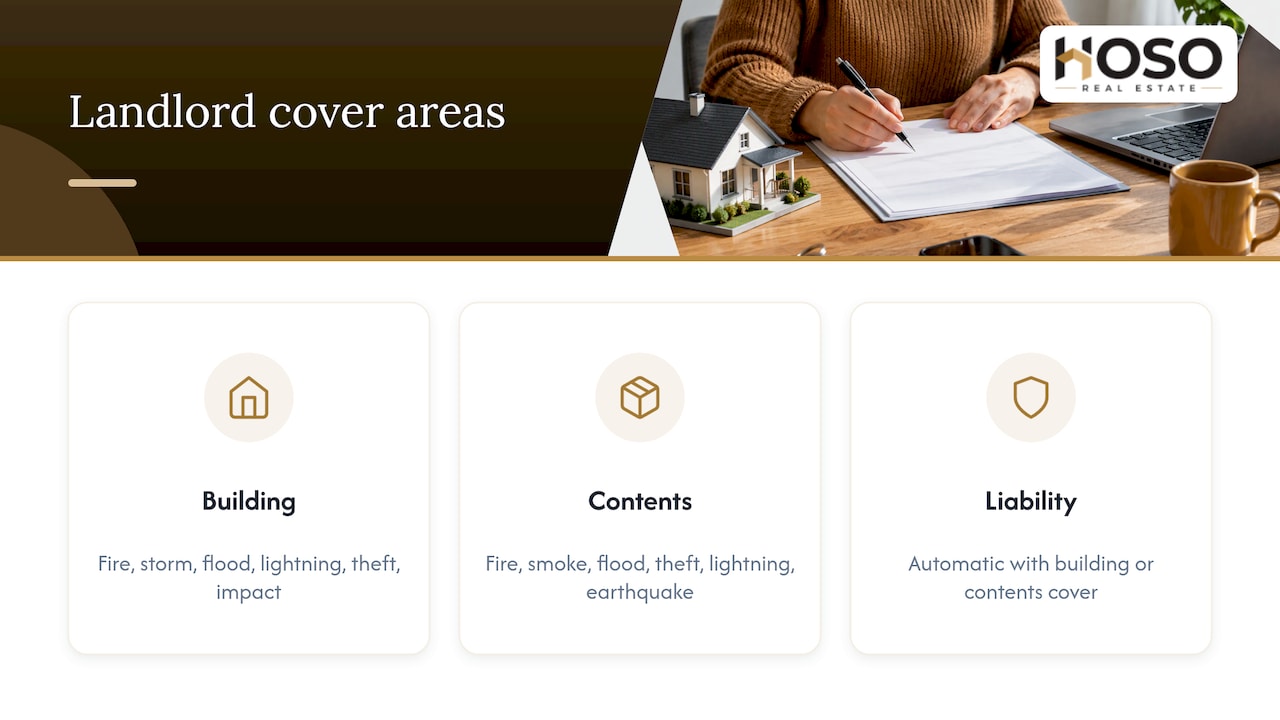
Another major policy, set out in its Product Disclosure Statement, lists 12 insured events for the building and landlord-supplied contents. They include fire or smoke (including bushfire), flood, storm, theft, vandalism, lightning, earthquake and accidental glass breakage. Legal liability applies automatically once building or contents cover is taken.
The lists differ between insurers. Your PDS is the document that decides what is covered, so read the insured events, sub-limits and exclusions before you sign.
Building, contents, liability and lost rent compared
You can generally choose building cover, contents cover or both. ANZ's landlord insurance FAQs describe building cover as protection for the structure, and contents cover as protection for household goods you own and provide, including carpets and curtains.
| Cover type | What it protects | Typical points to check |
|---|---|---|
| Building | Structure, fixtures and often outbuildings | Sum insured, full replacement value, strata arrangements |
| Landlord contents | Items you supply: carpets, blinds, appliances, furniture | Which items are listed, age limits on appliances |
| Legal liability | Claims for injury or damage to others at the property | Policy limit, and whether building or contents cover is held |
| Loss of rent | Rent lost while an insured event leaves the property unliveable | Weeks covered, percentage of sum insured |
| Rent default and tenant theft | Losses beyond the bond from unpaid rent, early departure or theft by a tenant | Rental agreement, bond held, waiting periods, weekly limits |
Building cover
Building cover can reach beyond the house itself. One insurer's PDS includes garages, carports, sheds, decks, pergolas, fixed pools and spas, granny flats, retaining walls within the boundary, and permanently wired appliances. Fences are included with a limit.
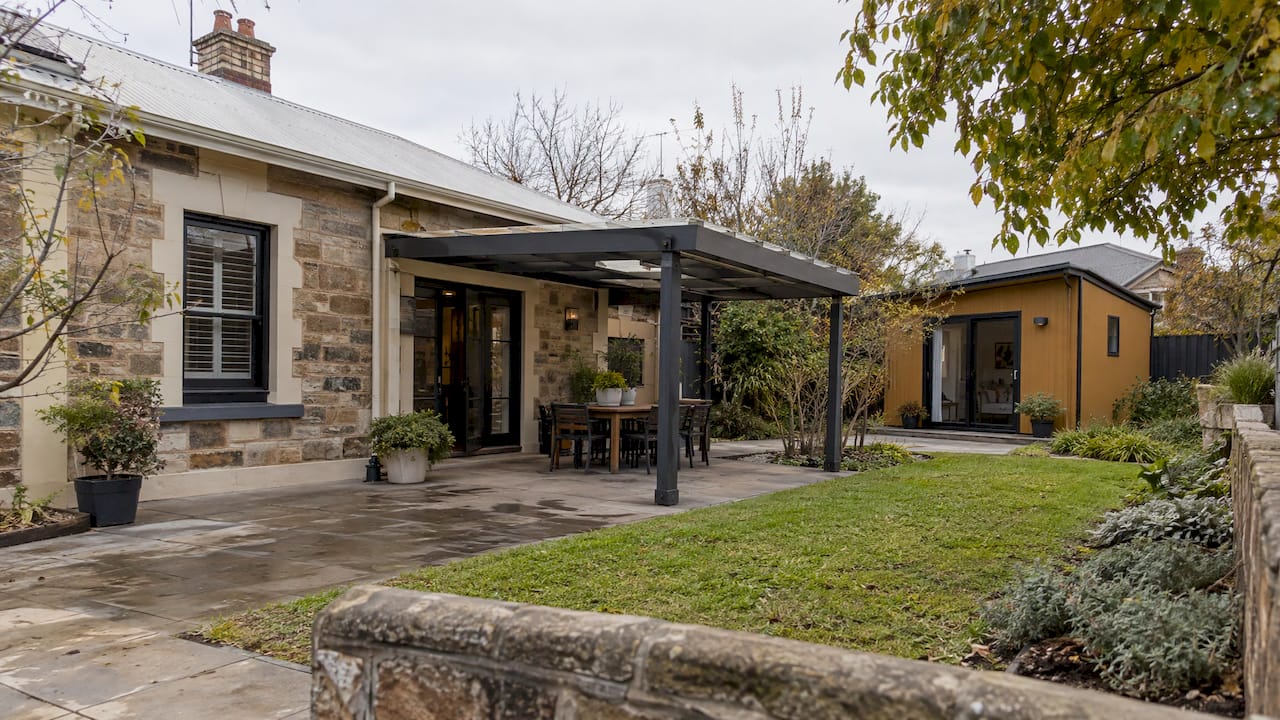
For a Burnside or Unley character home with a pergola, a detached studio and a retaining wall, this matters. Insure the buildings for full replacement value, not the purchase price. One broker's guidance recommends exactly that.
Landlord contents
Landlord contents cover is for items you own and supply. Tenants' belongings are not covered, and tenants need their own contents insurance. In a furnished Adelaide CBD apartment, or an unfurnished home with blinds, rugs and a dishwasher, your contents list is what the insurer will ask you to prove after a loss.
Legal liability
Liability cover responds if someone is injured, or their property is damaged, and you are found liable. Limits vary by product: one insurer lists $20 million, while another lists up to $30 million at the property. If a visitor trips on a faulty step during an open home, the question of who is responsible matters. Our guide to open home liability in South Australia covers it.
Loss of rent
Loss of rent pays when an insured event makes the property unliveable. Limits differ: one insurer pays up to 52 weeks and up to 10% of the sum insured, and another offers up to 12 months. It follows an insured event such as a storm or fire. It is not general cover for a tenant who stops paying, which is a separate optional benefit.
Tenant-related cover and its conditions
Standard landlord policies often treat tenant damage differently from storm or fire. One insurer states that tenant damage is not covered as standard, apart from accidentally broken fitted glass or ceramics. An optional tenant default and damage cover adds theft or intentional damage by the tenant or their guests.
Where rent default cover is offered, the conditions are specific:
- One insurer's tenant default cover provides up to $10,000 for up to 14 weeks on a fixed-term written agreement, or 4 weeks on a periodic agreement.
- A 2026 PDS from another insurer requires at least 4 weeks' rental bond to have been collected at the start of the lease. It caps combined benefits at 20 weeks' rent per policy period, and rent reductions agreed with the tenant are not claimable.
- That same PDS states that default cover only applies where no arrears or tenant problems already exist.
The pattern is consistent: insurers respond to new, unforeseen events. They do not respond to a tenancy that was already struggling when the policy began. That is why the tenant you select is the first line of risk control.
We built this into how we lease. HPTS, our four-layer tenant screening system, is designed to place applicants who are a sound fit for your property from the start. We also offer a drug testing service for landlords who want an extra layer of assurance. A well-screened tenancy gives you a cleaner position if you ever need to rely on tenant-related cover.
Certain illegal activity is addressed in some policies. One insurer lists chemical decontamination costs of up to $35,000 for illegal drug manufacturing by tenants and pet damage of up to $4,000 as standard features.
What is commonly excluded
Read the exclusions before the benefits. BankSA's landlord insurance guide lists exclusions including:
- wear and tear, depreciation and gradual deterioration
- defects and poor workmanship
- illegal contents
- soil movement, unless directly caused by specified events and within 72 hours
- unoccupancy exceeding 60 consecutive days, unless agreed in writing
- maintenance or repair work carried out by tenants
Two other conditions catch landlords out. Some policies have a 72-hour waiting period at the start for bushfire, storm, storm surge, flood and tsunami. And one insurer's page states that damage by vermin such as rats, termites and possums is not covered, and that a valid rental agreement is required for tenant-related claims.
The common thread is maintenance. Insurers pay for sudden events, not for slow deterioration. Mould from a long-running leak, a roof left unrepaired or a termite problem that went unnoticed puts a claim at risk. Our guides on maintenance responsibilities in SA and mould in Adelaide rentals set out where the line sits between landlord and tenant.
Why a home policy is not enough
Owner-occupier home insurance is written for a different risk. AAMI notes that home policies often are not designed for rental properties and typically do not cover landlord contents, tenant-related risks, legal liability or loss of rent in the same way. Landlord insurance adds those protections.
If you are moving out of a home you own in Prospect or Glenelg and renting it, tell your insurer and move to the right product. Some target market statements say plainly that the landlord product is not suitable for owner-occupiers.
Strata, short-term letting and vacancy
Strata title
In a strata or community title apartment, the body corporate normally insures the building and common areas. That does not cover your belongings inside. NAB's page says landlord contents cover is designed for that gap. One policy also states that it does not cover any portion of a unit legally part of a strata building. Check what the body corporate policy includes before you take building cover.
Holiday and short-term letting
Short-term rentals are not treated like ordinary leases. One PDS states that holiday letting, including through online booking platforms, is not a rental agreement for that policy. There is then no cover for tenant theft, loss of rent, legal costs to recover rent or lock replacement. Another insurer does not cover rentals of less than 90 days. If you are considering holiday letting at Victor Harbor or on the coast, confirm the policy wording first. Regular annual inspections for short-term rentals are one way to keep the property in documented condition, and the same discipline applies to any long-term let.
Vacancy and existing defects
An empty property between tenants carries its own risk. The 60-day unoccupancy exclusion noted above is one example. A target market statement from another insurer also treats homes unoccupied for more than 90 consecutive days, and properties with existing damage or defects as outside its target market. Shorter vacancy is better for both income and insurance.
Checking a policy fits your South Australian investment
Before you commit, work through these points against the PDS:
- Property type. Is it a house, a unit in a strata scheme or a property with outbuildings? Match the building cover to it.
- Sum insured. Is the building insured for full replacement value?
- Tenancy arrangement. Is there a written agreement, and does the policy treat fixed-term and periodic agreements differently?
- Bond and arrears. Is the bond in place, and is the tenancy free of arrears at the start date?
- Waiting periods and limits. Note the start-of-policy waiting periods and weekly or dollar limits.
- Exclusions. Compare the exclusions with the age and condition of the property.
Insurance rules and claims practice also have a South Australian angle, which we cover in why landlord insurance differs in SA. Your obligations as a landlord under the tenancy rules are in our SA landlord obligations guide. If a tenancy dispute reaches formal resolution in SA, it is the South Australian Civil and Administrative Tribunal (SACAT) that hears it, and your inspection and maintenance records carry weight there as well as with an insurer.
Policy wording and personal circumstances vary. For advice on which cover suits your situation, speak to a licensed insurance broker or adviser.
Making a claim
Claims reward preparation. One insurer's claims process asks you to:
- make sure everyone is safe, calling 000 in an emergency
- take reasonable steps to prevent further loss
- report theft and malicious damage to police immediately and keep the report details
- contact the insurer as soon as possible, because delay may mean additional loss is not paid
Our step-by-step guide to the landlord insurance claim process for SA owners covers the documents to gather. Dated condition reports, photos, maintenance invoices and rent ledgers are the evidence an insurer looks for.
Tax treatment of repair costs is a separate question. Our guides on capital works versus repairs and repairs versus improvements explain the distinction.
How HOSO supports a claim-ready property
HOSO Real Estate focuses exclusively on property management, not sales. Our services include full property management, tenant placement, rent collection, maintenance management, lease administration and property inspections. Each one produces the records an insurer asks for: routine inspection reports, maintenance history and a clear rent ledger. Our 24/7 owner portal gives you access to that information wherever you are, which suits interstate and busy owners. We also offer a 60-day satisfaction guarantee.
If you want to know what your Adelaide property should achieve before you set your cover and your cashflow, start with a rental appraisal.
Our perspective
Insurance pays when something goes wrong. Management is what makes it less likely to go wrong, and what makes a claim straightforward when it does.
Most disputed claims we hear about turn on the same things: a tenancy that was already struggling, maintenance that was put off, or paperwork that could not be found. A premium landlord policy does not fix any of those.
That is why we put screening first. Our four-layer HPTS process is designed to place tenants who suit your property, and our routine inspections and maintenance coordination keep the property in documented condition. The owner portal means you can see it all at any hour.
Your Portfolio. Our Craft.
HOSO
FAQ
Does landlord insurance cover tenant damage?
Not as standard on most policies. Insurers commonly cover accidental glass breakage as standard and offer theft or intentional damage by a tenant as an optional extra. These benefits usually need a valid rental agreement and exclude wear and tear.
Is landlord insurance the same as investment property insurance?
Yes, the terms are used interchangeably for cover written for a property you rent out. It generally includes building and landlord contents cover, legal liability and optional loss of rent or rent default benefits.
Does it cover a strata apartment?
The body corporate insures the building and common areas, so landlord insurance for a strata unit is typically about your contents, liability and rent-related benefits. Check what the strata policy includes before choosing building cover.
Will my policy cover an Airbnb or holiday let?
Often not in the same way. One PDS states holiday letting is not a rental agreement, so tenant theft and loss of rent are not covered. Another does not cover rentals under 90 days. Confirm wording with your insurer or a licensed broker.
Sources
- What Does Landlord Insurance Cover? (AAMI)
- NAB Landlord Insurance PDS
- Landlord insurance (NAB)
- Landlord Insurance FAQs (ANZ)
- Landlord Insurance PDS (Suncorp)
- Landlord Insurance (QBE)
- QBE Target Market Determination
- Landlord Insurance (GIO)
- GIO Landlord Insurance PDS
- Understanding your Landlord Insurance cover (BankSA)
- Pip Landlord Property Insurance PDS
- Landlord Insurance (NRMA)
- Landlord Insurance Cover (Youi)
- Investment Property Insurance (Moore Insurance Brokers)