
The proactive approaches worth adopting are routine inspections, preventive servicing, condition-based monitoring, seasonal works, and planned renewals. Run together as a single programme rather than five separate habits, these five approaches change the maintenance conversation from "what broke this week" to "what's due next quarter."
That shift matters more than it sounds. A structured preventative inspection programme can cut reactive callouts by roughly 40 to 60% over 12 to 18 months, with the sharpest gains in bathroom wet areas and security hardware. For an Adelaide landlord holding one property or twenty, that's the difference between a maintenance budget you control and one that controls you.
Here's what each approach actually does:
- Routine inspections — scheduled walkthroughs that catch deterioration before it becomes a tenant complaint.
- Preventive servicing — calendar-based upkeep on hot water systems, gutters, and HVAC before failure, not after.
- Condition-based monitoring — repairing or replacing based on measured wear, not an arbitrary date.
- Seasonal works — pre-winter and pre-summer checks that target weather-driven failure points.
- Planned renewals — timed reseals, repaints, and appliance swaps scheduled well ahead of end-of-life.
Key Takeaways
Proactive maintenance works because pairing scheduled inspections with preventive servicing and documented repairs cuts reactive callouts and protects long-term asset value.
| Point | Details |
|---|---|
| Five core approaches | Combine routine inspections, preventive servicing, condition-based monitoring, seasonal works, and planned renewals. |
| Match cadence to risk | Twice yearly for newer properties, quarterly for older or problem stock. |
| Document everything | Keep dated certificates, before/after photos, and invoices per property. |
| Cost gap is real | A $200 to $400 reseal prevents damage that can run $3,000 to $25,000. |
| Get expert coordination | HOSO Real Estate builds and runs the inspection, compliance, and contractor programme for Adelaide landlords. |
Table of Contents
- Types of proactive maintenance approaches landlords should know
- Inspection cadence and the compliance checklist you can't skip
- Where inspections find trouble, and what stops it early
- How to set up a proactive maintenance programme
- What to demand from contractors, and how the workflow should run
- The financial case: costs, ROI, and setting a budget
- Your printable checklist by frequency
- Why we treat maintenance as asset protection, not admin
- Let HOSO Real Estate run the programme for you
- Resources worth bookmarking
- Sources
Types of proactive maintenance approaches landlords should know
Each of these five approaches solves a different problem, and knowing which one applies where saves both money and arguments with tenants.
Routine inspections are the backbone. For most properties, twice-yearly visits are enough to catch early warning signs. Older stock, or anything with a maintenance history, usually justifies quarterly visits instead. These aren't just a walk-through with a clipboard. A proper inspection checks wet-area seals, tests smoke alarms, looks under sinks for slow leaks, and photographs anything that's starting to move in the wrong direction.
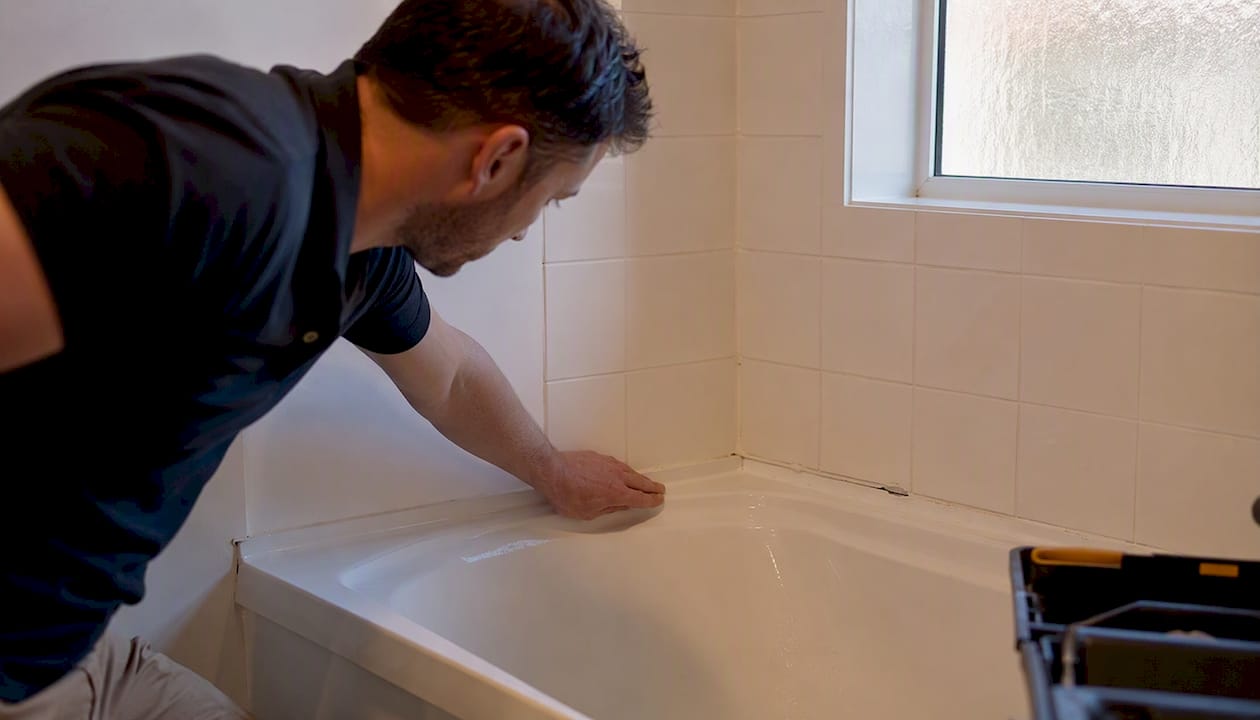
Preventive servicing is calendar-driven rather than complaint-driven. Annual hot water system servicing, gutter clearing before storm season, and HVAC filter changes fall here. The logic is simple: a $150 hot water service is cheaper than an emergency callout at 9pm on a Sunday, and far cheaper than a burst tank flooding a hallway.
Condition-based monitoring sits a level above preventive servicing. Instead of replacing something because a date arrived, you replace it because a measurable indicator says it's near failure. A hot water anode with visible corrosion, a roof valley showing early rust bleed, or door hardware with excessive play are all condition signals that override the calendar.
Seasonal works target failure points tied to weather. Pre-winter checks focus on gutters, downpipes, and roof flashing, while pre-summer works get air conditioning units serviced and ready before the first 35 degree day arrives. Skipping this step is one of the most common reasons landlords end up with emergency trades booked at peak-demand prices.
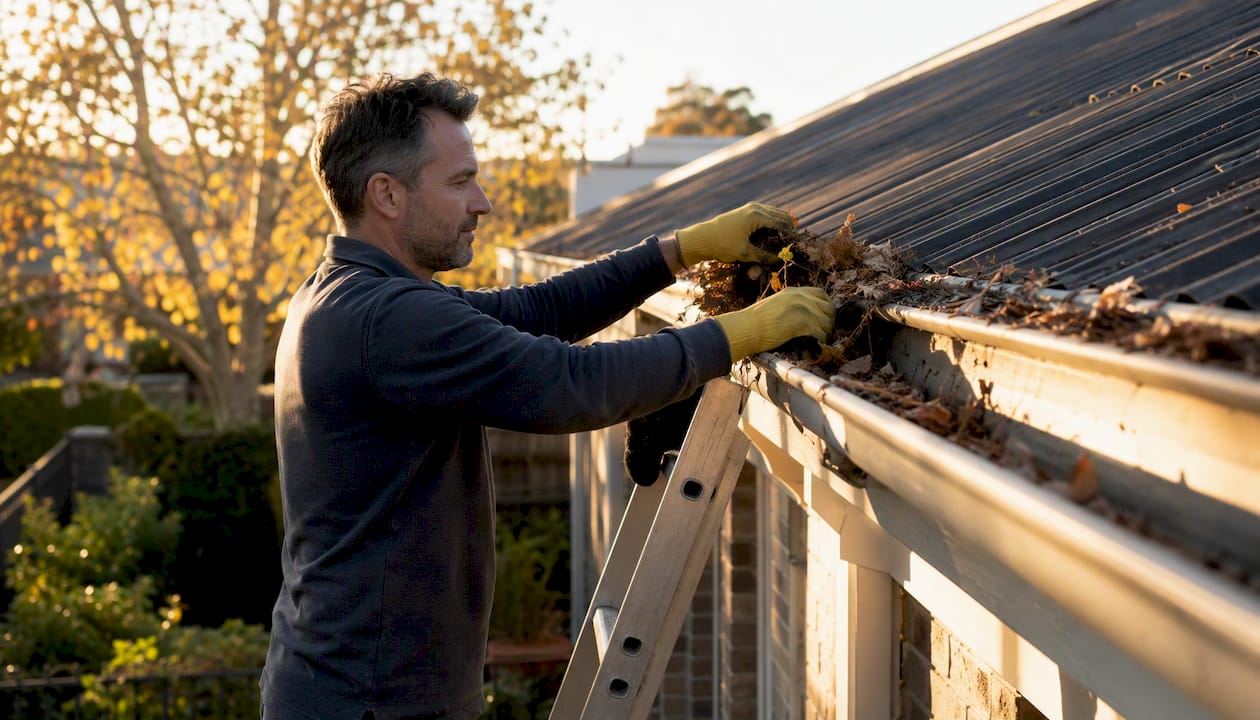
Planned renewals are the long game: bathroom silicone resealed on a five to seven year cycle, exterior paint on a repaint schedule, and appliances replaced before they fail mid-lease rather than during it. Landlords who treat these as scheduled capital items, not surprise expenses, run tighter budgets year over year.
Inspection cadence and the compliance checklist you can't skip
How often you inspect should track the age and condition of the asset, not a one-size-fits-all rule.
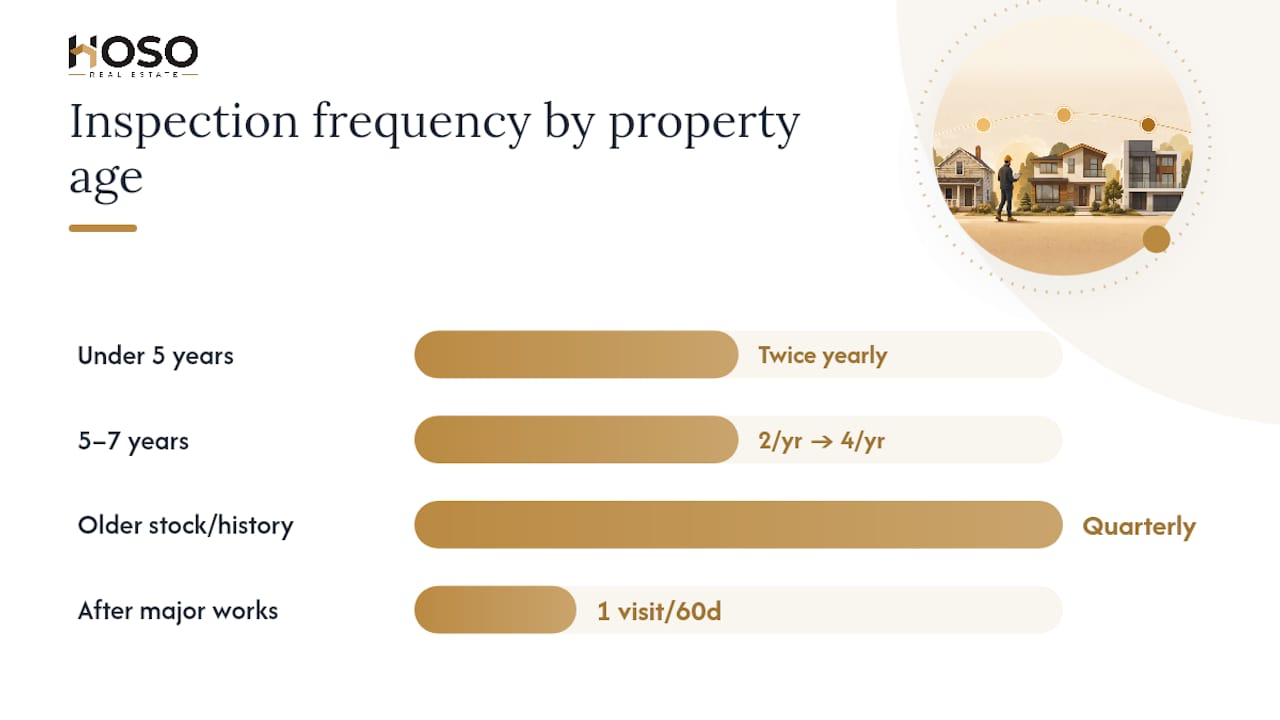
| Property age/condition | Recommended inspection frequency |
|---|---|
| Under 5 years, no known issues | Twice yearly |
| 5 to 7 years, standard wear | Twice yearly, moving to quarterly if issues emerge |
| Older stock or maintenance history | Quarterly |
| Immediately after major works | One follow-up visit within 60 days |
Beyond routine visits, statutory safety checks add their own cadence. Victorian guidance requires specific rental safety checks for gas and electrical appliances, with dated certificates kept on file. Smoke alarm testing is an annual minimum in most jurisdictions, and it's worth checking your own state or territory's current requirements rather than assuming a single national standard applies. In New South Wales, landlords may conduct up to four routine inspections a year with proper notice; a well-maintained property rarely needs that many, but the allowance exists for a reason.
Calendar these checks against lease anniversaries so nothing slips between tenancies. A dated compliance record isn't paperwork for its own sake. Most maintenance costs are tax-deductible in the year incurred, and a clean audit trail supports both tax positions and insurance claims.
Pro Tip: Keep a single digital folder per property with certificates, before/after photos, and trade invoices, sorted by date. When a dispute or claim arises, you want to find the record in seconds, not dig through email threads.
Documents worth keeping on file:
- Gas and electrical safety certificates, dated and renewed on schedule.
- Smoke alarm test records, ideally annual.
- Before and after photos from every trade visit.
- Itemised invoices tied to each job, not bundled receipts.
Where inspections find trouble, and what stops it early
Most reactive maintenance calls trace back to a small handful of repeat offenders, and each has a cheap fix if you catch it early.
- Wet-area silicone lifting — grout and silicone around showers typically fail within five to seven years; a reseal now avoids water tracking into wall cavities.
- Slow-draining gutters and downpipes — leaf build-up before storm season is the single most preventable cause of roof and ceiling water damage.
- Corroded hot water system anodes — a $30 to $80 anode swap extends tank life and prevents sudden failure.
- Stiff or rusted door and window hardware — cheap to lubricate or replace, expensive to ignore once security is compromised.
- Dead or expired smoke alarms — the easiest compliance gap to close, and the one with the highest safety stakes.
The cost curve here is stark. A silicone reseal runs roughly $200 to $400, while the water damage repair that follows a failed seal can land anywhere from $3,000 to $25,000 depending on how far the moisture has travelled. That single line item is the clearest argument for proactive spend that most landlords will ever see.
Pro Tip: Have your inspector check shower alcove junctions and balcony drainage outlets specifically. These spots are easy to miss on a quick walkthrough and are where wet-area failures usually start.
How to set up a proactive maintenance programme
Building a programme doesn't need to be complicated, but it does need a sequence.
- Audit the portfolio. List every property with its age, last major works, and known issues.
- Categorise by condition. Group properties as low, medium, or high maintenance risk based on age and history.
- Assign a cadence. Twice-yearly for low-risk properties, quarterly for higher-risk ones, as covered above.
- Book recurring trades. Lock in gutter cleaners, hot water servicers, and general inspectors on a repeating schedule, not one-off calls.
- Document every visit. Photos, certificates, and invoices go into the property file immediately, not weeks later.
A simple sample calendar for a twice-yearly programme might look like: January (pre-summer aircon and gutter check), April (mid-year inspection and hot water service), July (winter roof and drainage check), October (pre-summer inspection and smoke alarm test). Quarterly programmes simply add a fifth and sixth touchpoint in between.
Track a small set of KPIs to know whether the programme is working: reactive callout count per property per year, first-time fix rate on repairs, cost per reactive job versus cost per scheduled job, and tenant renewal rate. A drop in reactive callouts alongside a steady or improving renewal rate is the clearest signal the programme is earning its keep.
Tenant communication matters just as much as the schedule itself. Frame inspections as a shared benefit, not an intrusion: "We're checking the property to catch small issues before they become big ones, and we'll always give proper notice." Tenants who understand the purpose tend to report issues earlier, which feeds directly back into lower reactive volumes.
What to demand from contractors, and how the workflow should run
Not every trade is fit for a proactive programme. The right contractor can inspect and fix minor issues on the same visit, holds current licences for regulated gas and electrical work, carries adequate insurance, and quotes within an agreed timeframe rather than leaving landlords chasing.
A workflow worth insisting on: inspect, quote within the agreed SLA, schedule the work, photograph before and after, then invoice and close with a record entry. Skipping any step weakens the paper trail that protects you later.
Response time tiers keep everyone aligned on urgency:
- Emergency (burst pipe, gas leak, no power): same day.
- Urgent (failing hot water, security hardware): 24 to 48 hours.
- Routine (reseals, servicing, minor repairs): 7 to 14 days.
Pro Tip: Use the same multi-trade contractor for inspections and small fixes where possible. Pairing inspection with same-visit repair cuts booking lag and reduces the scope creep that happens when a small job sits unattended for weeks.
The financial case: costs, ROI, and setting a budget
Sample cost items give a realistic sense of what proactive spend looks like against the reactive alternative it prevents.
The financial case builds on more than avoided repairs. Reducing reactive callouts by 40 to 60% translates into fewer vacancy days between tenancies and fewer disruptive works during a lease, both of which support stronger rent appraisals. Framed over a longer horizon, professional maintenance on a $750 a week property has been shown to produce $18,000 to $40,000 in combined value over five years against ordinary reactive practice, once vacancy savings, appraisal support, and avoided repairs are counted together.
Set an annual maintenance reserve per property, roughly proportional to age and condition risk, and review it yearly against actual spend. Routine repairs are generally deductible in the year incurred, while larger renewal items (a full reseal programme, a roof repaint) may sit closer to capital works, so it's worth checking the current tax treatment with your accountant rather than assuming.
Your printable checklist by frequency
A short, frequency-based checklist keeps the programme moving without needing a spreadsheet degree.
Monthly (landlord or tenant): visual check under sinks for leaks, smoke alarm test button check, quick look at external drains after rain.
Quarterly (licensed trade or landlord): gutter clearing, exercise water isolation valves, HVAC filter change where fitted, test external tap washers.
Annual (licensed trade): hot water system service or flush, gas and electrical safety certificates where required, professional smoke alarm test with battery or unit replacement as needed, roof and flashing inspection.
Every task should end with the same three artefacts: a dated photo, a certificate or invoice where relevant, and a note in the property file. Miss that step and the programme's paper trail, and its insurance value, starts to erode.
Why we treat maintenance as asset protection, not admin
We think most landlords underrate how much of their long-term return sits in maintenance discipline rather than rent growth. A property that's inspected on schedule, serviced before failure, and documented properly tends to hold its condition, its tenant quality, and its insurability far better than one running on reactive repairs alone.
We've seen this play out in straightforward ways: tenants who feel their reports are actioned quickly tend to renew rather than move on, and a documented maintenance history has helped clients avoid disputed insurance outcomes when something did go wrong. Neither outcome shows up on a rent roll at a glance, but both protect the number that matters most, the property's long-term value.
If you want the practical mechanics behind this, our guide on proactive maintenance scheduling walks through how we build a calendar around lease dates and statutory checks, and our piece on why proactive property management matters covers the broader case for treating oversight as a discipline rather than a reaction.
Let HOSO Real Estate run the programme for you
HOSO Real Estate is the alternative to juggling trades, calendars, and compliance certificates yourself. Instead of chasing quotes and hoping someone remembers the gutter clean before winter, you get a coordinated programme: inspection scheduling built around your lease dates, contractor coordination with trades who can inspect and fix on the same visit, a compliance calendar that tracks statutory checks, and documentation with KPI reporting so you can see the reactive-callout reduction for yourself.
Our approach covers:
- Scheduled inspections mapped to property age and condition.
- Contractor coordination with licensed, insured trades.
- A compliance calendar for statutory safety checks and certificates.
- Documented before/after records and KPI reporting per property.
If your portfolio is running on reactive repairs, request a portfolio review through our services page and we'll show you where a structured programme would make the biggest difference first.
Resources worth bookmarking
These are the sources and internal guides worth keeping close as you build your own programme.
- How preventative maintenance reduces tenant complaints — for the reactive-callout reduction figures and cost curve examples.
- Rental property maintenance tips for landlords (Allianz Australia) — for tax and recordkeeping guidance.
- Lack of maintenance and wear and tear in property damage claims (Mills Oakley) — for understanding insurance claim risk.
- 7 essential fire alarm maintenance tips for property managers — for smoke alarm testing frequency and placement guidance.
- Proactive maintenance scheduling for landlords — for building your own inspection calendar.
Sources
- How preventative maintenance reduces tenant complaints | Superb Maintenance Group
- Rental property maintenance tips for landlords | Allianz Australia
- Lack of maintenance and wear and tear in property damage claims | Mills Oakley