
Soliciting rent bidding has been illegal in South Australia since 1 September 2023, under section 52A of the Residential Tenancies Act 1995 (SA). Landlords and agents who invite offers above the advertised rent risk a fine of up to $20,000, and Consumer and Business Services (CBS) handles enforcement. Anyone can report a suspected breach to CBS on 131 882.
TL;DR:
- Landlords must set a single fixed rent figure before advertising and eliminate any range or auction language in listings.
- Soliciting or inviting offers above the advertised rent has a penalty fine of up to $20,000, enforced by CBS with reports available online.
- Platforms that quietly rank tenants by offers or allow bidding functions risk breaching the law even without direct landlord solicitation.
- Maintaining documented records of advertisements and application processes is crucial to defend against disputes or investigations.
- Even with the ban, rent bidding can still occur if tenants volunteer higher offers without prompting, creating ongoing compliance challenges.
Table of Contents
- What the rent bidding ban SA law actually says
- Advertising and applications: what landlords must do now
- Penalties, enforcement, and reporting a breach
- Grey areas: unsolicited offers, signage, and application platforms
- Market impact: what's changed and what landlords should do
- Why transparent leasing protects your investment
- Compliant leasing with HOSO Real Estate
- Sources
- FAQ
What the rent bidding ban SA law actually says
Section 52A of the Residential Tenancies Act 1995 (SA) does two things, and landlords need to understand both to stay clear of trouble.
First, it requires every advertisement for rented premises to state a single fixed rent figure. You cannot list "$550 to $600 per week" or invite "offers over $520." According to CBS's rental reforms guidance, advertising a range or running anything resembling a rent auction breaches the Act, regardless of whether you call it that.
Second, the law prohibits a landlord or their agent from soliciting, or otherwise inviting, an offer of rent higher than the advertised amount. That's the core wording in the Law Handbook, and it's worth reading if you manage your own portfolio. The provision has applied since 1 September 2023, and it sets the penalty structure that flows through to enforcement.
In practice, this means:
- No verbal prompts like "we've had a higher offer, can you match it?"
- No application forms with an open "rent offered" field that invites a bid.
- No informal auction process between competing applicants, even off the record.
For the full legislative text, the Residential Tenancies Act 1995 (SA) remains the authoritative source, and our guide to landlord obligations in South Australia covers how this sits alongside your other tenancy duties.
Advertising and applications: what landlords must do now
Compliance here isn't complicated, but it does require a process, particularly if you're self-managing or juggling multiple properties across suburbs like Glenelg, Norwood, or Prospect.
- Set one fixed rent figure before you advertise. Decide the number, publish it everywhere, and don't move it once applications open.
- Strip ranges and auction language from every listing. Check portals, signage copy, and any agent-drafted ad text before it goes live.
- Brief your team on inspection conduct. Nobody should mention competing offers, hint at a "better deal," or ask applicants to nominate their own figure.
- Standardise application forms. Remove any field that invites an applicant to name a rent above the advertised price.
- Audit third-party portals. Some property tech platforms still surface fields that let applicants pledge extra rent, or rank applications by offer size, which puts you in breach even if you never asked for it. Guidance on booking data and rental compliance practices is a useful reference when reviewing vendor settings.
Pro Tip: Screenshot every advertisement the day it goes live, and keep dated copies of application forms. If CBS or SACAT ever questions your process, that paper trail settles the matter in minutes rather than weeks.
Our breakdown of Adelaide rental compliance requirements walks through how these steps sit alongside routine leasing obligations.
Penalties, enforcement, and reporting a breach
The maximum penalty for breaching section 52A is a fine of up to $20,000, and offences can also be dealt with through expiation notices for less serious conduct. CBS is the regulator, and it accepts reports through its hotline on 131 882.
If you suspect a breach, whether as a tenant, competing applicant, or industry observer, gather:
- Screenshots of the advertised rent amount and date.
- Any written or verbal solicitation for a higher offer.
- Application correspondence showing a request to nominate rent.
CBS reviews the evidence and can investigate, issue an expiation notice, or refer serious matters for prosecution.
Grey areas: unsolicited offers, signage, and application platforms
Solicited bidding is illegal, but a tenant who volunteers more rent without being asked isn't automatically breaking the law, though accepting that offer sits in murkier territory the government hasn't fully closed off. Signage advertising a property "for rent" without a dollar figure is generally fine, but every online or print advertisement with pricing must show the fixed amount. The real risk sits with application portals that quietly rank tenants by how much they're willing to pay, since that function can constitute solicitation even when no human ever asks the question.
Market impact: what's changed and what landlords should do
Reporting since the ban shows mixed compliance. Shelter SA and InDaily have flagged that rent bidding still occurs in some corners of the Adelaide market, and Choice's analysis notes the law bans solicitation but doesn't stop a landlord accepting an unsolicited higher offer, a gap other jurisdictions have closed more tightly.
For landlords, the practical response is straightforward:
- Set a realistic fixed rent from the outset, informed by current suburb data rather than guesswork.
- Document every advertising and shortlisting decision.
- Review your rent increase timing separately from initial pricing, since the two processes follow different rules.
Pro Tip: Tenants can strengthen a lawful application with references, proof of income, and a longer lease commitment, none of which involves offering extra rent.
Why transparent leasing protects your investment
Compliant advertising isn't just a legal box to tick. Every dispute HOSO Real Estate that has helped resolve at SACAT came down to documentation: whoever kept dated records of advertised rent, application timelines, and selection reasoning walked in with a stronger position. Landlords who leave pricing and shortlisting decisions undocumented carry more risk than they realise, particularly when a rejected applicant later alleges unfair treatment.
A property manager who builds compliance into every listing, not just the ones that attract scrutiny, is protecting your asset's long-term value as much as your legal standing. If you want a second opinion on how your current advertising and application process stacks up, that's a conversation worth having with HOSO Real Estate.
— HOSO
Compliant leasing with HOSO Real Estate
HOSO Real Estate is the alternative to piecing compliance together yourself: transparent, fixed-rent advertising, documented application handling, and SACAT-aware processes built into every leasing cycle from day one. Adelaide landlords managing their own properties often discover the rent bidding ban's finer points only after a complaint lands. HOSO Real Estate's property management team builds compliant advertising, tenant screening, and application record-keeping into standard practice, so your portfolio isn't exposed when a tenant or CBS asks questions.
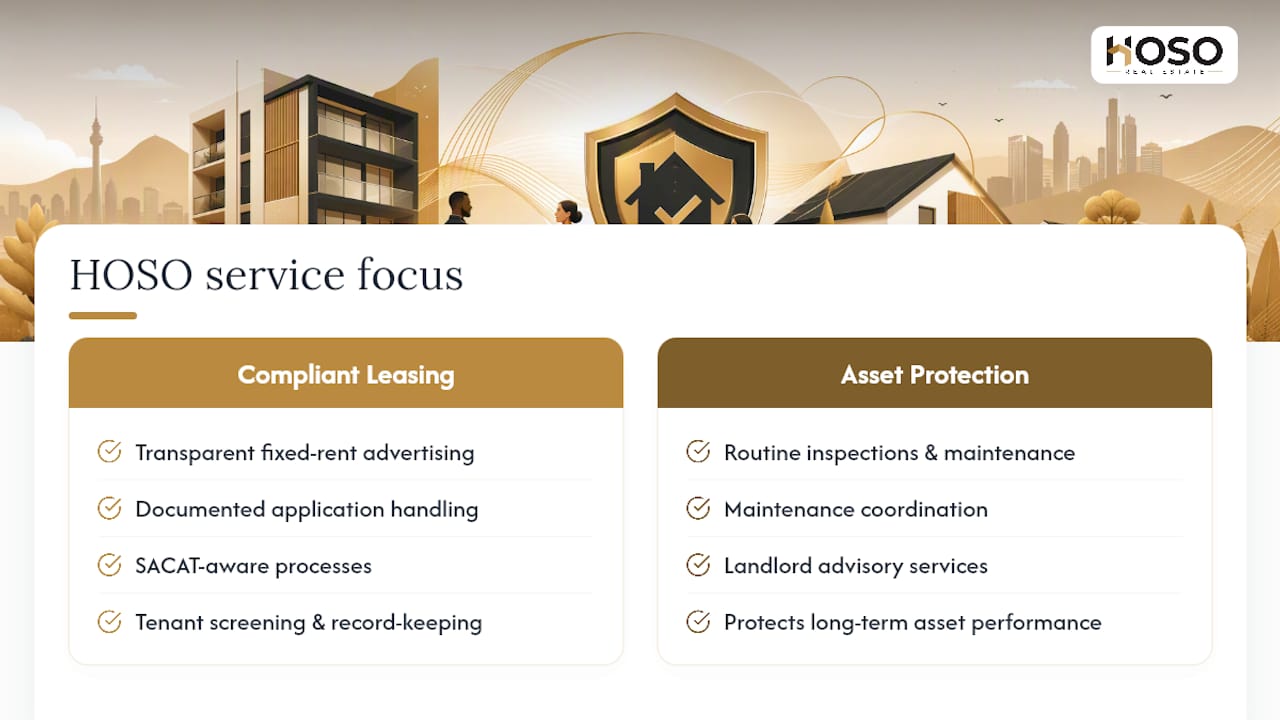
Beyond leasing, HOSO Real Estate handles routine inspections, maintenance coordination, and landlord advisory work across the Adelaide market, all aimed at protecting long-term asset performance rather than just filling a vacancy. If you're weighing up whether your current process holds up under scrutiny, explore HOSO Real Estate's property management services and get a clear read on where your portfolio stands.
Sources
- Rent bidding now illegal in SA — Consumer and Business Services
- Law Handbook — offering premises for rent, prospective sale and prospective tenant information
- Shelter SA says rent bidding is still prevalent — InDaily
This article is general information, not a substitute for advice from a qualified lawyer. Consult a qualified legal professional about your own circumstances before acting on anything here.
FAQ
What are the new rental laws in South Australia?
South Australia's tenancy reforms, effective from 1 September 2023, ban soliciting rent bidding and require fixed-rent advertising under the Residential Tenancies Act 1995.
Is rent bidding illegal in SA?
Soliciting an offer above the advertised rent is illegal and carries a fine of up to $20,000, though a genuinely unsolicited higher offer sits in a legal grey area.
What is the 30% rental rule?
The "30% rule" is a household budgeting guideline suggesting rent shouldn't exceed a set proportion of gross income; it isn't a South Australian legal requirement, just a common affordability benchmark used by tenants and lenders.
Is there still a rental crisis in Adelaide?
Reporting from Shelter SA indicates rental pressure and some rent bidding behaviour persist despite the ban, though compliant landlords who fix pricing upfront avoid the legal exposure entirely.
How do I report a suspected rent bidding breach?
Contact Consumer and Business Services on 131 882 with evidence such as advertising screenshots and any written solicitation for a higher rent figure.