
Owner app property management is a digital solution that gives property owners direct, real-time access to financial reports, maintenance updates, and tenancy records through a dedicated mobile or web platform. The term "owner app" is the informal name for what the industry formally calls an owner portal, a feature built into property management software platforms such as PropertyMe, MagicDoor, and Owner.app. These portals sit alongside tenant and manager interfaces within a single system, giving landlords visibility without requiring constant phone calls or emails. For South Australian landlords managing one property or a growing portfolio, understanding what is owner app property management means understanding how modern oversight actually works.
What are the key features of owner app property management platforms?
Owner app platforms consolidate the core functions of property oversight into a single, accessible interface. Common owner app features include real-time financial reporting, booking calendars, maintenance request tracking, and automated document storage. Each feature addresses a specific pain point that landlords have historically managed through spreadsheets, phone calls, or paper files.
The primary features you will find across most owner portal platforms include:
- Real-time financial reporting. Rent collection status, outgoing expenses, and owner statements are visible as they are processed. You can check whether rent has been received without waiting for a monthly statement.
- Maintenance request tracking. Requests raised by tenants or property managers appear in the portal with status updates. You can see when a job was logged, which tradesperson was assigned, and when it was completed.
- Document storage. Lease agreements, inspection reports, invoices, and compliance certificates are stored and accessible at any time. This is particularly useful for SA landlords who need to retain records for SACAT proceedings or bond disputes.
- Booking and calendar management. For landlords who also use a property personally, some platforms allow date-blocking and booking coordination directly through the app.
- Permission-based access controls. Your property manager configures what you can view and edit. Access restrictions based on permission settings mean that some owners have read-only access while others can approve maintenance quotes directly.
- Integration with core management systems. The best platforms connect the owner portal to the same database used by your property manager, so data is consistent across all users.
Pro Tip: Before committing to a property management agency, ask specifically which platform they use and whether the owner portal is fully integrated with their back-end system. A portal that pulls data from a separate database is less reliable than one built into the same platform.
How do owner apps benefit landlords vs. traditional methods?
Traditional property management relied on monthly statements, reactive phone calls, and manual record-keeping. Owner apps replace that model with continuous, on-demand access.

The time savings are significant. Property owners managing five or more properties manually spend around 25 hours weekly on administrative tasks. Modern owner app platforms reduce that figure to under five hours per week. That is a reduction of roughly 80%, which translates directly into time you can redirect toward acquisition, renovation planning, or simply not working weekends.
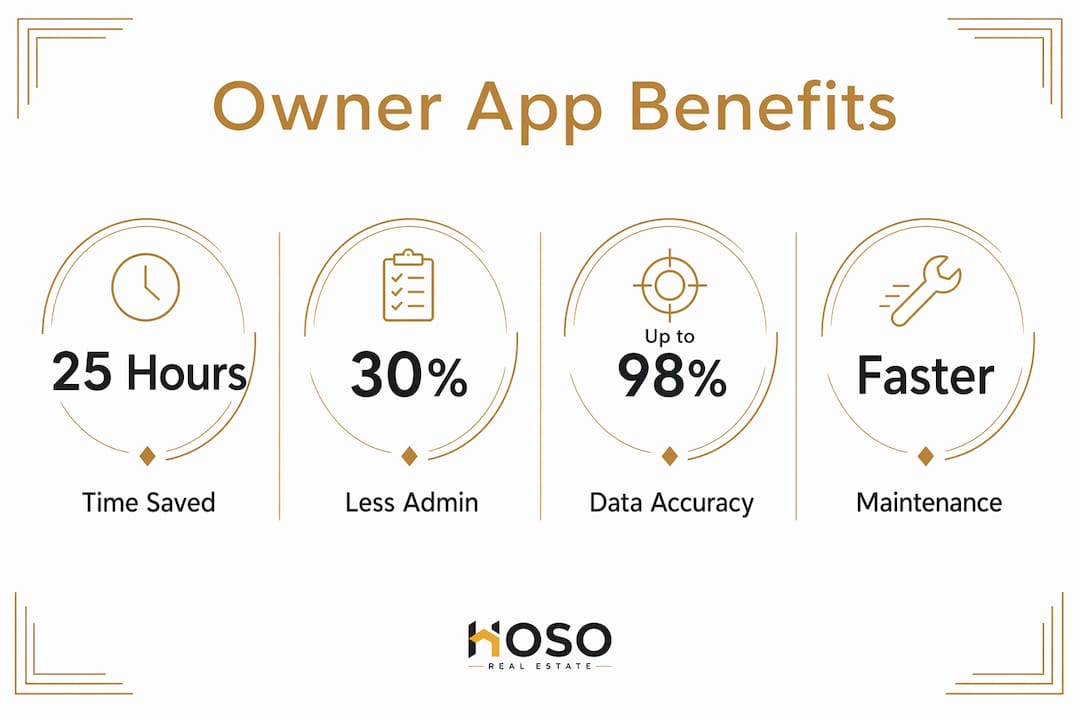
Data accuracy improves as well. Owner apps reduce administrative tasks by around 30% and improve data accuracy by up to 40% compared to manual property management. Manual processes introduce transcription errors, missed updates, and version-control problems across spreadsheets. A centralised platform eliminates most of those failure points.
The trust dimension is equally important. Transparency via owner apps reduces landlord anxiety about occupancy, maintenance, and finances. When you can log in and see that rent was received, an inspection was completed, and a maintenance job is in progress, you do not need to chase your property manager for updates. That shift in dynamic improves the working relationship on both sides.
The practical advantages over traditional methods, in order of impact, are:
- Instant rent collection visibility. No waiting for end-of-month statements to confirm payment.
- Proactive maintenance oversight. You see issues as they are logged, not after they have escalated.
- Reduced communication overhead. Fewer phone calls and emails because the data is already visible.
- Accurate financial records. Statements, invoices, and ledgers are generated automatically and stored in one place.
- Audit-ready documentation. For SA landlords, having lease documents and inspection reports accessible at any time simplifies compliance with the Residential Tenancies Act 1995 (SA).
For landlords with properties in high-demand Adelaide suburbs such as Norwood, Unley, or Prospect, where tenant turnover and maintenance activity can be frequent, this level of visibility is not a luxury. It is a practical necessity.
What limitations should SA landlords know about owner apps?
Owner apps are not without constraints. Understanding these limitations before you rely on a platform prevents misplaced expectations and poor decisions.
The most common issues SA landlords encounter include:
- Reporting lag on financial data. Ledgers may lag actual cash flow, meaning the balance shown in your portal may not reflect funds already transferred to your account. Always cross-reference your portal statement with your bank account before making financial decisions.
- Permission restrictions limiting control. Your property manager sets what you can see and do. If they configure read-only access, you cannot approve quotes or update records directly. Confirm the permission structure with your agency before signing a management agreement.
- Data fragmentation from standalone apps. Standalone apps not integrated with core systems risk data fragmentation and outdated information. If your agency uses a separate owner app that does not connect to their primary platform, the data you see may be delayed or incomplete.
- SA tenancy compliance is not automated. An owner portal shows you data. It does not replace the legal knowledge required to manage compliance under the Residential Tenancies Act 1995 (SA). Bond lodgement with Consumer and Business Services (CBS), notice periods, and SACAT processes still require human expertise.
- App quality varies by agency. Not all property management agencies in Adelaide use platforms with a fully featured owner portal. Some use basic software with limited owner-facing functionality.
Pro Tip: Ask your property manager to walk you through the owner portal before your first statement is issued. Confirm whether the financial data shown is live or subject to a processing delay. This one conversation prevents a significant amount of confusion later.
How can landlords use owner apps to manage properties effectively?
Getting value from an owner app requires more than logging in once a month. The landlords who benefit most treat the portal as an active management tool, not a passive reporting dashboard.
Follow these steps to get the most from your owner portal:
- Set up notifications from day one. Most platforms allow you to configure alerts for rent payments, maintenance requests, and inspection completions. Activate these immediately so you are informed without having to check manually.
- Use document storage for compliance records. Upload or confirm that your property manager has stored your lease agreements, entry condition reports, and compliance certificates within the platform. For SA landlords, this is critical if a SACAT matter arises.
- Review financial reports monthly, not annually. Monthly reviews allow you to spot discrepancies early. Compare the owner statement in your portal against your bank deposits to confirm figures align.
- Coordinate maintenance approvals through the platform. When your property manager logs a maintenance request, respond through the portal rather than by phone or email. This creates a documented approval trail, which protects you if a dispute arises.
- Use the calendar or booking function for personal-use properties. If you own a property you occasionally use yourself, block dates through the app to avoid scheduling conflicts with your manager.
- Match the platform to your portfolio size. A landlord with one property in Glenelg has different needs from an investor managing ten properties across Adelaide's inner north. Platforms like PropertyMe scale well for larger portfolios, while simpler tools suit single-property owners.
Landlords using owner apps can coordinate with managers for maintenance updates and document compliance far more efficiently than through traditional communication channels. The key is consistent engagement with the platform rather than treating it as a backup resource.
Modern property management software automates rent collection, maintenance, lease management, and accounting within one platform. When your agency uses a system with this level of integration, your owner portal reflects the full picture of your investment in real time.
For SA investors managing properties across multiple suburbs, such as a unit in Prospect and a house in Mitcham, a well-configured owner portal gives you a consolidated view of both assets without requiring separate logins or manual reconciliation. That consolidation is where the real efficiency gain sits. You can also explore digital tools for SA investors to understand which platforms are most commonly used by Adelaide agencies.
Key takeaways
Owner app property management delivers the most value when the portal is fully integrated with the agency's core system and actively used by the landlord for financial reviews, maintenance coordination, and document compliance.
| Point | Details |
|---|---|
| Owner apps are owner portals | The informal term refers to the owner-facing interface built into platforms like PropertyMe and MagicDoor. |
| Time savings are substantial | Landlords managing five or more properties can reduce admin from 25 hours to under 5 hours per week. |
| Data accuracy improves significantly | Owner apps improve data accuracy by up to 40% compared to manual property management methods. |
| Limitations require awareness | Financial data may lag actual payouts, and access is controlled by your property manager's permission settings. |
| Integration is non-negotiable | Standalone apps without back-end integration risk fragmented, outdated data that can mislead decision-making. |
The shift i see in how adelaide landlords engage with their portfolios
The landlords who get the most from owner apps are not the ones with the most properties. They are the ones who treat the portal as a management habit rather than a reporting tool they check when something goes wrong.
What I have observed working in Adelaide property management is that the shift from reactive to proactive landlord engagement is real, and owner apps are the mechanism driving it. Real-time data visibility enables this shift in a way that monthly statements simply cannot. When you can see a maintenance request logged on a Tuesday morning and approve the quote by Tuesday afternoon, you are managing your asset. When you wait for a phone call, you are reacting to it.
The transparency argument is also stronger than most landlords initially expect. Knowing that rent has been received, that an inspection was completed, and that a repair is underway does more than save time. It changes the quality of the relationship between owner and manager. Agencies that provide genuine portal access tend to attract landlords who are more engaged, better informed, and easier to work with. That is a better outcome for everyone.
My honest view is that the technology is only as good as the agency behind it. A well-configured owner portal from a capable agency is a genuine asset. A poorly integrated app from an agency using outdated systems is just noise. Before you choose a property manager in Adelaide, ask to see the owner portal in action. If they cannot show you a live demo, that tells you something important about how they operate.
The future of property management in South Australia will involve greater automation and more granular data access for owners. The agencies investing in that infrastructure now are the ones worth working with long-term. You can read more about why professionals use property managers to understand how digital tools fit into the broader management relationship.
— HOSO
How HOSO real estate supports landlords with owner portal access
HOSO Real Estate provides Adelaide landlords with access to a fully integrated owner portal as part of its property management service. You get real-time visibility over rent collection, maintenance activity, financial statements, and tenancy documents without chasing updates.
HOSO Real Estate works with landlords across Adelaide's inner suburbs and growth corridors, from Norwood to Glenelg, managing compliance, maintenance coordination, and tenant leasing through modern, integrated systems. Whether you own one investment property or a growing portfolio, the owner portal access included in HOSO's property management services gives you the oversight your investment deserves. Contact HOSO Real Estate to see the platform in action before you commit.
FAQ
What is an owner portal in property management?
An owner portal is the landlord-facing interface within property management software platforms such as PropertyMe or MagicDoor. It provides real-time access to financial reports, maintenance updates, and tenancy documents.
How does an owner app differ from a property management app?
A property management app is used by the agency to manage all operations. An owner app or owner portal is a restricted, read-focused interface that gives landlords visibility into their specific properties without access to the full system.
Can i approve maintenance requests through an owner portal?
This depends on the permission level your property manager has configured. Some portals allow direct quote approvals, while others are read-only. Confirm the access settings with your agency before signing a management agreement.
Is the financial data in an owner portal always current?
Not always. Ledger entries may lag actual payouts, so the balance shown in your portal may not match funds already transferred to your bank account. Always cross-reference portal statements with your bank.
Do SA landlords need a separate app for tenancy compliance?
No. Compliance with the Residential Tenancies Act 1995 (SA) is managed by your property manager, not the app itself. The portal stores records and documents, but legal obligations such as bond lodgement with CBS and SACAT processes require professional management expertise. Learn more about property management in SA to understand the full scope of compliance requirements.