

Depreciation cuts your taxable rental income by claiming the wear and tear on your building and its fittings, under Division 43 (capital works) and Division 40 (plant and equipment). You do not spend a dollar to claim it, yet it can shift a property from cash-flow negative to comfortably positive.
- Lower taxable income each financial year without any new cash outlay
- Improved after-tax cash flow, particularly in a property's early years
- A documented, ATO-compliant paper trail if your claim is ever reviewed
The single move that captures nearly all of this benefit: commission a tax depreciation schedule from an accredited quantity surveyor, then hand it to your accountant before your next tax return.
Key Takeaways
Residential property depreciation reduces taxable rental income through Division 43 capital works and Division 40 plant and equipment claims, improving cash flow without any new cash outlay.
| Point | Details |
|---|---|
| Two claim categories | Division 43 covers the building structure at 2.5% annually; Division 40 covers removable items with variable effective lives. |
| Get a schedule | An accredited quantity surveyor's report typically finds $5,000 to $15,000 in annual deductions and lasts for decades. |
| Watch the 2017 rule | Second-hand plant and equipment bought after 9 May 2017 generally can't be claimed under Division 40. |
| Renovations reset the clock | New items and structural upgrades start fresh depreciation periods and may trigger a scrapping deduction. |
| Coordinate with a professional | HOSO Real Estate liaises with quantity surveyors and accountants to keep depreciation aligned with ongoing property management. |
This article is general information, not a substitute for advice from a qualified financial advisor. Consult a qualified financial professional about your own circumstances before acting on anything here.
Table of Contents
- What can you claim under residential property depreciation benefits?
- How is depreciation actually calculated?
- What does depreciation mean for your cash flow?
- Do you need a tax depreciation schedule?
- How and when do you claim depreciation?
- How do renovations change your depreciation claim?
- How do you choose a quantity surveyor or tax specialist?
- Sources
What can you claim under residential property depreciation benefits?
Two separate tax rules govern what you can claim, and mixing them up is the most common reason investors under-claim.
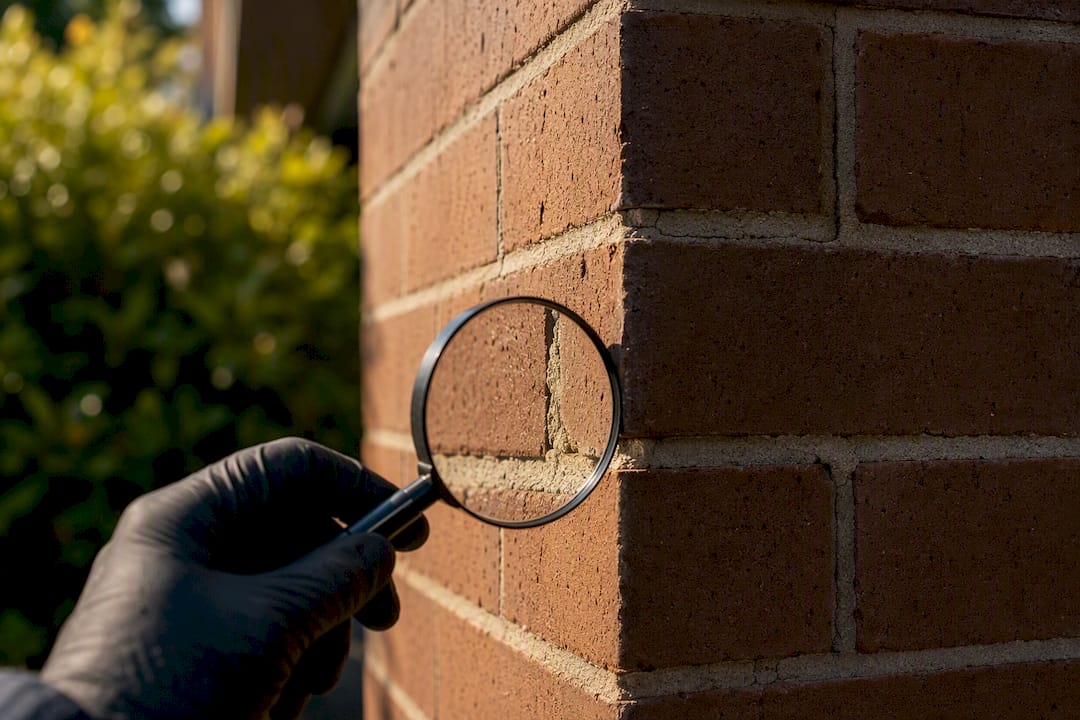
Division 43 covers the building's structure. Think brickwork, concrete, roofing, and fixed structural elements. You claim this at 2.5% per year over 40 years, using the prime cost method only, and it applies to construction that commenced after 16 September 1987.
Division 40 covers plant and equipment, the removable or mechanical items inside the property. Each item has its own effective life set by the ATO's depreciation and capital allowances tool, and you can choose between the diminishing value or prime cost method for each one.

| Feature | Division 43 (Capital Works) | Division 40 (Plant & Equipment) |
|---|---|---|
| Covers | Building structure, fixed elements | Removable, mechanical items |
| Rate | 2.5% p.a. over 40 years | Varies by item's effective life |
| Method | Prime cost only | Prime cost or diminishing value |
| Common examples | Brickwork, roofing, built-in cupboards | Carpets, hot water systems, blinds, air-conditioning, appliances |
A few rules change what you can actually claim:
- Assets costing $300 or less can be written off immediately in the year you buy them.
- Items under $1,000 can be grouped into a low-value pool and depreciated at a faster combined rate.
- Since 9 May 2017, you generally cannot claim Division 40 depreciation on second-hand plant and equipment already in a residential rental property when you buy it.
- That restriction does not touch Division 43. A property built after 16 September 1987 still delivers structural claims regardless of who built or previously owned it.
Pro Tip: A quantity surveyor's report routinely finds more claimable items than an owner spots on their own, because specialists are trained to identify plant and equipment buried in fitouts, wiring, and fixtures that don't look like "assets" to the untrained eye.
How is depreciation actually calculated?
Two methods decide how quickly you get the deduction, and the choice matters for your cash flow timing.
Prime cost spreads the deduction evenly across the asset's effective life. Diminishing value front-loads the deduction, giving you larger claims in the early years and smaller ones later. Division 43 only allows prime cost; Division 40 items let you pick whichever suits your strategy, based on effective life figures from the ATO's depreciation tool.
A simple way to work out a claim:
- Identify the asset and which division it sits under.
- Confirm its effective life (or use the 2.5%/40-year rate for Division 43).
- Choose prime cost or diminishing value for Division 40 items.
- Apply the rate to the asset's cost (or construction cost for capital works).
- Total every item's first-year claim for your overall deduction.
Worked example: a hot water system costing $1,200 with a 12-year effective life, claimed on diminishing value, might return roughly $200 in the first year.
- New apartments commonly see first-year depreciation of $8,000 to $15,000.
- Older established homes typically claim less, but rarely nothing, given Division 43 eligibility from 1987 onward.
What does depreciation mean for your cash flow?
This is where depreciation earns its keep. Say your property earns $28,000 in rent and costs $30,000 in interest, rates, and management combined, before depreciation. Without a claim, you're negatively geared by $2,000. Rent received doesn't change, but the tax you pay does.
- Depreciation is a "paper loss": it reduces taxable income without touching the rent you actually collect.
- Division 43 claims reduce your property's cost base, which increases the capital gain when you eventually sell.
- Despite that, annual tax savings claimed now, combined with the 50% CGT discount for assets held over 12 months, generally leave long-term holders better off overall.
Pro Tip: Talk to your accountant before choosing prime cost or diminishing value. The method affects loan serviceability calculations and how your cash flow looks year to year, not just your total deduction.
Do you need a tax depreciation schedule?
Yes, and it's the one document that turns an estimate into a defensible claim. A schedule prepared by an accredited quantity surveyor sets out every Division 43 and Division 40 item, the applicable method, low-value pooling where relevant, construction dates, and supporting notes the ATO expects to see if your claim is ever queried.
Schedules typically fall between $385 and $770, and the fee itself is tax deductible in the year you pay it. Reports commonly identify $5,000 to $15,000 in annual depreciation, so the return on that outlay is usually immediate.
There are two report types:
- Desktop reports, based on construction records and photos, suit newer properties with available cost data.
- Physical inspection reports, where the surveyor visits the property, suit older or renovated homes where records are incomplete.
Before engaging one, ask:
- Are they a member of the Australian Institute of Quantity Surveyors or equivalent body?
- Can they provide a sample report?
- Does the fee cover both Division 43 and Division 40 items?
- Will they reference original construction costs where records exist?
Pro Tip: A schedule is a one-off cost that typically remains valid for the life of the property, up to 40 years, so it's not an annual expense once it's done.
How and when do you claim depreciation?
Claiming correctly comes down to sequence and evidence.
- Commission your depreciation schedule as soon as the property is available for rent.
- Receive the report and pass it directly to your accountant.
- Your accountant applies the schedule's figures to your tax return for the year the property was held to produce income.
- Keep claiming from that schedule each year until items are fully depreciated or the property changes hands.
Keep these on file: the quantity surveyor's report, purchase receipts for any new plant and equipment, and evidence the property was genuinely available for rent, not just intended to be. Decline in value starts from when an asset is first used or installed ready for use, not from settlement date. The most common mistake is guessing entitlements without a schedule, or claiming depreciation on second-hand items that fall foul of the 2017 rule change.
How do renovations change your depreciation claim?
Renovations reset the clock on whatever you replace or add, and that's a genuine opportunity most owners overlook. New carpets, a fresh kitchen, and upgraded air-conditioning systems each start their own effective life countdown under Division 40, calculated from installation date, regardless of the property's age.
Structural renovations, an added room, a rebuilt bathroom, a new roof, fall under Division 43 and depreciate at 2.5% per year over 40 years from the completion date, separate from the original building's schedule.
There's a catch worth knowing: if you demolish or remove an asset during a renovation, and it still had depreciable value left, you may be able to claim the remaining written-down value as a scrapping deduction in that same year. This is frequently missed because owners focus on the new asset and forget the old one still had unclaimed value sitting on the books.
Any renovation, however small, should trigger an update to your depreciation schedule. A quantity surveyor can amend an existing report to add new items rather than starting from scratch, which keeps the process straightforward. If you're timing renovations around a broader maintenance schedule, it's worth coordinating the update with your surveyor at the same time, so nothing slips through between the tradie's invoice and your accountant's return.
How do you choose a quantity surveyor or tax specialist?
Not every quantity surveyor approaches residential property the same way, and the difference shows up in how much they find.
Start with accreditation. Membership with a recognised professional body signals the surveyor follows industry-standard methodology rather than a generic checklist. Ask whether they specialise in residential investment property specifically, rather than commercial or industrial work, since the asset mix and effective life tables differ considerably.
Request a sample report before committing. A strong schedule breaks down every Division 43 and Division 40 item individually, states the calculation method used for each, and references original construction costs where they're available rather than estimating everything from scratch. Vague, lump-sum reports with little itemisation are a warning sign, since they give your accountant less to work with and offer thinner protection if the ATO ever asks questions.
Ask how they handle renovations and future updates. A surveyor willing to amend an existing schedule as you make improvements, rather than charging for a full new report each time, saves both money and duplication. Finally, confirm they'll liaise directly with your accountant if needed. The two professionals should be working from the same numbers, not reconciling two different versions of your property's history. For Adelaide investors managing a portfolio, this coordination matters even more once you're juggling multiple schedules across different properties and settlement dates.
A landlord-focused view from HOSO Real Estate
We treat depreciation as part of asset stewardship, not a once-off tax errand. For Adelaide landlords, getting the schedule right protects cash flow and keeps compliance airtight across the life of the asset. HOSO Real Estate coordinates with quantity surveyors and accountants on our clients' behalf, and we're glad to talk through what a schedule means for your specific property.
Depreciation support as part of HOSO Real Estate's landlord advisory
Getting a depreciation schedule is only half the job. Applying it correctly to your ongoing property management, timing renovations, keeping records straight, coordinating with your accountant, is where the actual cash-flow benefit is protected year after year. HOSO Real Estate works alongside Adelaide landlords to coordinate quantity surveyor engagements, maintain the records that support a claim, and fold depreciation findings into broader landlord advisory and portfolio strategy.
If you're not sure whether your current schedule reflects a recent renovation, or you're weighing up commissioning one for the first time, our property management and advisory services are the place to start that conversation. Get in touch and we'll help you work out the right next step for your property.
Sources
- Investment Property Depreciation Guide: Div 40 & Div 43
- Austax
- Depreciation Schedules Guide for Investors - ACT Tax Academy