
Presentation standards directly determine whether a property earns market rent or premium rent. A well-presented, well-maintained home reduces vacancy, filters for higher-quality tenants and lets landlords charge more, week after week. The evidence backs this up: API Magazine reports investors spending around $3,000 on targeted upgrades, like lighting, tapware and blinds, have achieved an extra $20 to $40 a week in rent, alongside a stronger pool of applicants.
The mechanism is simple. Presentation signals how a property has been maintained and, by extension, how it will be managed going forward. Premium renters read a clean, well-lit, functional home as low risk. That perception lets landlords ask for, and get, a higher weekly figure.
Key Takeaways
Presentation standards drive premium rent because they lower perceived landlord risk, attract better-qualified tenants, and let landlords sustain a higher weekly figure across multiple tenancies.
| Point | Details |
|---|---|
| Presentation lifts achievable rent | Targeted upgrades around $3,000 have been linked to $20 to $40 a week in extra rent. |
| Tenants prioritise function over flash | Natural light, air conditioning, storage and a working kitchen matter more than cosmetic extravagance. |
| Small works often beat renovations | Paint, lighting, tapware and garden tidy typically deliver better returns per dollar than a full renovation. |
| Marketing execution matters as much as the work | Professional photography, costing roughly $150 to $350, meaningfully lifts inspection attendance. |
| Ongoing management protects the premium | HOSO Real Estate applies routine inspections, maintenance coordination and tenant vetting to hold presentation standards, and rent, at every lease renewal. |
Table of Contents
- Why presentation standards drive premium rent and lower vacancy
- What features do premium renters actually pay for?
- Which upgrades give the best return before you list?
- How property management protects your presentation premium
- Does professional marketing actually lift the rent you achieve?
- How do you calculate the ROI on a presentation upgrade?
- A six-step action plan you can start this month
- HOSO's view: presentation is a system, not a one-off spend
- Get a rental appraisal that reflects your property's real potential
- Sources
Why presentation standards drive premium rent and lower vacancy
Presentation is not a cosmetic afterthought. It is one of the few levers a landlord can pull directly to influence weekly rent, days on market and tenant retention, without waiting on the broader market to move.
The outcomes compound:
- Weekly rent uplift — well-presented homes routinely command more than comparable but tired properties in the same street.
- Shorter vacancy periods — presentable homes attract applications faster, cutting the days a property sits empty.
- Lower tenant turnover — tenants who choose a well-kept home tend to stay longer, protecting you from re-leasing costs.
- Reduced repair escalation — small issues fixed early stay small; neglect compounds into expensive repairs.
- Stronger references and applicant quality — presentation acts as a filter, drawing tenants who look after property rather than those chasing the cheapest option.
Buy Australian Property Investments makes the point plainly: presentation and condition often outweigh price alone when tenants decide what represents good value. A well-presented home at market rent will usually beat a neglected one offered at a discount.
Pro Tip: Build a maintenance baseline rather than reacting to problems. A professional clean and paint touch-up at every tenancy changeover, on a five to seven year repaint cycle, keeps presentation consistent without large one-off costs.
What features do premium renters actually pay for?
Premium renters are not chasing luxury finishes. They are chasing comfort, function and low hassle, and they will pay a weekly premium for homes that deliver all three.
- Natural light and a functional, logical floor plan
- Modern, working appliances (particularly in the kitchen)
- Air conditioning, especially reverse cycle
- Adequate storage, including linen and outdoor storage
- Neutral, uncluttered finishes that suit a range of lifestyles
- Secure entry and functioning locks
- Low-maintenance outdoor space
Families tend to prioritise storage and secure yards. Professionals rank air conditioning and layout efficiency highly, since they spend more time working from home. Downsizers value low-maintenance outdoor areas over square metres. API Magazine's reporting notes these lifestyle features are increasingly treated as non-negotiables by better-qualified applicants, not nice-to-haves.
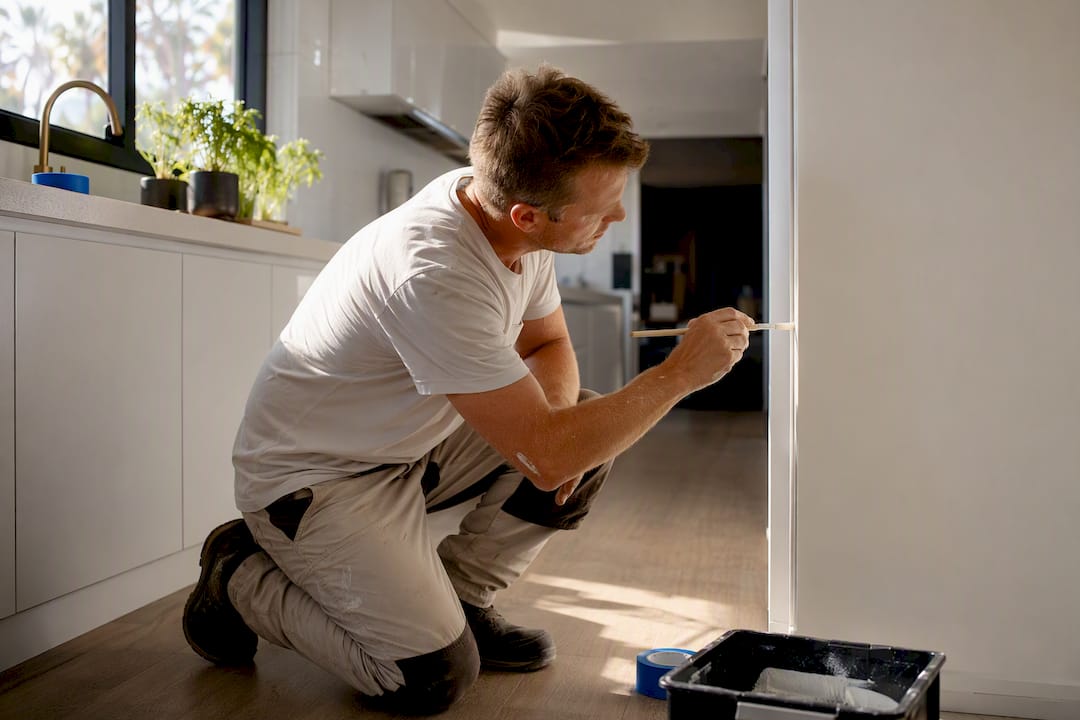
Condition beats extravagance almost every time. A well-maintained older kitchen, kept spotless and fully functional, regularly outperforms a newer kitchen that looks neglected, particularly in the rooms tenants scrutinise most during inspections.
Which upgrades give the best return before you list?
You don't need a full renovation to lift rent. Most uplift comes from targeted, inexpensive work done well.
- Fresh paint in neutral tones throughout main living areas and bedrooms.
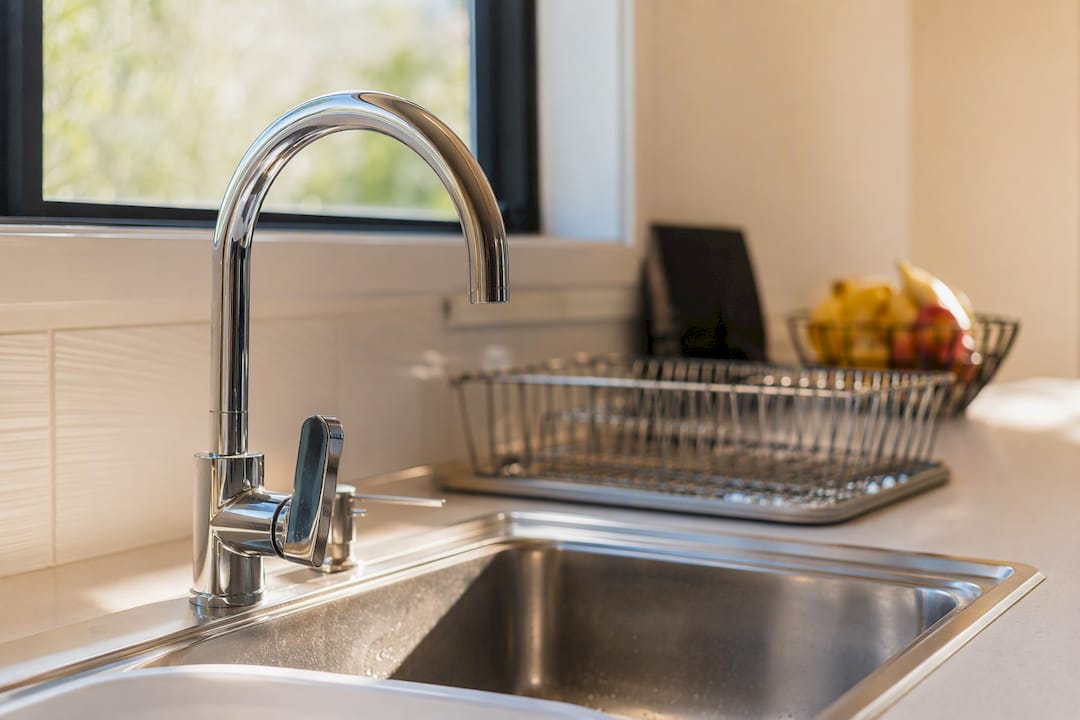
- Updated lighting and tapware, cheap fixes that modernise a kitchen or bathroom instantly.
- New blinds or window coverings where existing ones are dated or damaged.
- A split-system air conditioner in the main living area, where none currently exists.
- Garden tidy and kerb appeal work, including lawns, hedges and a clean entry path.
- Servicing existing appliances rather than replacing them, where they are functional but tired.
- Professional photography once the work is done, to capture the improvement properly.
The real-world example is worth repeating: investors spending roughly $3,000 on this kind of work have reported an extra $20 to $40 a week in rent. At the midpoint, $30 a week equals $1,560 a year, meaning the outlay pays for itself in under two years and then keeps returning.
Full renovations only make sense when a property is structurally dated, has a genuinely dysfunctional layout, or has appliances and services near the end of their working life. If the bones are sound, cosmetic and maintenance work almost always delivers the better return per dollar spent.
How property management protects your presentation premium
Presentation standards decay without active management. The condition that justified a premium rent on day one needs deliberate upkeep to hold that rent at every subsequent lease renewal.
- Pre-listing inspection checklist covering paint, fixtures, appliances, garden and safety compliance before a property goes to market.
- Routine inspection cadence to catch wear and maintenance issues before they affect presentation or tenant satisfaction.
- Maintenance response timeframes that keep small repairs from becoming visible problems at the next inspection.
- Tenant vetting criteria matched to the standard of the property, so premium presentation attracts and is protected by premium tenants.
Pro Tip: Set clear communication protocols with tenants from day one. Tenants who know how and when to report issues are far more likely to flag small problems early, before they damage presentation or escalate into costly repairs.
A property is only as premium as the standards applied to it after the lease is signed. Photography and paint get you the first tenant; inspections, maintenance coordination and vetting are what keep the rent at that level for the second, third and fourth tenant too.
These are the operational habits behind premium property management service standards, and they matter as much as the upgrade itself.
Does professional marketing actually lift the rent you achieve?
Presentation only earns its premium if the marketing shows it off properly. A beautifully presented home photographed poorly will underperform a modest home marketed well.
- Professional photography, not phone snapshots
- Full, accurate listing details: rent, bond, availability date and pet policy stated up front
- Listing copy written for the tenant you actually want, highlighting lifestyle features relevant to them
- Fast, clear communication with prospective applicants
Pro Tip: Highlight the kitchen, main living area and any outdoor space first in your photo order. These are the rooms that convert a scroll into a booked inspection.
Professional real estate photography typically costs $150 to $350 and measurably lifts online click-through and inspection attendance, making it one of the highest-leverage spends before a listing goes live. Full guidance on positioning premium Adelaide listings is covered in this landlord's guide.
How do you calculate the ROI on a presentation upgrade?
The maths is simple once you have real numbers. Take your expected weekly rent uplift, multiply by 52, and compare that annual figure against the one-off cost of the work.
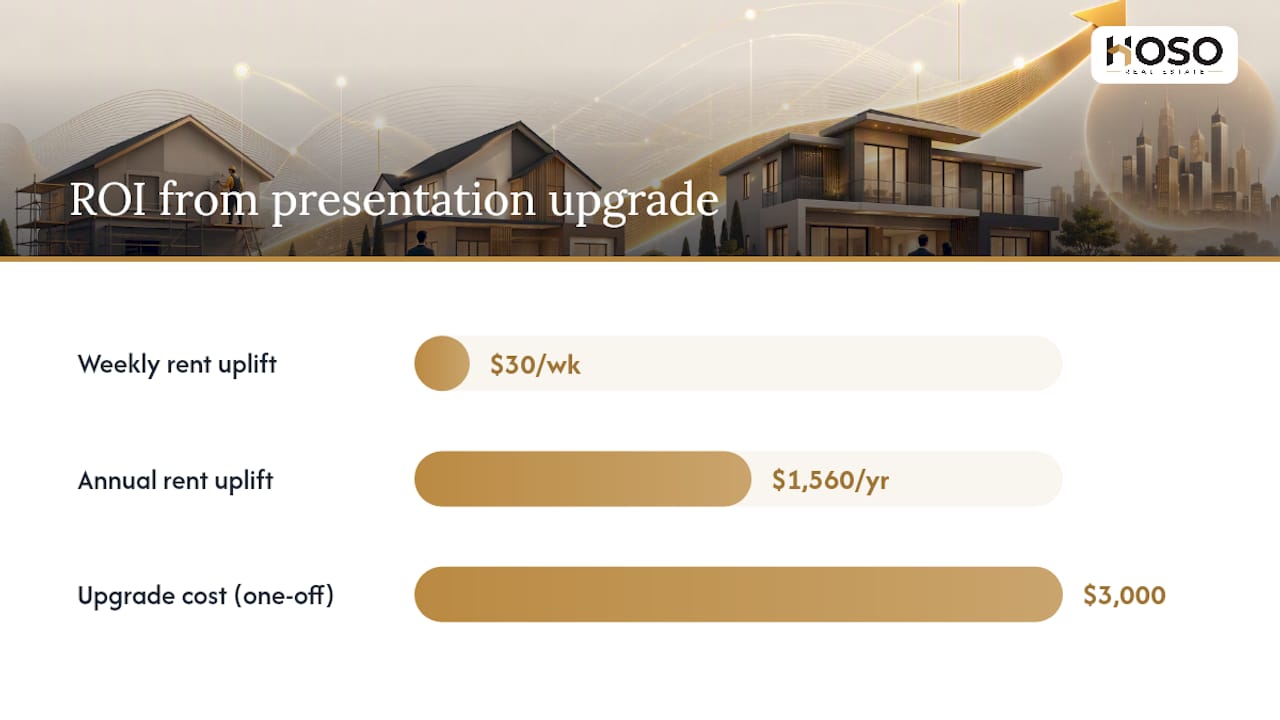
For example, a $30 weekly uplift equals $1,560 a year. Against a $3,000 spend, that's roughly a 19 to 20 month payback, after which the uplift is pure upside for as long as the improvements hold.
Track these metrics before and after any presentation investment:
- Days vacant between tenancies
- Number of applications received per listing
- Actual rent achieved versus asking rent
- Tenant turnover rate
- Ongoing maintenance spend
- Estimate the upgrade cost conservatively, including your own time if you're managing works yourself.
- Use comparable local listings, not aspirational ones, to estimate achievable rent uplift.
- Reassess after the first lease renewal to see whether the premium held.
Conservative assumptions protect you from overclaiming ROI on any single upgrade. Presentation earns compounding value over multiple tenancies, so budgeting realistically for maintenance up front avoids nasty surprises later.
A six-step action plan you can start this month
Turning presentation into premium rent doesn't require a renovation timeline. Most of this can happen inside 90 days.
- Audit the property (week 1) — walk through with a critical eye, room by room. Success metric: a written list of every presentation and maintenance gap.
- Complete small repairs (weeks 1 to 3) — taps, locks, cracked tiles, loose fittings. Metric: repair list closed out.
- Fresh paint and deep clean (weeks 2 to 4) — neutral tones, professional clean throughout. Metric: property photo-ready.
- Professional photo shoot (week 4) — book once repairs and cleaning are finished. Metric: full image set delivered.
- List with premium marketing (week 5) — full details, targeted copy, fast enquiry response. Metric: applications received in the first week.
- Enforce an ongoing inspection and maintenance schedule (ongoing) — routine inspections and prompt repairs. Metric: inspections completed on schedule each quarter.
Six months out, the property should be showing fewer vacant days and a stronger applicant pool than before the work began.
HOSO's view: presentation is a system, not a one-off spend
We see the same pattern across Adelaide portfolios: presentation isn't a single renovation decision, it's a maintained standard. Landlords who treat it as ongoing, not occasional, are the ones who protect their rent at every renewal, not just the first lease. Our routine-inspection and maintenance coordination processes exist precisely to hold that standard between tenancies. You can see the outcomes of that approach across our recently leased properties.
Get a rental appraisal that reflects your property's real potential
HOSO Real Estate is the alternative to guesswork for Adelaide landlords trying to work out whether a presentation upgrade will actually pay off. Rather than handing you a generic price estimate, we combine premium marketing, routine inspection schedules, maintenance coordination and structured tenant vetting into one ongoing service, so the uplift you achieve at listing gets protected at every lease renewal after it. That's the gap most self-managing landlords fall into: they nail the first photo shoot, then let the standard slip.
If you're weighing up whether a presentation investment is worth it, request a targeted rental appraisal through our property management services and get a clear read on where your Adelaide property sits against current premium renter expectations.
Sources
- Why good tenants are rejecting average rental properties - property management news - API Magazine
- Real estate photography cost Sydney 2026 | Uploadit
- How to Attract High-Quality Tenants Quickly - Buy Australian Property Investments